

Maintaining a clean, compliant workspace is no longer simply about appearances. UK businesses face increasing scrutiny from regulators, clients, and staff alike, and the standards expected in 2026 are higher than ever. Fail to meet them, and the consequences range from HSE enforcement action to losing talent and clients. This article walks you through the core benefits of investing in professional commercial cleaning, from legal compliance and staff wellbeing through to sustainability and long-term reputation. Whether you manage a single office or multiple facilities, the case for getting it right is compelling.
Table of Contents
- Legal compliance and health standards
- Enhanced staff wellbeing and productivity
- Protecting business reputation and client experience
- Reducing operational risks and safeguarding staff
- Sustainability and modern expectations
- Why professional cleaning is a strategic investment, not just a cost
- Find the right commercial cleaning partner
- Frequently asked questions
Key Takeaways
| Point | Details |
|---|---|
| Stricter compliance standards | Regular commercial cleaning helps businesses meet UK legal requirements and avoid penalties. |
| Improved wellbeing | A clean work environment boosts staff health, morale and productivity across all sectors. |
| Better client impressions | First-class cleanliness significantly impacts how clients and visitors perceive your business. |
| Operational risk reduction | Routine professional cleaning reduces workplace accidents and supports staff safety. |
| Sustainable business reputation | Eco-friendly and ethical cleaning choices strengthen brand reputation and attract talent. |
Legal compliance and health standards
After outlining the critical need for clean workspaces, itâs essential to understand the legal responsibilities involved. The UKâs Workplace (Health, Safety and Welfare) Regulations 1992 place a direct legal duty on employers to keep their premises clean. The Health and Safety Executive (HSE) reinforces this through regular guidance, and legal cleaning standards confirm that HSE/Workplace Regulations 1992 require clean premises, covering everything from floor surfaces to waste disposal.
Non-compliance carries real risks. These include:
- HSE fines and enforcement notices that can disrupt operations for weeks
- Reputational damage when inspection results become public
- Increased liability if a staff member or visitor is injured due to poor hygiene conditions
- Insurance complications if cleaning logs are absent during a claim
Professional commercial cleaning providers understand these requirements and build routines around them. Rather than relying on ad hoc staff efforts, a contracted cleaning schedule ensures that standards are met consistently. This matters especially in sectors such as food service, healthcare, and education where regulatory inspections are frequent and unannounced.
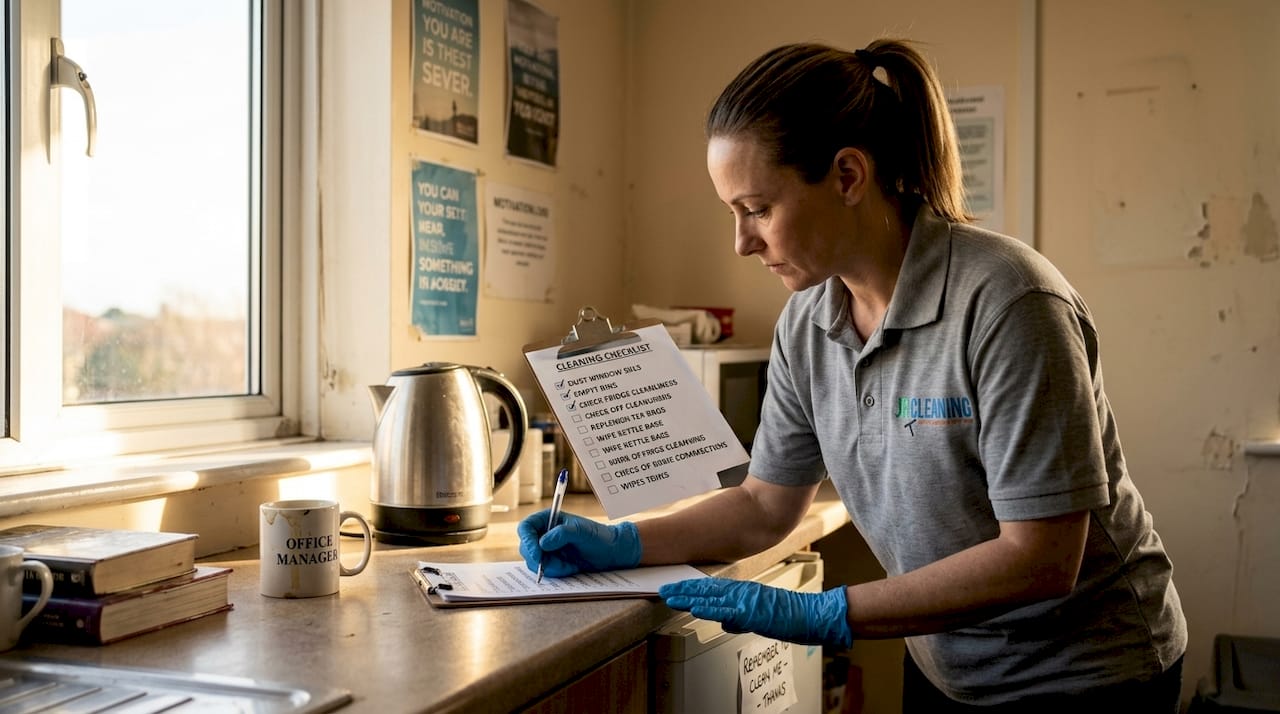

The safety and compliance benefits of a professionally managed cleaning contract go beyond ticking boxes. Regular cleaning reduces allergen build-up, controls cross-contamination, and creates a documented audit trail that demonstrates due diligence to regulators and insurers.
Understanding office cleaning requirements also helps businesses budget accurately and avoid the false economy of under-specifying cleaning frequency.
âA clean workplace is not simply good practice; it is a legal obligation under UK law, and failure to maintain it can result in serious enforcement consequences.â
Pro Tip: Engage a BICSc-accredited (British Institute of Cleaning Science) provider to gain the highest assurance of professional standards. BICSc accreditation signals that operatives are trained to nationally recognised benchmarks, which strengthens your compliance position significantly.
Enhanced staff wellbeing and productivity
While legal compliance is foundational, commercial cleaningâs impact on daily business goes even further, especially for your staff. A clean environment is not a luxury; it is a direct contributor to how well your team performs and how long they stay.
Research into occupational health interventions consistently points to a positive return. Studies show a positive ROI tendency (1.92) for workplace health measures, and professional cleaning sits firmly within that category. Reducing exposure to bacteria, dust, and allergens leads to fewer sick days and lower staff turnover.
Here is how cleaner environments create measurable improvements for your team:
- Fewer sick days: Shared surfaces such as door handles, keyboards, and kitchen areas are primary vectors for illness. Regular sanitisation reduces transmission substantially.
- Higher morale: Staff who work in a clean, well-maintained environment feel valued. This is not anecdotal; it consistently appears in workplace satisfaction surveys.
- Greater focus: Clutter and grime create cognitive noise. A tidy space supports concentration and reduces low-level stress.
- Reduced allergy triggers: Dust mite allergens, mould spores, and chemical residues affect air quality. Professional cleaning using appropriate equipment removes these more effectively than standard cleaning.
- Inclusivity: Neurodivergent staff, including those with sensory sensitivities, benefit meaningfully from low-scent, low-irritant occupational health interventions and product choices.
Thinking about cleaning and productivity as linked outcomes is a useful reframe. When windows are clean, natural light improves. When floors are maintained, people feel the premises are cared for. These subtle signals accumulate and shape culture.
Choosing the right approach matters too. Familiarising yourself with professional cleaning methods helps you specify services that genuinely suit your environment rather than accepting a generic package.
Pro Tip: Survey your team about preferred cleaning times before signing a contract. Many staff prefer cleaning to occur outside working hours, while others prefer visible daytime cleaning as a reassurance. Getting this right prevents unnecessary disruption and signals that you take staff preferences seriously.
Protecting business reputation and client experience
Productivity is only part of the equation; how a business is perceived by visitors can be equally influenced by cleanliness. First impressions form within seconds, and a grubby reception, smeared windows, or overflowing bins signal poor management long before a word is spoken.
Clients, investors, and partners notice. Maintaining client impressions in high-traffic areas requires more frequent sanitisation, particularly in hot-desking environments where multiple people share equipment and surfaces throughout the day.
| Factor | Routine professional cleaning | DIY or ad hoc cleaning |
|---|---|---|
| Consistency | Scheduled and documented | Variable and reactive |
| Product knowledge | Trained operatives, correct products | Generic products, potential damage |
| Compliance evidence | Cleaning logs maintained | Often absent |
| Client perception | Signals professionalism | Signals neglect if gaps show |
| Cost over time | Predictable budget | Unpredictable, often higher |
Beyond the comparison above, there are tangible ways your business signals professionalism through its approach to hygiene:
- Clean, odour-free reception areas that set the right tone immediately
- Visibly maintained meeting rooms, particularly before client visits
- Hygienic kitchen and toilet facilities that reflect overall standards
- Spotless external spaces including entrance steps and signage
- Consistent cleaning records available for client or auditor review
Exploring top cleaning services for your sector helps you match the service specification to the actual demands of your environment. You can also review industry cleaning standards to understand what certified providers are expected to deliver.
Reducing operational risks and safeguarding staff
Beyond image, cleanliness is a frontline defence against accidents and workplace risks. Slippery floors, blocked walkways, contaminated surfaces, and accumulated debris all increase the probability of an incident. The consequences range from staff injuries to regulatory investigations and costly insurance claims.
Research highlights that migrant cleaners face health risks from precarious work conditions, which is a reminder that the quality of your cleaning contract also reflects how fairly your supply chain treats its workers. Choosing a reputable provider with proper employment practices is both an ethical and an operational decision.
| Workplace hazard | How professional cleaning reduces it |
|---|---|
| Slippery floors | Regular mopping with appropriate products and wet floor signage protocols |
| Cross-contamination | Colour-coded cloths and equipment prevent spread between zones |
| Fire risk from debris | Consistent waste removal reduces fuel for potential fires |
| Poor air quality | Vacuuming with HEPA filters removes fine particulates |
For businesses serious about cleaner safety conditions, here are actionable steps to assess your current position:
- Conduct a cleaning risk assessment at least annually, or after significant layout changes
- Review your providerâs insurance and check that it covers all areas of your premises
- Maintain written cleaning logs to demonstrate compliance during inspections or insurance queries
- Check staff training records to ensure operatives handling chemicals hold relevant COSHH (Control of Substances Hazardous to Health) awareness certificates
Understanding the broader context of health and safety for cleaners also protects you as a client. If a cleaning operative is injured on your premises due to inadequate risk management, liability questions arise quickly.
Sustainability and modern expectations
Finally, your cleaning strategy says as much about your values as it does about your hygiene. Modern expectations are increasingly demanding, and clients, staff, and investors are paying attention to how businesses behave behind the scenes.
Eco-friendly procurement is now standard practice among leading commercial cleaning providers. Research shows that neurodivergent staff benefit from low-scent products, and this same ethical procurement lens extends to broader environmental considerations. Choosing eco-friendly cleaning practices reflects a values-led approach that resonates strongly in todayâs market.
Here are examples of what a sustainability-conscious cleaning partner should offer:
- Low-VOC (volatile organic compound) products that improve indoor air quality and reduce chemical exposure
- Recyclable or reusable cleaning materials to minimise single-use plastic waste
- Locally sourced supplies where possible to reduce transport emissions
- Safe chemical disposal in line with environmental regulations
- Fair employment practices for all cleaning staff, including clear contracts and living wage commitments
- ISO 14001 or BICSc certification as evidence of genuine environmental management systems
Transparency matters. Any provider worth considering should be willing to share their supply chain information, product data sheets, and staff employment policies on request. This protects your business from reputational risk by association.
Keeping pace with leading cleaning trends ensures your strategy stays current rather than falling behind competitor businesses who are already adopting these standards.
Why professional cleaning is a strategic investment, not just a cost
Having examined the practical benefits, it is worth questioning the traditional view of cleaning as a mere overhead. In our experience, businesses that treat cleaning as a line item to minimise consistently underperform on metrics they care about most: staff retention, client satisfaction, and regulatory readiness.
The maths rarely favours cutting corners. A single HSE enforcement notice, a client lost due to a poor first impression, or a staff injury claim can cost far more than a yearâs worth of professional cleaning contracts. Short-term savings on cleaning rarely match the long-term advantages of a well-maintained environment.
The strongest businesses we work with view their cleaning partner as part of core operations, not a back-office afterthought. They track outcomes, not just costs. They ask what the cleaning programme delivers, not simply what it charges.
Considering cleaning and overall ROI through this lens reframes the entire conversation. When you focus on outcomes, selecting the right provider becomes straightforward.
Pro Tip: When evaluating cleaning providers, ask for case studies and references from businesses in your sector. A provider who can demonstrate measurable outcomes is worth significantly more than one competing solely on price.
Find the right commercial cleaning partner
For business owners convinced that cleaning is a strategic priority, getting expert help is the next step.

The J R Cleaning experts bring over 20 years of experience delivering professional commercial and residential cleaning across the UK. Whether you need UK cleaning services tailored to an office environment or specialised solutions such as commercial kitchen cleaning, JR Cleaning offers fully insured, compliant, and professionally delivered services. Every contract is designed around your specific needs, your sector requirements, and your reputation. Request a free quote today and take the first step towards a cleaner, safer, and more professional workspace.
Frequently asked questions
Are commercial cleaning services required by law in the UK?
While not mandated in every form, UK law through HSE/Workplace Regulations 1992 obliges employers to maintain clean premises, and professional cleaning services are the most reliable way to meet this obligation consistently.
How does commercial cleaning improve staff wellbeing?
A clean workplace reduces exposure to germs and allergens, accommodates specific needs such as low-scent products for neurodivergent staff, and creates an environment where employees feel genuinely valued.
What is the return on investment for professional cleaning?
Meta-analyses show a positive ROI tendency of 1.92 for occupational health interventions, with professional cleaning contributing to reduced absenteeism and higher staff retention over time.
How do commercial cleaning providers support sustainability?
Leading providers use eco-friendly cleaning practices including low-VOC chemicals, ethical employment standards, and certified environmental management systems that align with modern corporate responsibility expectations.
Recommended
- 5 key benefits of regular gutter cleaning in 2026 | J R Cleaning
- What office cleaning involves: a guide for UK businesses | J R Cleaning
- Top services for UK homes and businesses 2026 | J R Cleaning
- Top services for UK homes and businesses 2026 | J R Cleaning

