

After builders cleaning is a specialised deep-cleaning service that removes construction dust, debris, paint splashes, and adhesive residues left behind once renovation or building work is complete. It is the critical step that transforms a work zone into a space that is genuinely safe and ready to occupy. Most homeowners are surprised to learn that builders typically provide only a broom-swept finish, leaving fine particles and chemical residues throughout the property. Post-renovation cleaning, as it is also known in the industry, fills that gap with a structured, multi-phase process designed to protect both your health and your newly finished surfaces.
What is after builders cleaning and what does it involve?
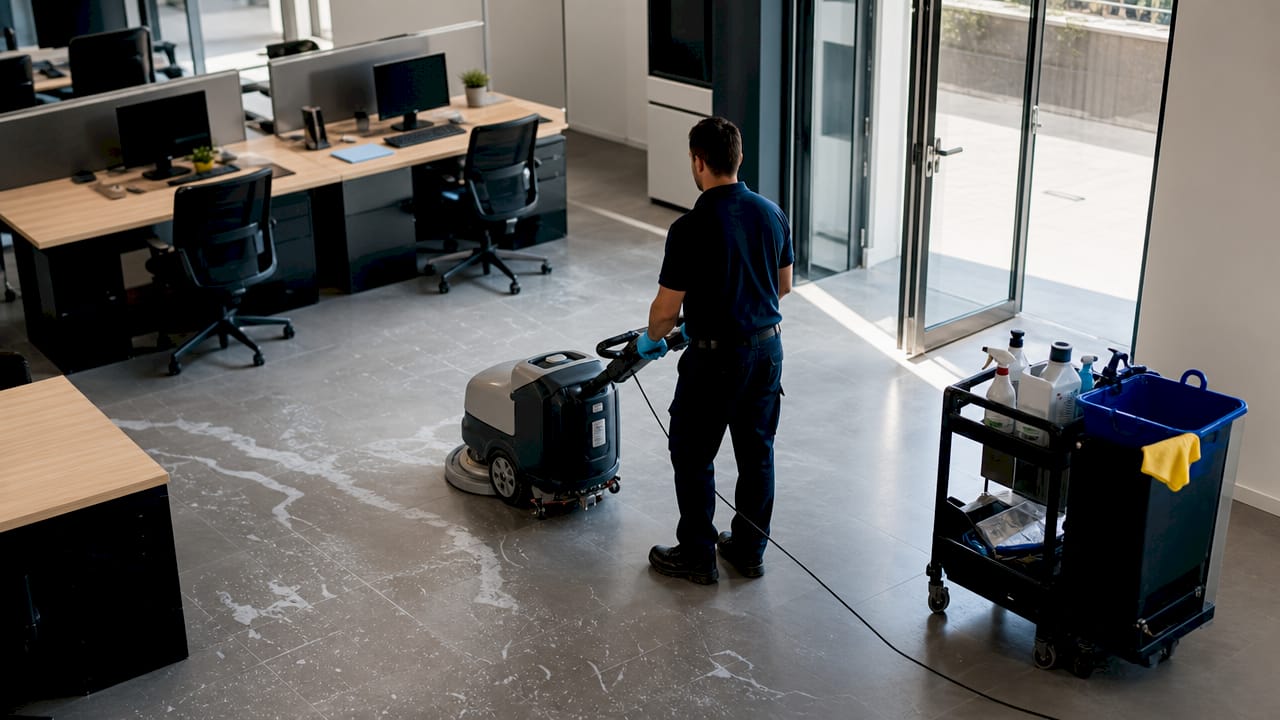
After builders cleaning is defined as a three-stage professional cleaning process applied to a property once all construction or renovation work has finished. The industry standard term is post-construction cleaning, and it covers everything from bulk debris removal through to detailed polishing of fixtures and glass. Unlike a standard domestic clean, it targets the specific residues that building work leaves behind: plaster dust, grout haze, silicone smears, paint overspray, and adhesive marks on floors and windows.
The process is sequential by design. Each phase builds on the last, and skipping a stage almost always results in re-soiling surfaces that have already been cleaned. Jrcleaning, with over 20 years of experience in residential and commercial cleaning across the UK, structures every post-build job around this three-phase model to deliver consistent, thorough results.

Pro Tip: Book your after builders clean only once every trade has finished and signed off. A single plasterer returning after the clean can undo hours of work.
What are the main stages involved in after builders cleaning?
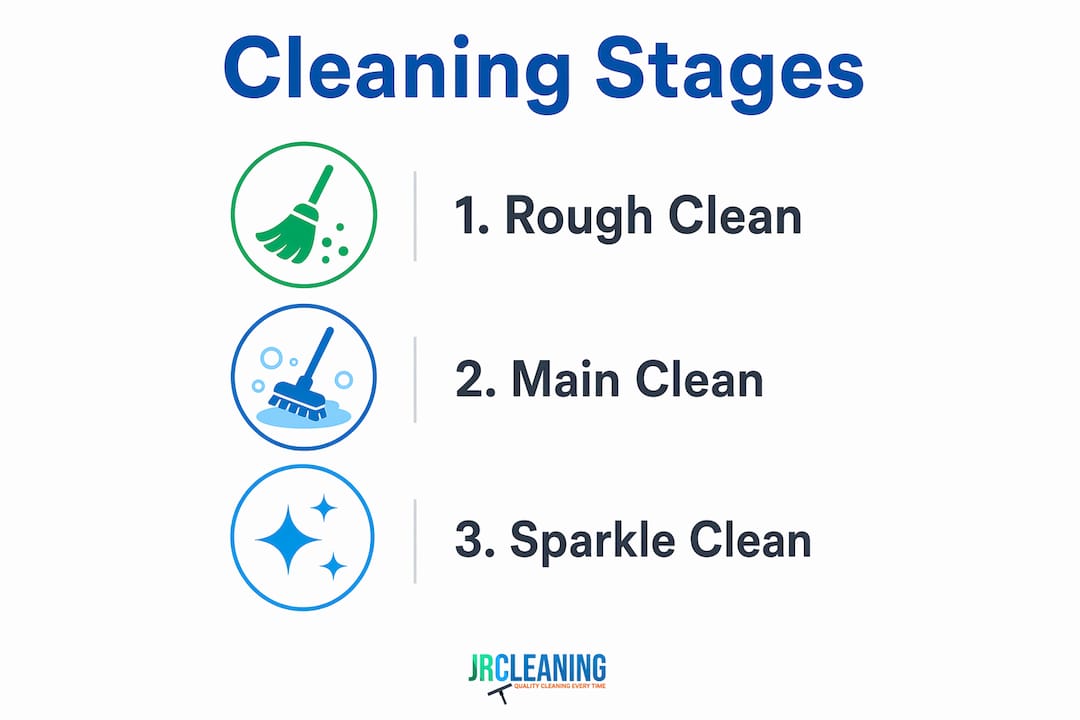
After builders cleaning follows a three-stage sequence: rough clean, main clean, and sparkle clean. Each stage has a distinct purpose, and the order is not negotiable if you want floors and surfaces to stay clean.
-
Rough clean. The first phase removes bulk waste: off-cuts of timber, plasterboard, packaging, and rubble. Surfaces are swept and vacuumed to clear the heaviest deposits. This stage prepares the space for the more detailed work that follows. Without it, fine cleaning tools would clog immediately and spread coarse debris across wet or polished surfaces.
-
Main clean. This is the most labour-intensive phase. Cleaners work top to bottom, starting with ceilings, coving, and light fittings before moving to walls, window frames, skirting boards, kitchen cabinets, and bathroom fixtures. Floors are always cleaned last to prevent dust resettling on freshly cleaned surfaces. HEPA-filter vacuums extract fine particulates from vents and carpets, and microfiber cloths capture dust rather than redistributing it.
-
Sparkle clean. The final phase is detail-focused. Glass is polished streak-free, chrome fittings are buffed, grout lines are spot-cleaned, and any remaining marks on paintwork are addressed. This is the stage that makes a property feel genuinely finished rather than merely tidy.
| Stage | Main tasks | Tools used | Expected outcome |
|---|---|---|---|
| Rough clean | Debris removal, bulk waste clearance | Industrial bags, stiff brushes, heavy-duty vacuum | Clear site, surfaces ready for detailed cleaning |
| Main clean | Dust removal from all surfaces, fixtures, vents | HEPA vacuum, microfiber cloths, professional detergents | Dust-free surfaces, clean fixtures and fittings |
| Sparkle clean | Glass polishing, chrome buffing, spot cleaning | Glass cleaner, lint-free cloths, detail brushes | Move-in ready finish, no streaks or residues |
Pro Tip: Ask your cleaning team to confirm they follow a top-to-bottom sequence. Any team that cleans floors before walls and ceilings will create more work, not less.

Why is professional after builders cleaning better than DIY?
Builders are generally only required to provide a broom-swept clean, which means the fine dust, paint residues, and chemical deposits are left entirely for the property owner to deal with. Many homeowners attempt this themselves and underestimate both the scale and the risk involved.
Construction dust is not ordinary household dust. Silica dust from cutting and sanding concrete, brick, and plasterboard is a recognised respiratory hazard. Standard domestic vacuum cleaners lack HEPA filtration and simply recirculate fine particles back into the air rather than capturing them. Professional teams use HEPA vacuums, microfiber cloths, and low-VOC products that are not typically available to homeowners, and this equipment difference is the single biggest reason professional results are superior.
The time trade-off is also significant. DIY post-renovation cleaning frequently results in incomplete work because homeowners lack both the equipment and the trained eye to spot contaminated vents, dust-packed light fittings, and silicone residue on glass. A professional team completes the job in a fraction of the time and to a standard that a domestic clean simply cannot replicate.
The key benefits of hiring specialists for after builder cleaning services include:
- Health protection. Proper HEPA filtration removes silica and fine particulates that cause respiratory problems.
- Surface protection. Professionals know which cleaning agents are safe for new plaster, fresh paintwork, and delicate stone finishes.
- Time efficiency. A team of trained cleaners completes in hours what a homeowner might spend days attempting.
- Thoroughness. Vents, extractor fans, window tracks, and cabinet interiors are cleaned as standard, not as afterthoughts.
- Safety compliance. Reputable companies like Jrcleaning are fully insured and operate under health and safety regulations, protecting you if anything goes wrong.
You can read more about the advantages of expert cleaners versus DIY approaches on the Jrcleaning blog.
How long does after builders cleaning take and what does it cost?
The cost of after builders cleaning typically ranges from £180 to £650 depending on property size and the scope of the renovation. This range reflects the significant difference between a single-room refurbishment and a full house renovation. Larger properties and more intensive building projects demand more time, more product, and larger teams.
| Property size | Typical duration | Estimated cost range |
|---|---|---|
| One-bedroom flat | 3 to 5 hours | £180 to £280 |
| Three-bedroom house | 6 to 10 hours | £300 to £450 |
| Large house or commercial unit | 10 to 16+ hours | £450 to £650+ |
Several factors push costs toward the higher end of these ranges. Specialist finishes such as polished concrete, natural stone, or bespoke joinery require specific products and extra care. Properties where renovation dust has been allowed to settle and spread into lived-in areas take considerably longer to clean. The number of rooms, the condition of windows, and whether external areas need attention all affect the final price.
To get an accurate quote, be specific when you contact cleaning companies. Describe the type of renovation, the approximate square footage, and any surfaces that need particular attention. Vague enquiries produce vague quotes, and the difference between a rough estimate and a firm price can be substantial. Jrcleaning offers free quotes and can advise on scope once you describe your project.
A few practical points to keep in mind when budgeting:
- Confirm whether VAT is included in the quoted price.
- Ask whether cleaning materials and equipment are included or charged separately.
- Clarify what happens if additional work is discovered on the day.
- Check that the company is fully insured before anyone enters your property.
How should you prepare before the cleaners arrive?
Scheduling your deep clean after builders is most effective once all construction work, painting, and flooring installation are fully complete and dust has had time to settle. Cleaning too early means tradespeople returning after the clean and undoing the work. Cleaning too late risks dust spreading into adjacent rooms or lived-in areas of the property.
Beyond timing, a small amount of preparation on your part makes a measurable difference to the outcome. Ventilating the property before the team arrives allows the heaviest airborne particles to settle, which reduces the number of passes needed on surfaces. Replacing HVAC filters before or during the clean prevents dust circulating back through the system once cleaning begins.
Here is a practical checklist to work through before your cleaning team arrives:
- Confirm all trades have finished and will not need to return.
- Remove large tools, materials, and contractor equipment from the site.
- Open windows and doors to ventilate the space for at least an hour beforehand.
- Replace HVAC and extractor fan filters.
- Flag any delicate surfaces, new appliances, or areas requiring special attention to the cleaning team in advance.
- Ensure the property has running water and electricity, as both are needed for professional cleaning equipment.
- Secure or remove any valuables or fragile items that could be damaged during cleaning.
Clear communication with your cleaning team before they start is worth more than any amount of preparation. If you have new stone worktops, freshly laid hardwood floors, or bespoke cabinetry, say so upfront. A good cleaning company will adjust their products and methods accordingly.
Key takeaways
After builders cleaning is a three-stage professional process that removes construction residues, protects your health, and prepares a property for safe occupancy. DIY approaches consistently fall short because of equipment limitations and the health risks posed by fine construction dust.
| Point | Details |
|---|---|
| Three-stage process | Rough clean, main clean, and sparkle clean must be completed in sequence to avoid re-soiling surfaces. |
| Professional equipment matters | HEPA vacuums and microfiber cloths capture fine silica dust that standard domestic equipment recirculates. |
| Cost range | After builders cleaning costs between £180 and £650 depending on property size and renovation scope. |
| Timing is critical | Schedule the clean only once all trades have finished and dust has settled to avoid repeated work. |
| Preparation pays off | Ventilating the property and replacing HVAC filters before the team arrives improves the final result. |
Why I think most people underestimate what after builders cleaning actually involves
After years of seeing post-renovation properties in every condition imaginable, the most common misunderstanding I encounter is the belief that builders leave a property clean. They do not, and they are not contractually required to. A broom-swept finish is the industry standard handover condition, and the gap between that and a genuinely habitable space is enormous.
What surprises people most is where the dust ends up. It is not just on floors and windowsills. Fine construction particles travel through HVAC systems, settle inside kitchen cabinets, coat the inside of light fittings, and embed in carpet fibres. I have seen properties where inadequate post-build cleaning led to blocked extractor fans within weeks of moving in, and others where residents reported persistent respiratory irritation traced back to silica dust that was never properly removed. Renovation projects, as outlined by home renovation advisors, carry real risks when dust and debris management is treated as an afterthought.
The advice I give every client is this: treat after builders cleaning as the final phase of your renovation project, not as an optional add-on. The money you spend on a professional clean is a fraction of what you spent on the renovation itself, and it is the step that determines whether you actually get to enjoy the result.
â jamie
Get your property move-in ready with Jrcleaning


Jrcleaning delivers professional after builders cleaning services for residential and commercial properties across the UK, backed by over 20 years of experience. Every job follows the three-stage rough, main, and sparkle clean sequence using HEPA-filter vacuums, microfiber cloths, and professional-grade products safe for new surfaces. The team is fully insured and operates under strict health and safety standards, so your newly renovated property is in safe hands. Whether you have completed a single-room refurbishment or a full house renovation, Jrcleaning provides free, no-obligation quotes tailored to your specific project. Visit Jrcleaningâs services page to explore the full range of residential and commercial cleaning solutions available.
FAQ
What does after builders cleaning include?
After builders cleaning covers bulk debris removal, deep dust extraction from all surfaces and fixtures, window and glass polishing, and detailed spot cleaning of residues such as paint splashes and grout haze. The three-stage process ends with a sparkle clean that prepares the property for immediate occupancy.
How much does after builders cleaning cost in the UK?
Costs range from approximately £180 for a small flat to £650 or more for a large house or commercial unit, depending on property size and renovation scope. Always request an itemised quote and confirm whether VAT and materials are included.
Can I do after builders cleaning myself?
DIY post-renovation cleaning is possible for minor works, but it consistently falls short for full renovations because standard vacuum cleaners lack HEPA filtration and cannot safely remove fine silica dust. The lack of specialist equipment and the time required make professional cleaning the more practical and safer choice for most homeowners.
When is the best time to book after builders cleaning?
Book your clean once all trades have finished, all painting is dry, and flooring installation is complete. Cleaning before all work is done wastes money and risks re-soiling surfaces when contractors return.
Why do builders not clean up after themselves?
Builders are contractually required to provide only a broom-swept finish at handover. Fine dust, paint residues, adhesive marks, and chemical deposits fall outside their scope, which is precisely why professional post-build cleaning exists as a distinct service.
Recommended
- What is builders cleaning? your complete UK guide | J R Cleaning
- What is post-construction cleaning? | J R Cleaning
- After builders cleaning | J R Cleaning
- What is one-off cleaning? Your complete guide | J R Cleaning

