

Routine cleaning is defined as the regular removal of dirt, dust, and germs from household surfaces to maintain a hygienic and comfortable living environment. Most homeowners and renters treat it as the backbone of home hygiene, yet few have a clear picture of what it actually includes, how often tasks should happen, or how it differs from a deep clean. The CDC confirms that cleaning with soap and water removes most harmful viruses and bacteria from surfaces, making it sufficient for day-to-day disease prevention. Get the basics right, and you protect your health without spending your weekends scrubbing.
What does routine cleaning include?
Routine cleaning covers the recurring tasks that keep your home functional and hygienic between deeper periodic cleans. Think of it as maintenance rather than renovation. The industry term for this practice is regular domestic cleaning, and it sits at the foundation of any home hygiene programme.

Daily tasks that matter most
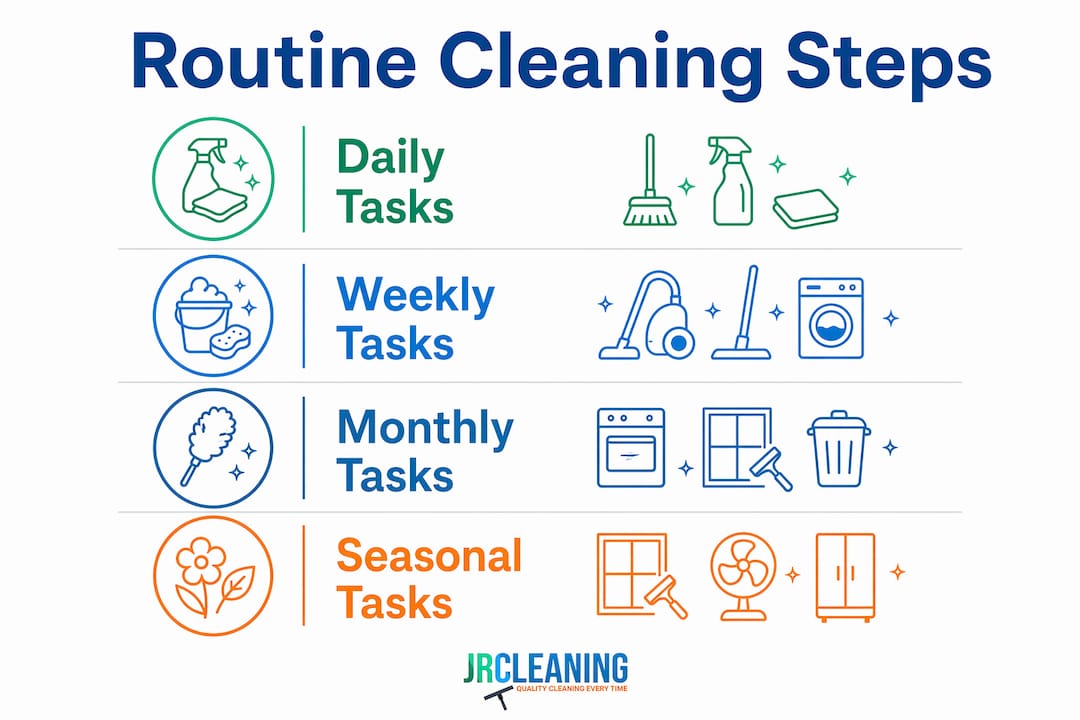
Daily tasks form the core of any routine cleaning checklist. These are the quick actions that stop small messes from becoming large problems.
- Wipe kitchen counters and hob after cooking
- Wash up or load the dishwasher
- Sweep or spot-mop hard floors in the kitchen and hallway
- Wipe the bathroom sink and tap handles
- Empty bins that are full or odorous
- Tidy clutter from living areas and surfaces
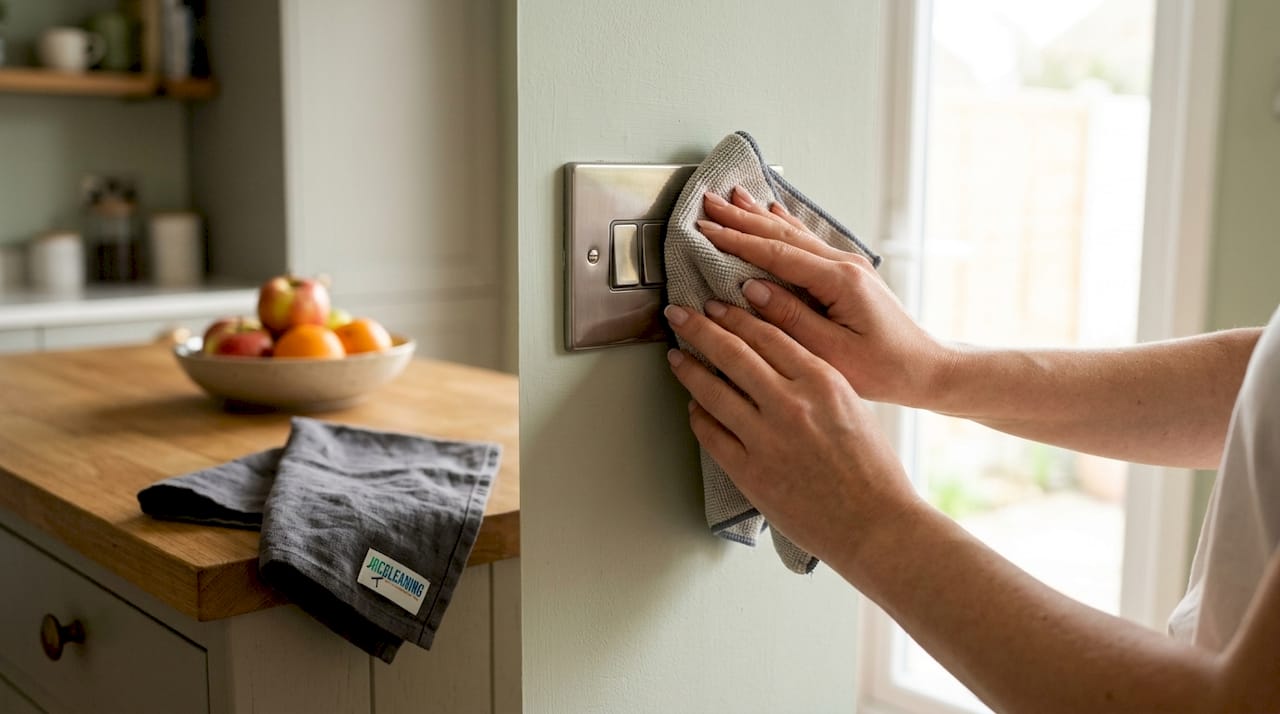
The CDC advises paying particular attention to high-touch surfaces such as doorknobs, light switches, and countertops, especially when household members are unwell or visitors have been present. These spots transfer germs far more frequently than walls or ceilings, so targeting them daily gives you the greatest return for your effort.
Weekly tasks that round out the routine
Weekly maintenance tasks build on daily resets and address areas that accumulate grime more slowly. A practical weekly routine blends daily upkeep with weekly targets such as dusting blinds, cleaning the refrigerator exterior, mopping all hard floors, and scrubbing the toilet and shower. Washing towels weekly is also recommended by cleaning experts to prevent bacterial build-up in damp fibres.

Pro Tip: Keep a small caddy of cleaning supplies in each bathroom and under the kitchen sink. When supplies are already where you need them, you remove the mental barrier of fetching equipment, and tasks get done far more consistently.
How to build a routine cleaning schedule that sticks
A cleaning schedule works when it matches your actual life, not an idealised version of it. The goal is consistency, not perfection.
-
Start with a daily reset. Identify the five to eight tasks that, if done every day, keep your home from descending into chaos. These typically include wiping surfaces, washing up, and a quick tidy of shared spaces. A 10-minute micro-reset focused on high-impact chores is enough on very busy days to maintain the baseline.
-
Assign weekly tasks to specific days. Spreading tasks across the week prevents the dreaded âwhole-house cleanâ on a Saturday morning. Monday might mean vacuuming, Wednesday the bathrooms, Friday the kitchen floor. This approach, recommended in the Full Circle with Jess cleaning system, separates daily resets from weekly maintenance and deep-clean rotations to manage workload sustainably.
-
Build in a monthly rotation. Some tasks do not need weekly attention but cannot be ignored indefinitely. Cleaning inside the oven, washing windows, wiping skirting boards, and descaling the kettle all belong in a monthly or bi-monthly rotation. Slot one or two into your weekly plan each fortnight so they never pile up.
-
Prepare your space before a scheduled clean. Decluttering surfaces before you wipe them saves significant time. Our guide on how to prepare for a cleaning service covers this in detail and applies equally to your own routine.
-
Review and adjust every month. A schedule that worked in summer may not suit winter. Reassess what is and is not getting done, and shift tasks accordingly.
Pro Tip: Set a recurring phone reminder for your weekly cleaning day. Treating it like a meeting you cannot cancel is the single most effective way to maintain a consistent routine over months rather than weeks.
How does routine cleaning differ from deep cleaning?
Understanding the distinction between routine cleaning, deep cleaning, and sanitising helps you allocate your time and effort correctly.
Routine cleaning removes visible dirt and most germs using soap, water, and physical scrubbing. It is the first and most frequent layer of home hygiene. Deep cleaning targets accumulated grime in less accessible areas, such as behind appliances, inside cupboards, grout lines, and extractor fan filters. It is triggered when routine cleaning alone can no longer maintain hygiene, typically every three to six months. Sanitising reduces germ counts further using chemical agents, but it is only effective after surfaces have been physically cleaned of dirt first.
| Type | Frequency | What it targets | Tools typically used |
|---|---|---|---|
| Routine cleaning | Daily and weekly | Visible dirt, dust, and surface germs | Soap, water, cloths, vacuum |
| Deep cleaning | Every 3 to 6 months | Accumulated grime, hidden areas | Degreasers, steam cleaners, specialist brushes |
| Sanitising | As needed | Residual germs after cleaning | Disinfectant sprays, antibacterial solutions |
The practical takeaway is that deep cleaning complements rather than replaces regular maintenance. Homes that are routinely cleaned need far less effort when a deep clean eventually comes around. Homes that skip routine cleaning and rely on periodic deep cleans tend to accumulate grime faster and require significantly more time and product to restore.
Practical tips and tools to make routine cleaning easier
The right tools and habits reduce the time and effort routine cleaning demands. This is where many people give up on their schedules, so removing friction here pays dividends.
- Use a robotic vacuum. Models such as the Roomba or Eufy range handle daily floor maintenance automatically. Robotic vacuums and ergonomic tools like extended shower scrubbers save meaningful time and reduce the physical effort of routine cleaning, making it far easier to sustain as a habit.
- Stock supplies in multiple locations. Placing a spray bottle, cloth, and toilet brush in each bathroom means you can clean a sink or toilet in under two minutes without fetching anything. This single change, highlighted in Southern Livingâs 2026 guide, is one of the most effective ways to increase routine adherence.
- Address pet areas daily. Pet beds, feeding mats, and litter trays accumulate bacteria and odour quickly. Wiping feeding areas and spot-cleaning pet beds daily prevents smells from embedding into flooring and soft furnishings.
- Manage laundry hygiene as part of your routine. Washing towels and bed linen weekly, as experts recommend, reduces allergen levels and keeps fabrics fresh. Leaving damp towels folded for days creates conditions for mould growth.
- Use a printed or digital checklist. A visible routine cleaning checklist removes the cognitive load of deciding what to clean. Apps such as Tody or OurHome let you track tasks and set reminders across a household.
Pro Tip: If motivation is the barrier, try the âone-room rule.â Commit to cleaning just one room fully before stopping. Most people continue once they have started, and even if they do not, one clean room is better than none.
For a deeper look at the interior cleaning essentials that make daily habits easier to maintain, Jrcleaning has put together a practical guide covering the tools worth investing in.
Key takeaways
Routine cleaning is the most effective daily and weekly practice for maintaining a healthy, comfortable home, and it works best when tasks are organised by frequency and supported by the right tools.
| Point | Details |
|---|---|
| Definition is specific | Routine cleaning removes visible dirt and surface germs using soap, water, and physical scrubbing. |
| Prioritise high-touch surfaces | Doorknobs, light switches, and tap handles transfer germs most frequently and deserve daily attention. |
| Schedule by frequency | Separate daily resets, weekly maintenance, and monthly rotations to prevent burnout and missed tasks. |
| Routine and deep cleaning are different | Deep cleaning addresses accumulated grime every few months and complements rather than replaces regular upkeep. |
| Tools reduce friction | Robotic vacuums and strategically placed supplies make it far easier to maintain a consistent cleaning habit. |
Why I think most people overcomplicate this
People tend to treat routine cleaning as something that requires a full Saturday afternoon and a complete overhaul of the house. That framing is what causes most cleaning routines to collapse within a fortnight.
What I have observed, both personally and through years of working alongside professional cleaners at Jrcleaning, is that the homes that stay cleanest are not cleaned the most thoroughly. They are cleaned the most consistently. A five-minute wipe of the kitchen after dinner every night does more for long-term hygiene than a two-hour deep scrub once a month. The mental wellbeing benefits of a consistently clean home are real too. Clutter and visible dirt create low-level background stress that most people do not notice until it is gone.
The other thing worth saying plainly: your routine does not need to look like anyone elseâs. A single person in a flat has different needs to a family of four with pets. The right routine is the one you will actually do. Start smaller than you think you need to, build the habit, and add tasks once the basics feel automatic. That is how sustainable cleaning routines are built. For those who want to understand the broader picture of domestic cleaning methods before building their own system, that resource is worth reading first.
â jamie
When professional cleaning makes sense for your home
Even the most disciplined home cleaner benefits from professional support at certain points in the year.


Jrcleaning offers residential cleaning services across the UK, covering both routine maintenance cleans and thorough deep cleans for when life gets in the way of your schedule. With over 20 years of experience and full insurance, the team works to the same high-touch surface priorities the CDC recommends, using professional-grade equipment that goes further than standard household tools. Whether you need a one-off refresh before guests arrive or a regular scheduled clean to complement your own efforts, Jrcleaning makes it straightforward. Visit the Jrcleaning services page to explore options and request a free quote.
FAQ
What is routine cleaning in a home?
Routine cleaning is the regular practice of removing dirt, dust, and surface germs from a home using soap, water, and physical scrubbing. It covers daily tasks like wiping counters and weekly tasks like vacuuming floors and cleaning bathrooms.
How often should routine cleaning tasks be done?
Daily tasks such as wiping kitchen surfaces and washing up should happen every day, while weekly tasks like mopping floors, cleaning toilets, and washing towels are recommended by experts to maintain hygiene and reduce allergens.
What is the difference between routine cleaning and deep cleaning?
Routine cleaning maintains day-to-day hygiene on visible surfaces, while deep cleaning targets accumulated grime in hard-to-reach areas such as behind appliances and inside cupboards. Deep cleaning is typically needed every three to six months.
Does routine cleaning prevent illness?
The CDC states that cleaning with soap and water removes most harmful viruses and bacteria from surfaces, making it sufficient to prevent the spread of most common illnesses in a home setting without the need for daily disinfection.
What should a routine cleaning checklist include?
A practical checklist covers kitchen surfaces, hob, and sink daily; bathrooms, floors, and high-touch surfaces weekly; and tasks like oven cleaning and window washing on a monthly or bi-monthly rotation.
Recommended
- How to prepare for cleaning service: your full guide | J R Cleaning
- Domestic cleaning explained: methods, benefits & expert tips | J R Cleaning
- The real role of cleaning in home value | J R Cleaning
- What office cleaning involves: a guide for UK businesses | J R Cleaning

