
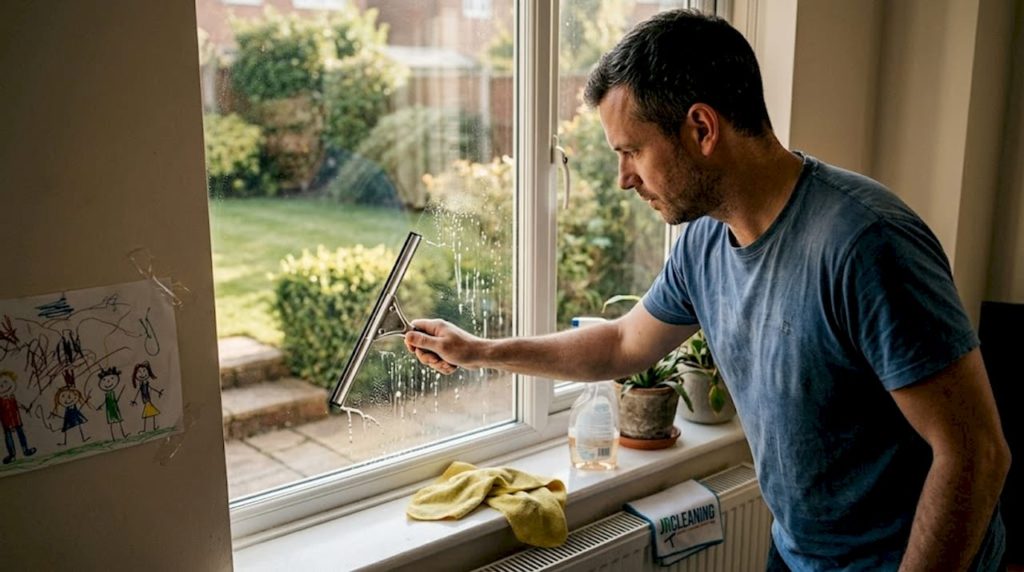
Youâve just spent twenty minutes cleaning your windows, stepped back to admire the results, and noticed streaks running in every direction. Sound familiar? Itâs one of the most common frustrations for homeowners and business owners in Victoria alike. The good news is that spotless, streak-free results come down to using the right tools and techniques, not more elbow grease. In this guide, we cover everything from essential equipment and cleaning solutions to step-by-step methods and seasonal maintenance, so your windows stay clear, safe, and looking their best all year round.
Table of Contents
- The essential tools for effective window cleaning
- Choosing the best cleaning solutions for spotless windows
- Step-by-step techniques to clean windows without streaks
- Maintaining your windows: Safety and seasonal tips
- Our expert perspective: What most DIY window guides miss
- How J R Cleaning makes window care simple
- Frequently asked questions
Key Takeaways
| Point | Details |
|---|---|
| Use proper tools | A squeegee and microfibre cloth deliver the best streak-free results. |
| Select safe solutions | Eco-friendly detergents and purified water help protect your windows and the environment. |
| Apply expert techniques | Follow a step-by-step approach for clean, clear windows every time. |
| Prioritise safety | Always use extension poles or professional help for upper floors. |
The essential tools for effective window cleaning
The difference between a streaky finish and a crystal-clear pane often comes down to what youâre holding in your hand. Many people reach for a sponge and an old newspaper, but professional results call for purpose-built tools. Getting familiar with the right equipment makes the job faster, safer, and far more satisfying.
Hereâs a quick look at the core tools every homeowner or business owner should have:
- Squeegee: The gold standard for window cleaning. A good rubber-bladed squeegee pulls water cleanly off the glass without leaving residue.
- Microfibre cloths: Ideal for detailing edges and corners. They trap dirt rather than pushing it around.
- Bucket: A wide, flat bucket lets you load your squeegee or applicator evenly without dripping.
- Extension pole: Essential for reaching upper-floor windows safely from the ground. More on this in the safety section.
- Scrubber or applicator sleeve: Used to apply soapy water across the glass before you squeegee it off.
As a professional standard, squeegee and microfibre cloth use is what separates amateur results from genuinely spotless glass. You can read more about choosing the right window cleaning tools for different property types on our blog.
| Feature | Traditional tools | Modern professional tools |
|---|---|---|
| Streak risk | High (newspaper, sponge) | Low (squeegee, microfibre) |
| Drying time | Slow | Fast |
| Reach | Limited | Extended with poles |
| Eco impact | Low | Low to moderate |
| Cost | Low | Moderate upfront, long-term saving |
Safety matters too, especially for properties with upper-floor windows. Never lean out of a window or stand on an unstable surface. Extension poles let you clean from ground level, which removes the risk entirely for most standard properties.
Pro Tip: After each use, rinse your squeegee blade and hang your microfibre cloths to dry. Storing tools properly prevents mould, rubber degradation, and cross-contamination between jobs.
Now that youâve seen how the right tools make a difference, letâs cover the cleaning solutions that complement them.
Choosing the best cleaning solutions for spotless windows
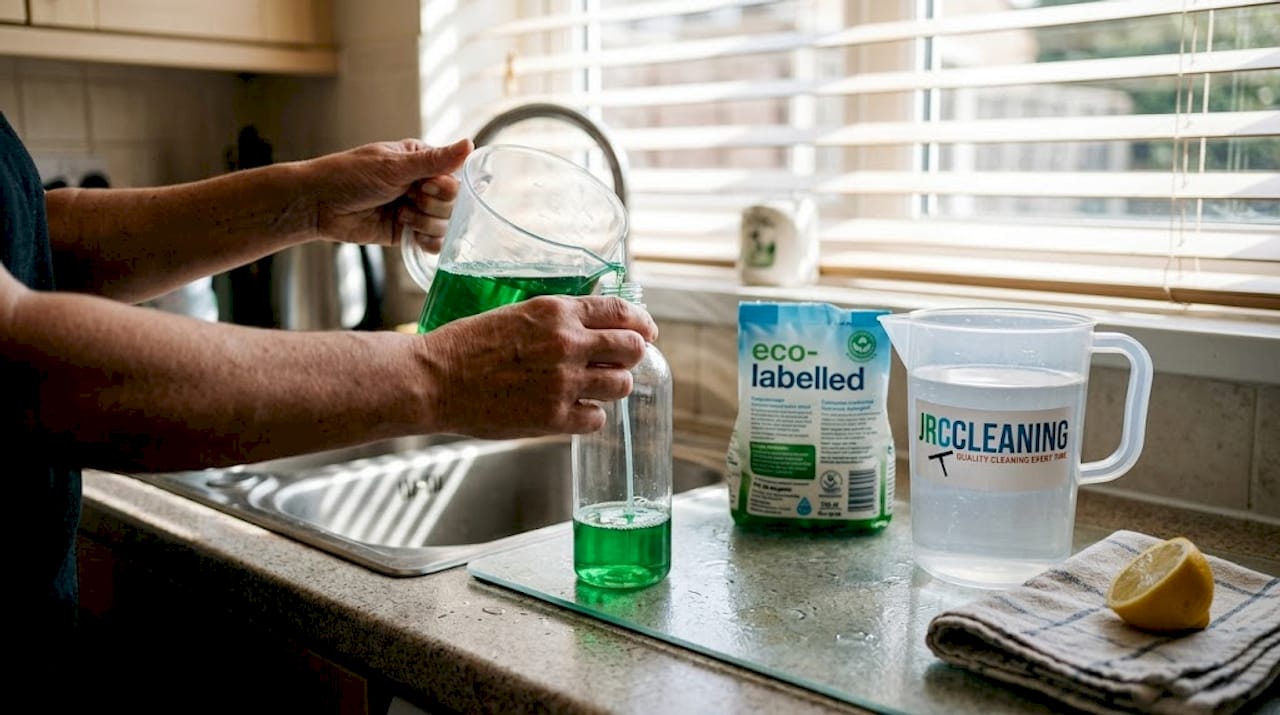
Even with the best squeegee in hand, the wrong cleaning solution will leave your windows looking worse than before. The chemistry of what you add to your bucket matters more than most people realise.

Hereâs how the main options compare:
| Solution type | Streak risk | Eco-friendliness | Cost | Best use |
|---|---|---|---|---|
| Washing-up liquid (low foam) | Low | Moderate | Very low | Everyday cleaning |
| Specialist window cleaner | Very low | Varies | Moderate | Regular maintenance |
| Deionised water only | Minimal | High | Low (with system) | Professional finish |
| Vinegar and water | Moderate | High | Very low | Light grime |
The key principle is simple: less foam is better. High-foaming detergents leave a residue on the glass that dries into streaks. A small drop of low-foam washing-up liquid in a full bucket is genuinely all you need for most jobs.
Deionised water, also called purified water, takes things a step further. It works by removing all dissolved minerals from the water, achieving a TDS of 0ppm (total dissolved solids). When this water dries on glass, there are no minerals left to form spots or smears. Itâs the reason professional window cleaners using water-fed poles can leave windows to dry without wiping them at all.
For those who prefer eco-friendly options, plant-based, biodegradable detergents work well and are safer for gardens, pets, and drainage systems. Theyâre particularly worth considering for commercial properties where large volumes of water run off into public drains.
A few tips for mixing your solution effectively:
- Use warm water in cooler months to help cut through grime faster.
- Add detergent to water, not the other way around, to control foam levels.
- Change your bucket water regularly during a job. Dirty water just redistributes grime.
- For heavily soiled windows, pre-rinse with plain water before applying your solution.
After choosing your detergent and water system, you can apply these methods to achieve a professional result.
Step-by-step techniques to clean windows without streaks
Having the right tools and solution only gets you halfway there. The sequence in which you clean makes a significant difference to the final result. Professional window cleaners follow a defined sequence, and itâs one you can replicate at home or on your commercial premises.
Hereâs the method, step by step:
- Rinse the glass first. Use plain water to remove loose dust and debris. Scrubbing dry dirt across glass can cause fine scratches.
- Apply your cleaning solution. Use your scrubber or applicator sleeve to cover the entire pane with soapy water. Work in overlapping strokes.
- Squeegee from top to bottom. Start at the top corner and pull the squeegee across in a slight arc, overlapping each stroke by a couple of centimetres. Wipe the blade with a clean cloth after each pass.
- Detail the edges. Use a dry microfibre cloth to catch any drips along the frame and corners. This is where most streaks hide.
- Final inspection. Step back and check the glass at an angle in natural light. Any missed spots will show up immediately.
âThe corners are where most DIY cleans fall apart. A dry microfibre cloth wrapped around your fingertip gives you the precision to clear them properly without smearing.â
Common mistakes to avoid include using too much detergent, cleaning in direct sunlight (the solution dries too fast), and using the same cloth for washing and drying. That last point is worth emphasising. Keeping your interior cleaning routines consistent with two-cloth discipline makes a noticeable difference, and you can see how this fits into broader professional methods for maintaining your property.
Pro Tip: Always use two cloths. One damp cloth for washing frames and edges, one completely dry cloth for finishing the glass. Mixing the two is the single most common cause of streaks.
Following these expert methods keeps your windows clear, but ongoing maintenance is just as important.
Maintaining your windows: Safety and seasonal tips
Cleaning your windows well once is satisfying. Keeping them clean throughout the year takes a bit of planning, but it doesnât have to be complicated. A simple routine prevents the kind of heavy buildup that makes each clean a major project.
Extension poles are essential for safely reaching upper-floor windows, and this is non-negotiable for anyone working on a two-storey or taller property. You can find detailed guidance on cleaning upper windows safely without ladders or unnecessary risk.
Hereâs a safety checklist before you start any window cleaning session:
- Check that extension poles are fully locked before use.
- Wear non-slip footwear on wet surfaces.
- Keep children and pets away from the work area.
- Never lean out of an upstairs window to reach the outside pane.
- If in doubt about access or height, call a professional.
Seasonal routines also play a big role in keeping windows in good condition:
- Spring: Clear pollen and winter grime. Check frames and seals for any damage caused by frost.
- Summer: Clean more frequently as dust and insects accumulate faster. Avoid cleaning in peak afternoon sun.
- Autumn: Remove leaf residue and check gutters, as blocked gutters overflow onto window frames and cause staining.
- Winter: Clean on milder days. Avoid using cold water on very cold glass. Read more about winter maintenance to protect your property during colder months.
For most Victoria properties, cleaning windows every six to eight weeks strikes the right balance between effort and appearance. High-traffic commercial premises or properties near busy roads may need attention every three to four weeks.
Pro Tip: Set a recurring reminder on your phone for window cleaning. Treating it like any other maintenance task, rather than waiting until the glass looks obviously dirty, prevents stubborn buildup and keeps each clean quick and easy.
Now, with maintenance routines and safety covered, letâs reflect on what really matters for consistently spotless windows.
Our expert perspective: What most DIY window guides miss
After more than two decades of professional cleaning across Victoria, weâve noticed a pattern in the advice that circulates online. Most guides focus on gadgets and products, as though the right spray bottle is the answer. In our experience, it rarely is.
The real culprit behind most streaky windows is too much detergent. People assume more soap means more cleaning power, but it actually leaves a film that attracts dust and smears light. A tiny amount of low-foam solution in clean water outperforms a bucket full of suds every single time.
Pure water systems, often dismissed as a professional-only luxury, are genuinely worth considering for homeowners who clean regularly. The upfront cost of a basic deionised water filter pays for itself quickly when you factor in the time saved on re-cleaning and detailing.
âThe real trick is consistency, not perfectionism. A quick clean every six weeks beats a heroic deep clean twice a year.â
Weâd also encourage you to read our thoughts on commercial window safety tips, because the principles apply equally well to residential properties. Stop chasing the perfect technique and start building a reliable routine. Thatâs what actually keeps windows looking great.
How J R Cleaning makes window care simple
If youâve worked through this guide and realised that window cleaning is more involved than youâd like to manage yourself, thatâs a perfectly reasonable conclusion. Safety risks, time constraints, and the sheer effort of maintaining larger or multi-storey properties are exactly why many homeowners and businesses in Victoria turn to professional help.


At JR Cleaning, our window cleaning experts bring over 20 years of experience to every job, fully insured and equipped with professional-grade tools and pure water systems. Whether you need a one-off clean or a regular maintenance schedule, our professional cleaning services are tailored to your property type and budget. Get in touch today for a free, no-obligation quote and let us take the hassle out of keeping your windows spotless.
Frequently asked questions
What is the best tool for cleaning home windows?
A squeegee paired with a microfibre cloth is the most effective combination for streak-free results, as professionals rely on these tools for spotless finishes on every job.
Are eco-friendly detergents as effective as traditional ones?
Yes, eco-friendly low-foaming detergents are just as effective when used correctly and actually help reduce the streaking that high-foam products cause.
How often should I clean my windows?
Regular window cleaning every six to eight weeks suits most properties, though high-pollution or high-traffic locations benefit from more frequent attention.
Is it safe to clean upper-floor windows myself?
It can be risky without the right equipment. Extension poles for higher windows are the safer option, or you can contact a professional service to handle upper floors securely.
Recommended
- Professional cleaning methods for spotless UK homes | J R Cleaning
- Interior cleaning must-haves for spotless results in 2026 | J R Cleaning
- External window cleaning: methods, costs & pro tips | J R Cleaning
- Gutter cleaning step by step: keep your UK home safe | J R Cleaning
- Window Cleaning Tips Malta â StreakâFree Glass | Rozie

