

Effective kitchen cleaning tips are structured routines and targeted hacks that keep your cooking space hygienic, organised, and free from grease buildup with minimal daily effort. The most reliable approach combines a 10 to 15 minute daily reset with natural cleaning agents such as white vinegar, baking soda, and castile soap, plus scheduled deep cleans every one to three months. Tools like microfiber cloths and bench scrapers make the difference between a surface that looks clean and one that actually is. Whether you cook every night or just at weekends, this guide gives you a repeatable system that works.
1. What is the best quick kitchen cleaning routine?
A structured daily reset is the single most effective habit you can build for a clean kitchen. It takes between 10 and 15 minutes and prevents the kind of grease and grime accumulation that turns a weekend wipe-down into a two-hour ordeal.
Follow these steps in order each evening:
- Clear the countertops. Remove anything that does not belong in the kitchen. Post, bags, and chargers all attract clutter that makes surfaces harder to wipe.
- Scrape dried food first. Use a bench scraper to lift dried spills before applying any liquid. This avoids over-wetting surfaces and cuts scrubbing time significantly.
- Wipe all surfaces. Spray a multi-surface cleaner and use a microfiber cloth in overlapping strokes. Work from the back of the counter towards you so you push debris forward rather than spreading it.
- Clean the sink. A small amount of dish soap and a sprinkle of baking soda removes food residue and neutralises odours. Dry the taps with a cloth to prevent limescale, which is a particular issue in hard-water areas of the UK.
- Load the dishwasher or wash up. Leaving dirty dishes overnight is the fastest way to attract bacteria and fruit flies.
- Sweep or spot-mop the floor. Focus on the area in front of the hob and sink where most debris falls.
The best time to run this reset is immediately after dinner, before you sit down for the evening. Waiting until later means fatigue wins.
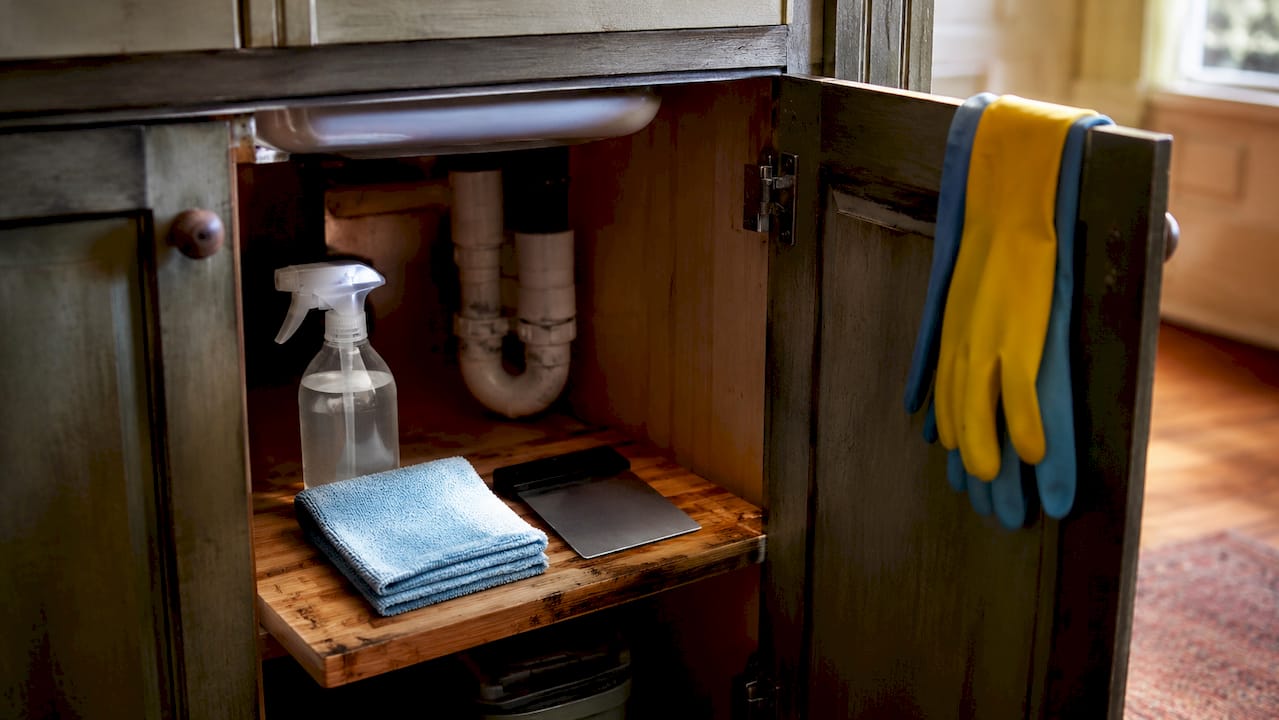
Pro Tip: Keep your microfiber cloths, spray bottle, and bench scraper in a single accessible spot under the sink or on the counter. Behavioural research shows that reducing cleaning friction by keeping tools within reach is one of the strongest predictors of whether a cleaning habit actually sticks.

2. Which natural ingredients work best for kitchen cleaning?
White vinegar, baking soda, lemon, and castile soap handle 95% of kitchen cleaning tasks without synthetic chemicals. That figure matters because it means you can simplify your cleaning cupboard to four items and still cover almost every surface and situation in your kitchen.
Here is what each ingredient does best:
- White vinegar. A natural degreaser and antimicrobial agent. Mix equal parts white vinegar and water in a spray bottle for an all-purpose surface cleaner. Effective on hob surrounds, splashbacks, and the inside of microwaves.
- Baking soda. A gentle abrasive that scrubs without scratching. Apply as a paste with water for stubborn stains on sinks and oven interiors. It also absorbs odours when left open in the fridge.
- Lemon. The citric acid cuts through grease and leaves a fresh scent. Half a lemon rubbed on a chopping board removes stains and bacteria. A lemon wedge placed in the microwave with water and heated for two minutes loosens splattered food.
- Castile soap. A plant-based soap that is gentle enough for wood surfaces and strong enough for general washing up. Dr. Bronnerâs is the most widely available brand in UK supermarkets and health stores.
One important safety note: never mix white vinegar with baking soda in a sealed container, and never combine bleach with vinegar or ammonia. These combinations either cancel out the cleaning effect or produce harmful fumes.
Pro Tip: Make a batch of all-purpose spray using 250ml white vinegar, 250ml water, and 10 drops of tea tree essential oil. Tea tree adds genuine antimicrobial properties and masks the vinegar smell. This costs a fraction of branded sprays and avoids the synthetic fragrances that linger in food preparation areas.
3. How often should you deep clean your kitchen?
Experts recommend a tiered schedule: daily tasks of 5 to 15 minutes, weekly appliance maintenance, and a full deep clean every one to three months. Most people skip the weekly tier entirely, which is why their quarterly deep cleans take so long.
The table below breaks down what belongs at each frequency:
| Frequency | Time required | Key areas |
|---|---|---|
| Daily | 10 to 15 minutes | Countertops, sink, hob surface, floor spot-clean |
| Weekly | 20 to 30 minutes | Oven exterior, stovetop degreasing, microwave interior, door handles |
| Monthly | 45 to 60 minutes | Oven interior, refrigerator shelves, cabinet fronts, extractor filter |
| Every 1 to 3 months | 2 to 3 hours | Behind appliances, refrigerator coils, pantry audit, grout lines |
The oven interior deserves special attention. Oven auto-clean settings can trigger smoke alarms and produce unpleasant odours from burning residue. A safer method is to apply a thick baking soda paste to the interior surfaces, leave it overnight, then wipe clean with a damp cloth and a splash of white vinegar to neutralise the paste.
For the refrigerator, pull it away from the wall every three months and vacuum the coils at the back. Dusty coils force the motor to work harder, which shortens the applianceâs life and raises your energy bill. This is one of those cleaning schedule tasks that most homeowners never think about until the fridge stops working.
4. How to clean different kitchen surfaces without causing damage
Surface-specific care is where most people go wrong. Using the wrong tool or product on a delicate finish causes irreversible damage that no amount of cleaning can fix.
Here is a surface-by-surface breakdown:
- Wooden cabinets and worktops. Use castile soap diluted in warm water and a soft microfiber cloth. Avoid white vinegar on wood as the acidity strips the finish over time. Dry immediately after wiping to prevent warping.
- Stone and composite worktops. Skip vinegar entirely on granite, marble, or quartz. The acid etches the surface. Use a pH-neutral washing-up liquid instead, and reseal stone surfaces once a year.
- Stainless steel. Wipe in the direction of the grain with a damp microfiber cloth. For fingerprints and smears, a few drops of baby oil on a cloth buffs the surface to a clean finish without scratching.
- Ceramic and glass hobs. A dedicated hob scraper removes burnt-on residue without scratching. Follow with a specialist ceramic hob cleaner or a paste of baking soda and washing-up liquid.
- Cabinet fronts. Avoid steel wool at all costs on painted or lacquered cabinet surfaces. It causes scratches that are impossible to reverse. Use a soft scrub sponge and a mild degreasing spray. For guidance on keeping cabinet doors in top condition, this kitchen door cleaning guide covers material-specific methods in detail.
Pro Tip: Place sheets of wax paper on top of your wall cabinets. Airborne grease from cooking settles on these sheets rather than on the cabinet surface. When they look grimy, simply replace them. This single habit cuts the effort of your quarterly deep clean noticeably.
5. What tools should every home kitchen have for cleaning?
The right tools make easy kitchen cleaning methods genuinely easy. Without them, even the best technique falls short.
Microfiber cloths remove bacteria more effectively than standard cotton rags, which means your choice of cloth matters as much as your choice of cleaner. Keep a minimum of six cloths in rotation so you always have a clean one available without doing laundry daily.
Your kitchen cleaning checklist of must-have tools:
- Microfiber cloths (at least 6, colour-coded by task)
- Bench scraper for lifting dried food without soaking
- Reusable spray bottle filled with your all-purpose vinegar solution
- Soft scrub sponge for sinks and hob surrounds
- Dish brush with a handle to keep hands away from hot water
- Disposable or reusable gloves for hygiene during deep cleans
- Small dustpan and brush kept in the kitchen for quick floor sweeps
- Baking soda and washing-up liquid as multipurpose staples
Store these items together in one place, whether that is a caddy under the sink or a hook on the inside of a cupboard door. The less time you spend hunting for supplies, the more likely you are to actually use them.
Key takeaways
A consistent daily reset combined with natural cleaning agents and a tiered schedule is the most effective approach to kitchen hygiene, requiring no specialist products and under 15 minutes per day.
| Point | Details |
|---|---|
| Daily reset is the foundation | A 10 to 15 minute evening routine prevents grime buildup and reduces deep-clean frequency. |
| Four natural ingredients cover most tasks | White vinegar, baking soda, lemon, and castile soap handle 95% of kitchen cleaning without synthetic chemicals. |
| Tiered schedule prevents overwhelm | Daily, weekly, and quarterly tasks spread the workload and protect appliances from long-term damage. |
| Tool choice matters as much as product | Microfiber cloths outperform standard rags for bacteria removal; bench scrapers cut scrubbing time. |
| Surface-specific care protects finishes | Avoid vinegar on stone, steel wool on cabinets, and always dry wood surfaces immediately after cleaning. |
What I have learnt from years of watching kitchens get cleaned
Most people treat kitchen cleaning as a single event rather than a system. They let things build up for a week, then spend a Saturday morning scrubbing, then repeat the cycle. The problem is not laziness. It is that nobody ever showed them how short a proper daily reset actually takes.
The insight that changed how I think about this is simple: a kitchen that gets a 10 minute reset every evening almost never needs a full deep clean. The quarterly scrub becomes a light refresh rather than a battle. That shift in effort is enormous when you add it up across a year.
I am also sceptical of the idea that you need a cupboard full of branded cleaning products. White vinegar and baking soda genuinely outperform most of what you will find on a supermarket shelf for everyday kitchen grime. The marketing around specialist sprays is persuasive, but the chemistry does not back it up for routine use.
The one thing most guides miss is lighting. When you clean under bright light, you see what you have actually cleaned. Many kitchens have dim under-cabinet lighting that hides grease and streaks. Turn on every light in the kitchen before you start your reset. You will catch things you would otherwise miss, and the finished result will feel more satisfying, which makes you more likely to repeat the habit tomorrow.
Start with the daily reset for two weeks before adding anything else. Build the habit before you build the system.
â jamie
How Jrcleaning can support your kitchen hygiene
When daily resets and natural cleaning agents are not enough, professional expertise makes the difference. Jrcleaning has over 20 years of experience delivering residential and commercial cleaning across the UK, including thorough kitchen deep cleans that cover areas most homeowners never reach.


From kitchen duct cleaning to grease extract maintenance and full appliance cleans, Jrcleaning handles the tasks that require specialist equipment and professional-grade products. Their team is fully insured and works to strict health and safety standards, so you get a genuinely clean kitchen without the risk of surface damage. Contact Jrcleaning for a free quote and find out how a scheduled professional clean fits alongside your regular home routine.
FAQ
How long does a daily kitchen reset take?
A structured daily kitchen reset takes between 10 and 15 minutes when you follow a consistent order and keep your tools accessible. Completing it straight after dinner prevents the routine from being skipped.
Can I clean my whole kitchen with natural ingredients?
White vinegar, baking soda, lemon, and castile soap cover 95% of kitchen cleaning tasks without synthetic chemicals. The main exception is heavily calcified limescale, which may require a dedicated descaler.
How often should I deep clean my kitchen?
Experts recommend a full kitchen deep clean every one to three months, covering the oven interior, refrigerator coils, behind appliances, and cabinet surfaces. Weekly maintenance of appliance exteriors and handles reduces how intensive each deep clean needs to be.
What is the safest way to clean an oven?
Apply a baking soda paste to the oven interior, leave it overnight, then wipe clean with a damp cloth. This avoids the smoke and odours that oven auto-clean settings can produce.
Which cleaning tool makes the biggest difference in a kitchen?
Microfiber cloths remove bacteria more effectively than standard rags and work on most kitchen surfaces without scratching. Paired with a bench scraper for dried food, they cover the majority of daily cleaning tasks.
Recommended
- What is routine cleaning? A practical home guide | J R Cleaning
- How to prepare for cleaning service: your full guide | J R Cleaning
- Window cleaning tips: Easy methods for spotless results | J R Cleaning
- What is high-level cleaning? A practical guide | J R Cleaning

