

Cleaning your home or workplace thoroughly takes real effort, yet many people unknowingly sabotage their own hard work. The wrong cloth, the wrong product, or simply the wrong order can leave surfaces dirtier than before, cause damage that costs money to repair, and even create health risks. We have put together this practical, expert-backed guide to walk you through the most common interior cleaning mistakes UK homeowners and business owners make, and exactly what to do differently so every clean actually counts.
Table of Contents
- Mistake 1: Reusing dirty cleaning tools
- Mistake 2: Using the wrong cleaning products
- Mistake 3: Ignoring cleaning order and surface contact time
- Mistake 4: Overusing products or excess moisture
- Mistake 5: Forgetting high-touch and hidden spots
- Mistake 6: Interior vehicle cleaning pitfalls
- Why skipping the basics is the most expensive mistake
- Professional support for truly spotless spaces
- Frequently asked questions
Key Takeaways
| Point | Details |
|---|---|
| Keep tools clean | Dirty cloths and sponges will spread germs, so change or wash them often. |
| Match products to surfaces | Using the wrong cleaner can damage surfaces and leave residue. |
| Follow correct order | Clean from top to bottom and allow disinfectants their contact time for best results. |
| Avoid overuse | Too much product or water leaves surfaces sticky or damp. |
| Don’t skip hidden spots | High-touch or hard-to-reach areas often harbour most bacteria and dirt. |
Mistake 1: Reusing dirty cleaning tools
It sounds obvious, but using a cloth or sponge that is already saturated with grime is one of the most widespread cleaning errors around. You pick up your mop, give the kitchen floor a quick once-over, and feel satisfied with the result. The problem? If that mop head has not been properly washed since last week, you are effectively painting bacteria and old grease across the surface rather than removing it.
Cross-contamination via dirty tools means germs picked up in one room travel straight to another. A cloth used on the bathroom sink, for example, can carry E. coli onto kitchen worktops if it is not washed between uses. The same principle applies to vacuum filters, mop heads, and even dustpan brushes.
Here is how to keep your tools genuinely hygienic:
- Microfibre cloths: Wash at 60°C after every use to kill bacteria. Use colour-coded cloths for different areas (blue for bathrooms, yellow for kitchens) to avoid mix-ups.
- Sponges: Replace weekly or disinfect by microwaving a damp sponge for 90 seconds. Sponges that smell are already breeding grounds for bacteria.
- Mop heads: Wash mop heads after every single use. Allow them to dry fully before storing, as damp heads grow mould quickly.
- Vacuum filters: Check your vacuum’s manual, but most filters need rinsing every one to two months and replacing every six to twelve months.
- Buckets: Rinse with hot water and a splash of disinfectant after mopping, not just a cold rinse.
“A clean tool is the first step towards a genuinely clean surface. Without it, the effort you put in simply redistributes the problem.â€
Pro Tip: Invest in a set of colour-coded microfibre cloths and label a small hook or peg for each one. The few seconds it takes to grab the right cloth prevents hours of scrubbing later.
Knowing which tools you actually need makes a huge difference. A look at interior cleaning must-haves will help you build a toolkit that does the job properly. For spaces that need a deeper level of hygiene, deep cleaning for healthier spaces covers what a thorough reset involves.
Mistake 2: Using the wrong cleaning products
While clean tools are vital, the products you reach for matter just as much. Grabbing the nearest bottle and hoping for the best is a recipe for damaged surfaces, ineffective results, and in some cases, genuine danger to health.
The most serious risk is mixing chemicals without realising they are incompatible. Bleach combined with ammonia produces chloramine gas, which causes respiratory irritation, chest pain, and can be life-threatening in poorly ventilated spaces. Many bathroom cleaners contain bleach while glass cleaners often contain ammonia, so mixing them in a bucket or using them in quick succession without rinsing is genuinely hazardous.
Using the wrong product on a surface causes physical damage too. Abrasive powders on stainless steel leave permanent scratches. Acidic cleaners on natural stone like marble or limestone etch the surface, which cannot be undone without professional restoration. Bleach on coloured grout fades and weakens it over time.
Common product pitfalls to avoid:
- Neat bleach on grout: Dilute always. Neat bleach degrades the grout over months of use.
- Washing-up liquid on hardwood floors: Leaves a film that dulls the finish and encourages moisture damage.
- White vinegar on natural stone: The acid attacks the surface. Use a pH-neutral cleaner instead.
- Furniture polish on laminate surfaces: Creates a greasy build-up that attracts more dust, not less.
- Multi-surface sprays on electronics: Most contain solvents that damage screens and casings.
Statistic callout: According to NHS guidance, accidental exposure to household chemical fumes accounts for thousands of calls to poison control services each year in the UK. The majority involve products used together without reading labels first.
Pro Tip: Always read the label before using a new product, and never decant cleaners into unlabelled bottles. If you are unsure whether two products are compatible, never mix them. Use one, rinse the surface with water, then apply the other.
For a detailed look at how professionals approach product selection and application, professional cleaning methods is well worth reading. If windows are giving you trouble, our window cleaning tips guide covers the specific products and techniques that deliver streak-free results.
Mistake 3: Ignoring cleaning order and surface contact time
Selecting the right products is important, but cleaning order and application technique are just as essential for a professional finish. Many people clean randomly, wiping surfaces as they come to them, and then wonder why dust has settled back on the table they cleaned first.
Cleaning from top to bottom in every room is a non-negotiable rule. Dust and debris fall downwards. If you vacuum the carpet before dusting the shelves, you will need to vacuum again. If you mop before wiping down the units, you will bring new dirt onto a clean floor.
The recommended cleaning sequence for any room:
- Remove loose clutter and put away items that do not belong.
- Dust from the highest point (ceiling corners, light fittings, tops of wardrobes) downwards.
- Wipe all surfaces, working from the furthest point of the room towards the door.
- Clean glass and mirrors.
- Wipe skirting boards and door frames.
- Vacuum or sweep the floor last, then mop if required.
Contact time, also called dwell time, is equally misunderstood. Most people spray a surface and wipe it immediately. This does not give disinfectants enough time to work. Wiping immediately after application simply spreads bacteria around rather than killing it.
| Product type | Recommended dwell time | Notes |
|---|---|---|
| General surface spray | 30 to 60 seconds | Check label for specific guidance |
| Disinfectant | 2 to 5 minutes | Do not wipe until time has elapsed |
| Bathroom limescale remover | 5 to 15 minutes | Longer for heavy build-up |
| Oven degreaser | 15 to 30 minutes | Use in a ventilated space |
| Floor disinfectant (mop) | Allow to air dry | Do not rinse unless label specifies |
“Patience is the most underrated cleaning skill. Letting a product do its job before you remove it is the difference between surface-level cleaning and genuine disinfection.â€
Understanding what is interior cleaning and how professionals structure a clean helps you apply these principles confidently. For a broader look at methods that work across the home, domestic cleaning explained is a helpful starting point.
Mistake 4: Overusing products or excess moisture
Technique and timing matter, but so does quantity. More product does not mean more clean. In fact, overusing cleaning solution is one of the most common reasons surfaces end up looking worse after cleaning than before.
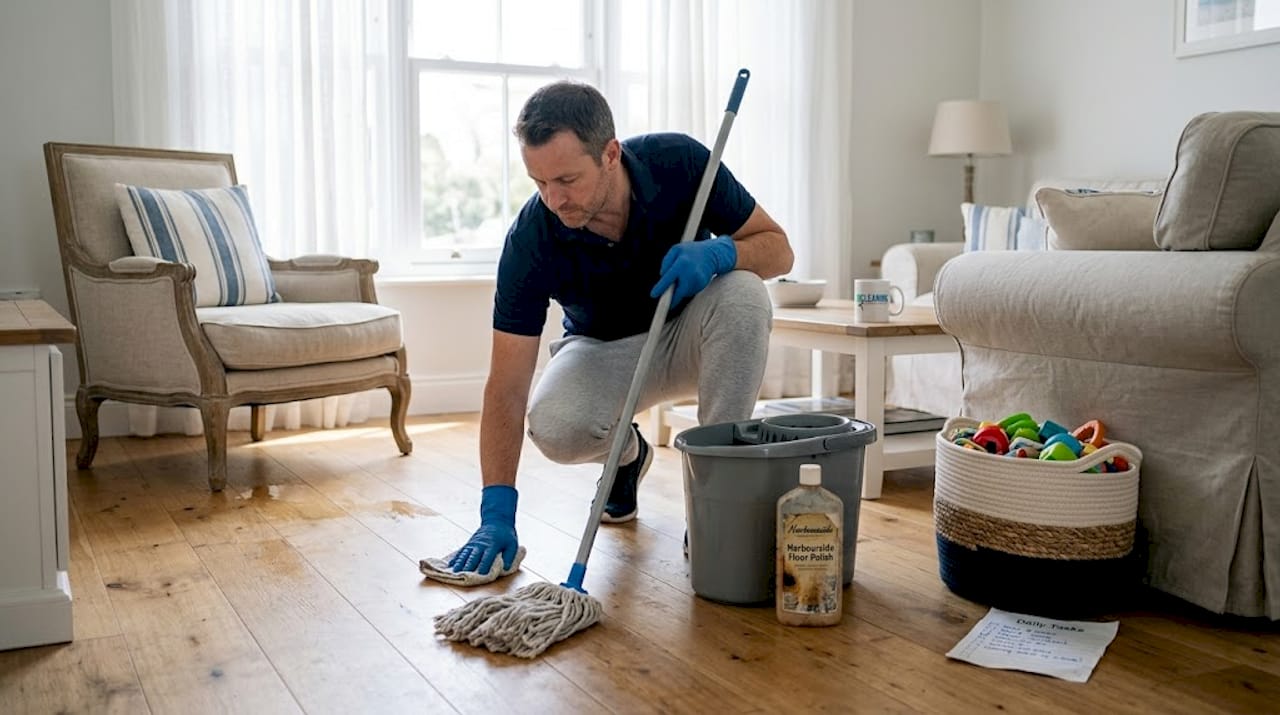
Over-applying cleaning products leaves a sticky residue on floors and worktops that attracts dust and grime far faster than if you had used less. Excess moisture, particularly on wooden floors, MDF units, or around window frames and skirting boards, seeps into joints and causes swelling, mould growth, and long-term structural damage.
Watch out for these specific over-application mistakes:
- Spraying directly onto a surface: Spray onto the cloth instead to control the amount of product used and prevent liquid from getting into hinges, electronics, or grout lines.
- Soaking floors when mopping: Wring your mop until it is barely damp. You are cleaning the surface, not watering it.
- Using too much carpet shampoo: Residue left in carpet fibres attracts soil rapidly, making the carpet look dirty again within days.
- Excess product on glass: One or two sprays of glass cleaner is enough. Using more leaves streaks and a hazy film.
- Over-applying wood polish: A thin, even coat buffed out fully is all you need. Excess polish builds up into a sticky, dull layer.
Pro Tip: When mopping hard floors, the surface should feel dry within two to three minutes of mopping. If it takes longer, you are using too much water or product. Adjust your technique until the floor dries quickly.
The same principle applies to commercial spaces. A busy kitchen or office that is over-saturated during cleaning creates damp conditions that encourage mould, which then becomes a far bigger problem to address.
Mistake 5: Forgetting high-touch and hidden spots
With main surfaces handled, it is easy to overlook the smaller but critical parts of your interior. These are the areas where bacteria accumulate fastest, yet they are routinely skipped during a standard clean.
High-touch surfaces and hard-to-reach areas harbour far more bacteria than the flat surfaces most people focus on. Light switches are touched dozens of times a day by multiple people but are rarely wiped down. Door handles, toilet flush buttons, and remote controls are similarly neglected.
Commonly missed spots to add to your routine:
- Light switches and plug sockets (use a barely damp cloth, not a wet one near electrics)
- Door handles and push plates
- The back and base of toilets, including the area around the fixings
- Underneath kitchen appliances (toaster, kettle, microwave base)
- Bin lids and the exterior of pedal bins
- Toothbrush holders and soap dispensers
- Fridge door seals and handles
- Stair rails and banisters
| Area | Cleaning frequency | Product |
|---|---|---|
| Light switches and handles | Weekly | Antibacterial wipe or spray |
| Toilet flush and cistern | Twice weekly | Disinfectant spray |
| Remote controls | Weekly | Antibacterial wipe |
| Under appliances | Monthly | Warm soapy water |
| Fridge seals | Monthly | Bicarbonate of soda solution |
| Stair rails | Weekly | Multi-surface spray |
Building sanitising high-touch areas into your regular routine rather than saving them for deep cleans dramatically reduces bacterial load in the home and is especially important in households with young children or elderly residents.
Mistake 6: Interior vehicle cleaning pitfalls
Cleaning mistakes extend beyond the home. The car interior is an area many UK homeowners clean themselves, yet it is easy to cause damage with the wrong approach.
Vehicle fabrics, dashboards, and door cards are not designed for harsh household chemicals. Over-wetting car interiors and using household cleaners on delicate materials risks staining, fading, and in the case of electronics, short circuits in areas like speaker grilles and infotainment surrounds.
Key dos and don’ts for car interior cleaning:
- Do blot stains, never rub. Rubbing spreads the stain and pushes it deeper into the fabric.
- Do use products specifically formulated for car upholstery and dashboards. These are pH-balanced for the materials used in vehicles.
- Do extract moisture after shampooing seats. Leaving damp fabric in a sealed car encourages mould and a persistent musty smell.
- Do not use bleach or multi-surface sprays on plastic trims. These degrade and fade the material over time.
- Do not use excessive water around the footwell. Wet carpets beneath the mats can cause corrosion on the floor pan and damage wiring looms.
- Do not clean electronic touchscreens with glass cleaner. Use a dry or very lightly dampened microfibre cloth only.
Taking the same careful approach to vehicle interiors as you would to a delicate surface in your home will protect the car’s value and keep the interior genuinely fresh.
Why skipping the basics is the most expensive mistake
After working in the cleaning industry for over 20 years, we have seen a clear pattern: the biggest, costliest mistakes are almost never about missing a specialist technique. They come from skipping the fundamentals that everyone assumes they already know.
Viral cleaning hacks are everywhere right now, from fizzing bicarbonate and vinegar combinations (which largely cancel each other out chemically and do very little) to neat lemon juice on surfaces that will be damaged by the acid. Social media makes these approaches look satisfying and effective. The reality is that a clean cloth, the right product used correctly, and a sensible cleaning sequence will outperform any trending shortcut every single time.
Real cleaning success comes from repeatable fundamentals. Clean tools before you start. Choose the right product for the surface. Let it dwell. Work top to bottom. Use less rather than more. These six principles, applied consistently, deliver results that no hack can match.
We have seen homes where expensive hardwood floors were dulled beyond recovery by well-meaning owners who used washing-up liquid weekly for years. We have seen bathrooms where grout had to be fully re-done because bleach was applied neat and repeatedly. The damage was not caused by neglect. It was caused by applying evidence-based cleaning methods incorrectly, often with the best intentions.
Consistency, patience, and attention to the basics will always beat a complicated regime of trendy products and elaborate techniques. The most effective clean is not the most impressive one. It is the one that is done correctly, every time.
Professional support for truly spotless spaces
Knowing the mistakes is one thing. Having the expertise and equipment to avoid them entirely is another.
At JR Cleaning, we bring over 20 years of professional experience to every job, whether that is a domestic home, a commercial premises, or a specialist area like a commercial kitchen cleaning contract that requires food-safe methods and strict hygiene compliance. We also offer professional carpet cleaning that uses the correct extraction techniques to remove residue and moisture fully, avoiding the over-wetting issues that cause so many DIY attempts to fall short. Fully insured and committed to the highest standards of safety and quality, we are here to take the guesswork out of cleaning entirely. Contact us today for a free quote.
Frequently asked questions
How often should I replace cleaning cloths and sponges?
Replace cloths and sponges weekly or sooner if they smell, because dirty tools spread bacteria and can make surfaces harder to clean effectively.
Is it safe to mix different cleaning products together?
No. Never mix products such as bleach and ammonia because they create toxic fumes that are genuinely dangerous, particularly in enclosed spaces like bathrooms.
What’s the best order for cleaning a room?
Always clean from the top down, starting with ceiling corners and light fittings, because top-to-bottom prevents re-soiling the surfaces you have already cleaned.
Why is dwell time important for cleaners and disinfectants?
Leaving disinfectants on for the label-recommended dwell time ensures bacteria and viruses are neutralised rather than simply spread across the surface.
What mistakes should I avoid when cleaning car interiors?
Avoid over-wetting fabrics and never use harsh household chemicals on vehicle materials, because car-appropriate products are formulated specifically to protect delicate trims and electronics.
Recommended
- What is interior cleaning? How professionals transform your home | J R Cleaning
- Window cleaning tips: Easy methods for spotless results | J R Cleaning
- Professional cleaning methods for spotless UK homes | J R Cleaning
- Achieve healthier spaces with professional deep cleaning | J R Cleaning

