J R Cleaning news

Health and safety cleaning guidelines for UK properties

Selecting a cleaning service sounds straightforward until you realise that the wrong choice can expose your family, staff, or customers to chemical hazards, cross-contamination, or compliance failures that carry serious consequences. Health and safety cleaning guidelines exist precisely to prevent these outcomes, and in the UK, they are underpinned by the Control of Substances Hazardous to Health (COSHH) regulations enforced by the Health and Safety Executive (HSE). Whether you own a home, manage a retail unit, or run a commercial kitchen, knowing what compliant cleaning actually looks like helps you make better decisions and avoid the risks that come with cutting corners.

Table of Contents

Key Takeaways

PointDetails
COSHH compliance is mandatoryCarry out site-specific risk assessments and provide PPE and training for all cleaning staff.
Safe chemical handlingStore chemicals securely, avoid dangerous mixtures like bleach and ammonia, and use spill kits promptly.
Effective cleaning methodsUse dust-free techniques and disinfect high-touch surfaces regularly with approved products.
Service selection tipsChoose cleaners with documented risk assessments, training, and proven adherence to safety guidelines.
Compliance benefitsProper cleaning protects health, prevents legal issues, and maintains property value efficiently.

Key criteria for compliant cleaning services

Before you hire anyone to clean your property, there are non-negotiable standards that any reputable service must meet. The most important of these sits within COSHH, which requires anyone using cleaning chemicals to understand and manage the risks those chemicals create.

What to verify before hiring:

  • COSHH risk assessments are completed and specific to your premises
  • Written records of chemical hazards are available on request
  • Staff training on chemical handling is completed before work begins
  • PPE (personal protective equipment) is supplied and worn appropriately
  • Risk controls are reviewed regularly, not just ticked off once
  • Employers with five or more members of staff must record all significant findings

Employers must carry out COSHH risk assessments for every cleaning chemical used, identifying hazards and reviewing the controls in place on a regular basis. This is not optional documentation, it is a legal requirement. A cleaning company that cannot produce these records is not compliant, and engaging them puts you at risk too.

Training is equally critical. Employers must provide training and supply PPE under COSHH regulations before cleaning staff handle any hazardous substances. This means the cleaner arriving at your premises should already know which gloves to wear for which product, what to do in a spill, and how to read a Safety Data Sheet (SDS).

How a compliant service manages risk:

  1. Conducts a site-specific COSHH assessment before starting work
  2. Identifies all chemicals to be used and their associated hazards
  3. Puts controls in place, such as ventilation, PPE, and dilution guidance
  4. Trains all staff and records that training formally
  5. Reviews and updates the assessment whenever products or conditions change

When managing cleaning contracts, these criteria should form the baseline of any agreement rather than being treated as optional extras.

Essential practices for handling cleaning chemicals safely

Even the most experienced cleaner can cause serious harm if basic chemical handling rules are ignored. The most dangerous combination in domestic and commercial cleaning is also one of the most common mistakes: mixing bleach with ammonia-based products. This reaction produces chlorine gas, which causes respiratory damage even at low concentrations. Never allow it to happen in your property.

Safe chemical handling in practice:

  • Store chemicals in a ventilated area, away from incompatible substances such as acids and alkalis
  • Cleaning chemicals must be stored securely away from incompatibles to prevent dangerous reactions
  • Always read the SDS for every product before use
  • Never decant chemicals into unlabelled containers
  • Implement a spill kit as standard equipment on every job
  • Respond to any spill immediately, contain it, ventilate the area, and dispose correctly

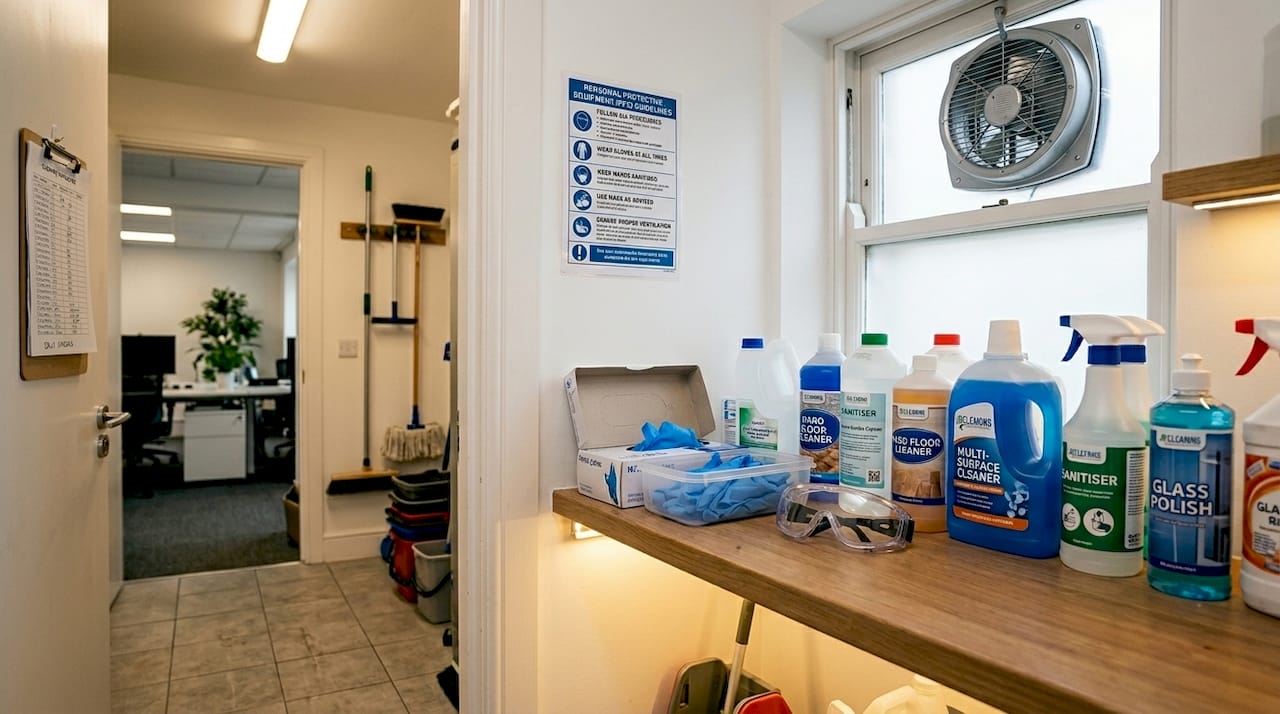
Gloves matter more than most people realise. PPE such as nitrile gloves, eye protection, and aprons must be worn when handling bleach and other corrosive substances. Latex gloves are not suitable for chemical resistance. This is a specific, practical distinction that any properly trained cleaning operative should know without being told.

Pro Tip: Ask your cleaning provider to show you the SDS folder they carry on site. If they do not have one or cannot produce it quickly, that is a strong indicator that their chemical handling practices are not up to standard.

1778778309409 Cleaner putting on gloves near cleaning chemicals - J R Cleaning

For more detail on what proper technique looks like in practice, the professional cleaning methods used by trained operatives differ significantly from ad-hoc approaches. Understanding disinfectant selection is also part of getting chemical safety right, as not all disinfectants are appropriate for all surfaces or environments.

Cleaning methods that enhance safety and hygiene

The way cleaning is carried out matters as much as the products used. Many standard cleaning habits, particularly in commercial environments, actively spread contamination rather than eliminate it.

Sweeping hard floors with a dry broom, for instance, pushes dust, allergens, and pathogens into the air where they remain suspended for extended periods. Vacuuming with a HEPA-filtered machine captures particles rather than redistributing them. This single change makes a measurable difference to indoor air quality, particularly in environments with vulnerable occupants.

Methods that meet hygiene and safety standards:

  • Vacuum rather than sweep, using HEPA filtration where possible
  • Clean surfaces before disinfecting: disinfectants cannot work effectively on soiled surfaces
  • High-touch surfaces require daily disinfection in high-traffic areas using HSE-approved disinfectants
  • Use colour-coded cloths and mops to prevent cross-contamination between zones
  • Select smooth, non-porous materials in food preparation and washroom areas where possible

Pro Tip: The clean-then-disinfect sequence is frequently skipped when time is short. However, disinfecting a visibly dirty surface wastes product and leaves you with a false sense of security. The dirt physically blocks the disinfectant from reaching the pathogens underneath.

MethodPurposeKey requirement
VacuumingDust and allergen removalHEPA filter recommended
Wet moppingSurface soil removalChange water between zones
DisinfectionPathogen eliminationClean surface first
Steam cleaningDeep sanitisationCorrect temperature sustained
Colour-coded equipmentCross-contamination preventionStrictly enforced by zone

You can find a fuller breakdown in this business property cleaning guide and within the detail on interior cleaning techniques that apply to both homes and commercial premises.

Comparing cleaning service options for compliance and safety

Not all cleaning services operate to the same standard. The table below illustrates how common approaches differ in terms of safety, compliance, and practical risk management.

Service typeCOSHH compliancePPE requiredChemical risk levelTraining standard
Manual disinfectionRequiredGloves, apron, eye protectionMedium to highMandatory before starting
Low-pressure washingRequiredFull respiratory and skin PPEMediumMandatory; exposure controls needed
Vacuum cleaningLower riskGloves, dust mask if allergens presentLowBasic awareness sufficient
Steam cleaningRequiredHeat-resistant gloves, eye protectionLow chemical, heat riskIntermediate
Specialist chemical cleaningRequiredFull PPE per SDSHighAdvanced mandatory

Employers should prefer low-pressure washers with full PPE in place and must ensure that exposure reduction measures are built into the process, not treated as optional.

When comparing providers, look beyond price. A lower quote may reflect reduced compliance, untrained staff, or the absence of COSHH documentation. These are not abstract concerns. They translate directly into risk for the people in your building.

Questions to ask any cleaning provider:

  • Do you carry out site-specific COSHH risk assessments?
  • Can your staff demonstrate correct PPE use for each chemical?
  • How do you manage chemical storage at our premises?
  • What is your spill response procedure?
  • How frequently do you review your risk assessments?

For specific settings, the office cleaning guide and retail cleaning guidelines provide context on what compliance looks like in practice across different environments.

Choosing the right health and safety compliant cleaning service

Once you understand what good looks like, the selection process becomes much more straightforward. Here is what to confirm with any provider before signing a contract.

Checklist for selecting a compliant service:

  • Documented COSHH risk assessments, specific to your site and regularly reviewed
  • Evidence of staff training, ideally with written records
  • Clear PPE policy with correct equipment provided by the employer, not left to individuals
  • Defined procedures for chemical storage, spill response, and incident reporting
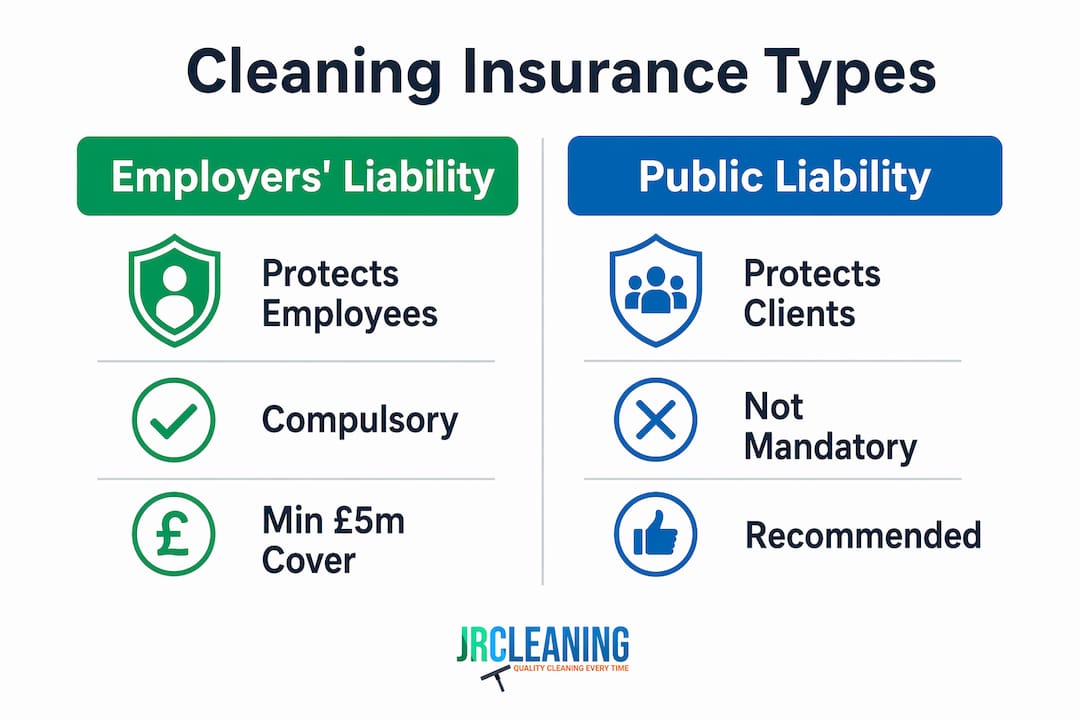
  • Public liability insurance with adequate cover
  • Willingness to share documentation upfront, not just on request after an incident

Request cleaners’ COSHH risk assessments and training records before work begins. A provider who hesitates to share these documents likely does not have them in order.

Pro Tip: Ask specifically whether the risk assessment is generic or site-specific. A generic document is almost always insufficient. Your premises have unique layouts, occupancy patterns, and chemical storage conditions that a generic template cannot address.

More guidance on what separates genuinely safe providers from those who merely claim to be is covered in detail on hiring expert cleaning companies.

The overlooked value of thorough health and safety cleaning compliance

Here is something most property owners only discover after something goes wrong: compliance is not just a legal obligation. It is the single most cost-effective investment in the long-term wellbeing of your building and the people in it.

The conversation about health and safety cleaning guidelines tends to centre on avoiding fines. That framing misses the bigger picture. Repeated exposure to cleaning chemicals without proper controls is a known cause of occupational asthma, dermatitis, and eye conditions. These conditions develop slowly and are often attributed to other causes until the pattern becomes undeniable. The cost, both human and financial, is entirely preventable.

There is also a reputational dimension that business owners consistently underestimate. A hygienically maintained environment communicates professionalism and care to every person who walks through the door. A poorly managed one, even if it looks superficially clean, carries risks that clients and staff can sense. The correlation between demonstrably safe environments and quality cleaning benefits, including property value and business reputation, is direct and measurable.

Perhaps the most counterintuitive insight from over two decades in this industry is this: the properties with the fewest cleaning incidents are rarely those that spend the most money. They are the ones that invest in site-specific assessments, insist on trained staff, and treat safety documentation as a working tool rather than a filing exercise. Getting the basics right consistently beats expensive reactive fixes every time.

Professional cleaning services that prioritise health and safety

If this article has made one thing clear, it is that meeting health and safety cleaning obligations requires more than good intentions. It requires documented processes, trained people, and the right equipment applied correctly every time.

1774551979294 jrcleaning - J R Cleaning

At JR Cleaning, every service we deliver is built around full COSHH compliance, from site-specific risk assessments to trained, PPE-equipped operatives who know their products and their responsibilities. Our residential and commercial cleaning services are tailored to the specific requirements of your property, whether you need routine office maintenance, specialist commercial kitchen cleaning, or professional gutter cleaning that meets exterior safety standards. We provide transparent records, regular safety reviews, and the peace of mind that comes from knowing your cleaning is handled by professionals with over 20 years of experience. Get in touch for a free quote today.

Frequently asked questions

What is a COSHH risk assessment and why is it important?

A COSHH risk assessment identifies hazards from cleaning chemicals and establishes controls to protect users and others, ensuring compliance with UK law. Employers must complete these assessments for all hazardous substances used on site and review them regularly.

Are cleaning chemicals required to be locked away?

Not always, but chemicals must be stored securely away from incompatible substances and in ventilated conditions; locked storage is specifically required where vulnerable individuals such as children could gain access.

What PPE is necessary when using bleach for cleaning?

Nitrile gloves, eye protection, and aprons are the standard recommended PPE for handling bleach and similar corrosive products under COSHH regulations; latex gloves are not a suitable substitute.

How often should high-touch surfaces be disinfected in commercial environments?

In high-traffic commercial settings, high-touch surfaces should be disinfected daily using HSE-approved disinfectants, always after thorough cleaning to maximise effectiveness.

Can I hire any cleaning service for my business regarding health and safety?

No. You should only engage services that can provide documented COSHH assessments and training records upfront, along with clear evidence of appropriate PPE use and chemical handling procedures.

What is builders cleaning? your complete UK guide

Many homeowners assume that once the last tradesperson leaves, a quick hoover and mop will sort everything out. That assumption is what builders cleaning exists to correct. What is builders cleaning, exactly? It is a specialised cleaning process carried out after construction or renovation work, designed to remove hazardous dust, debris, plaster residue, paint splatters, and adhesive residue that regular cleaning simply cannot handle safely. This guide walks you through what the process involves, why it matters for your health and property, and how to schedule it correctly so your home or business premises is genuinely ready for occupation.

Table of Contents

Key Takeaways

PointDetails
Specialised cleaning processBuilders cleaning is a critical, specialised service to remove hazardous dust and debris after construction work.
Two-stage cleaningThe process often includes an initial builders clean followed by a detailed final sparkle clean before occupancy.
Proper schedulingSchedule the final clean 24 to 48 hours before move-in to allow a touch-up and prevent dust settling again.
Professional equipment neededHEPA-filter vacuums and specialised tools are essential to safely and effectively clean construction dust and residues.
Health and safety benefitsProfessional builders cleaning ensures a safe, hygienic environment protecting occupants and preserving property value.

Understanding builders cleaning and its purpose

Builders cleaning is not a deeper version of your usual spring clean. It is a completely different discipline with a specific purpose: making a newly built or recently renovated property safe, navigable, and ready for the next phase, whether that is further trades working on site, a formal inspection, or eventual move-in. As the industry puts it, a builders clean removes bulk debris, dust, construction residue, and makes the site safe for further work.

Construction sites generate a type of contamination that is qualitatively different from domestic dust. Fine particles from cut plasterboard, sanded filler, ground concrete, and sawn timber settle on every surface, including inside cupboards, behind radiators, and within ventilation grilles. Professional cleaning at this stage is not a luxury; it is a practical necessity to prevent those particles from being disturbed repeatedly over weeks and months.

Here is what the initial builders cleaning phase typically targets:

  • Heavy debris such as off-cuts, packaging, fixings, and leftover materials
  • Plaster dust coating floors, skirting boards, and window frames
  • Paint splatters on glass, tiles, and hard flooring
  • Adhesive residue from tape, labels, and protective film on surfaces
  • Cement and grout haze on tiled walls and floors
  • General grime and staining from boots, tools, and equipment

Knowing the difference between builders cleaning and regular domestic cleaning also helps set realistic expectations. For practical guidance on how to prepare your property afterwards, the after builders cleaning tips from JR Cleaning are a useful starting point.

Stages of builders cleaning: from initial to final sparkle clean

1778686992381 Infographic comparing builders to regular cleaning - J R Cleaning

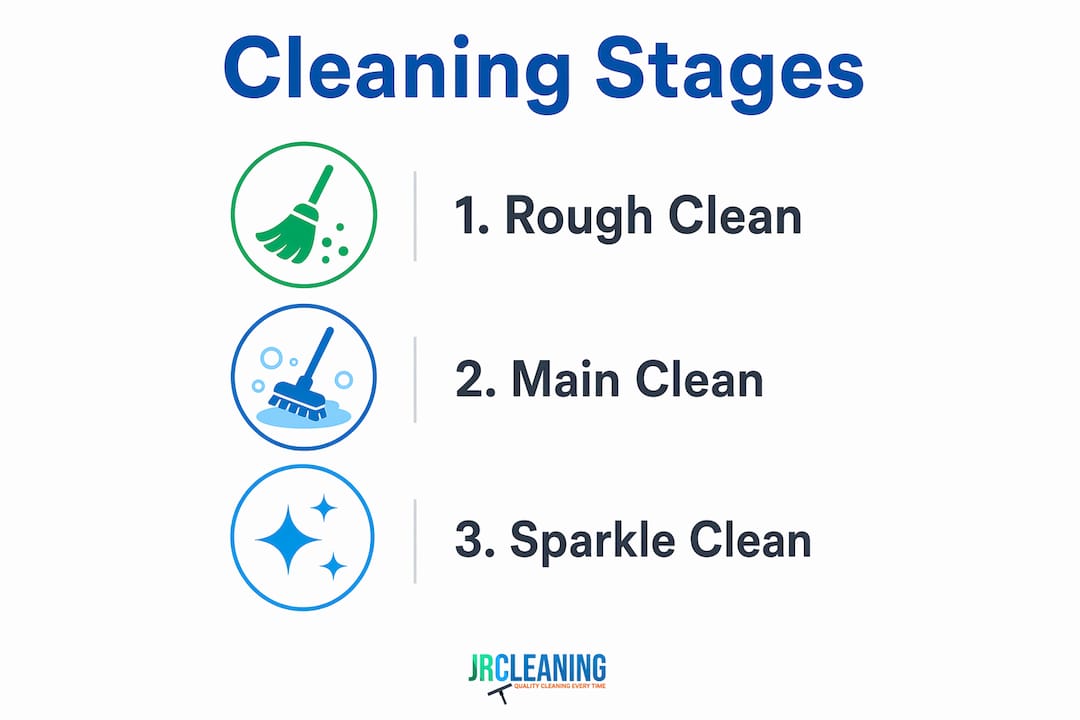
Builders cleaning consists of at least two levels: an initial builders phase and a final sparkle clean, carried out after snagging and trades have finished. Understanding the difference between these two stages is essential for planning your project handover correctly.

StageTimingMain goalKey tasksEquipment used
Initial builders cleanAfter major construction, before finishing tradesRemove bulk debris and hazardous dustSweeping, debris removal, vacuuming surfaces, washing down wallsIndustrial wet/dry vacuums, squeegees, stiff brushes
Final sparkle clean24 to 48 hours before move-in or handoverCreate a polished, hygienic, move-in ready spaceWindow polishing, sanitising kitchens and bathrooms, removing fingerprints, deep floor cleanHEPA-filter vacuums, microfibre cloths, streak-free glass cleaners

The initial clean is about safety and access. Trades cannot work effectively, and inspections cannot be conducted properly, in a site full of dust and debris. This stage is not about making anything look beautiful; it is about making it functional and safe.

1778686444949 Worker cleaning windows in new build kitchen - J R Cleaning

The final sparkle clean is where presentation matters. At this point, all construction work is complete, snagging has been signed off, and the property needs to look and feel immaculate. This is the clean your estate agent, tenant, or client will see.

Key considerations for each stage:

  • HEPA filtration matters: Standard vacuum cleaners release fine dust back into the air. HEPA-filter vacuums trap particles down to 0.3 microns, which is critical for post-construction environments.
  • Order of work: Always clean top to bottom. Dust dislodged from ceilings and cornices will fall onto floors you have not yet cleaned.
  • Protect surfaces: Avoid abrasive tools on newly installed surfaces such as composite worktops or brushed steel fittings.

Pro Tip: Never schedule the final sparkle clean on the same day as a snagging inspection. Finishing trades often return to correct minor defects, which will undo the sparkle clean and require a repeat visit.

For a broader look at hiring professional cleaning and what to expect from a specialist team, JR Cleaning’s resource covers the essentials clearly.

When to schedule builders cleaning for UK properties

Timing is the part most homeowners and project managers underestimate. Book too early and the clean gets undone by subsequent trades. Book too late and you create delays to handover, move-in, or business opening.

Here is a practical scheduling sequence to follow:

  1. Confirm major construction is complete. This means structural work, plumbing first fix, electrical first fix, plastering, and flooring are all done before you book the initial builders clean.
  2. Schedule the initial builders clean. This allows finishing trades (painters, kitchen fitters, bathroom installers, decorators) to work in a clean, safe environment without constantly disturbing settled dust.
  3. Complete snagging. Walk the property with your contractor and note any remaining work. All rectification should happen before the sparkle clean.
  4. Book the final sparkle clean 24 to 48 hours before move-in. Scheduling the clean 24 to 48 hours prior allows a touch-up clean if dust resettles before the handover date.
  5. Allow a contingency buffer. If a last-minute snag requires a trade to return, you may need a light refresh before the official handover. Build this into your timeline.

For commercial properties, the stakes are even higher. A delayed handover can mean business disruption, lease penalties, or damage to client relationships. Coordinating the builders cleanup process with your project manager and main contractor from the start avoids these problems entirely.

Pro Tip: In the UK, the run-up to Christmas, summer school holidays, and bank holiday periods tend to be exceptionally busy for cleaning companies. If your renovation is finishing near any of those windows, book your cleaning team at least four weeks in advance.

Understanding professional cleaning methods used in post-construction environments will also help you brief a cleaning company accurately when the time comes.

What tasks does builders cleaning cover?

A thorough builders cleaning checklist covers far more than most people expect. Here is a breakdown of what each stage typically includes, so you know exactly what you are paying for and what to check on completion.

Initial builders clean tasks:

  • Removal of all loose debris, off-cuts, and rubbish from all rooms
  • Vacuuming of all surfaces from ceiling roses to skirting boards
  • Sweeping and washing of hard floors to remove grit and plaster residue
  • Removal of plaster dust from walls, doors, and window reveals
  • Cleaning of all internal glazing to remove paint, plaster, and dust
  • Wiping down all newly installed surfaces before finishing trades begin

Final sparkle clean tasks:

  • Full polish of all glass, mirrors, and shower screens
  • Sanitising of kitchen units, worktops, sinks, and appliances
  • Deep clean of all bathroom and en-suite fixtures
  • Removal of any remaining fingerprints, smears, and marks on paintwork
  • Polishing of hard floors and cleaning of carpet if installed
  • Final check of cupboards, drawers, and storage spaces
AreaInitial clean focusSparkle clean focus
FloorsDebris removal, grit sweep, basic washDeep clean, polish, streak-free finish
WindowsPaint and plaster removalFull polish, frame wipe, sill clean
KitchenDust and debris clearSanitise surfaces, clean appliances
BathroomDust removal, basic wipeFull sanitise, polish fixtures and glass
Walls and skirtingsPlaster dust removalSmear and mark removal

As the builders cleaning scope makes clear, it covers dust removal, debris collection, and removal of adhesive and paint overspray across floors, walls, windows, kitchens, and bathrooms.

Pro Tip: Before the sparkle clean begins, switch on all lights including feature lighting and inspect every corner. Shadows hide dust. Cleaning in well-lit conditions makes a significant difference to the quality of the final result.

For a wider view of how thorough cleaning protects both health and property value, the quality cleaning benefits resource sets out the evidence well.

Benefits of professional builders cleaning for your property

The case for professional builders cleaning services goes well beyond aesthetics. The construction environment creates genuine health risks that persist long after the last tool is packed away.

Construction dust contains harmful crystalline silica and fibreglass particles that ordinary vacuums cannot capture, making professional cleaning essential for safety. Breathing in silica dust over time is linked to serious lung conditions including silicosis, a progressive and irreversible disease. This is not a remote risk; it is a documented hazard in post-construction environments.

Beyond health, the benefits of professional builders cleaning include:

  • Surface protection: Construction residue left on newly installed surfaces, especially natural stone, composite materials, and hardwood floors, can cause permanent staining or etching if not removed promptly.
  • Property value: A professionally cleaned property makes a far stronger impression on buyers, tenants, or visiting clients than one that shows evidence of cut corners.
  • Safety compliance: For commercial properties, occupational health and safety obligations require that the environment is safe before staff or the public enter. Professional cleaning contributes directly to meeting those obligations.
  • Project efficiency: A clean site at each stage keeps subsequent trades working efficiently, which reduces the overall project timeline.

“Proper post-construction cleaning is not the final item on a to-do list. It is the step that determines whether everything else, the workmanship, the finishes, the materials, is presented and experienced as intended.”

Understanding the relationship between expert hygiene and safety and property outcomes is what separates well-managed projects from those that disappoint at the final moment. For facilities managers and business owners, environmental cleaning essentials provide an additional layer of context around post-construction hygiene.

What most people miss about builders cleaning: an expert’s perspective

After more than 20 years in the cleaning industry, the single most common mistake we see is this: clients treat builders cleaning as an afterthought rather than a planned phase of the project. It gets scheduled at the last minute, handed to a general domestic cleaner, or in some cases, attempted as a DIY job with a household vacuum and a bucket of water.

The results are predictably poor. Fine silica dust gets redistributed rather than extracted. Paint residue on glazing gets smeared rather than removed. And the sparkle clean, if it happens at all, takes place while trades are still on site, which means it needs doing again.

The real difference between builders cleaning and a standard clean is not just the tasks involved; it is the equipment, the sequencing, and the understanding of what construction contamination actually consists of. A domestic cleaner working with a standard vacuum is not equipped to deal with particles that pass straight through a non-HEPA filter. That is not a criticism; it is simply the wrong tool for the task.

There is also a coordination element that people consistently underestimate. The initial clean and the sparkle clean need to be booked around the project programme, not after it finishes. If you are waiting for the builder to confirm practical completion before you even call a cleaning company, you are already a week behind. The professionals who manage this process well build their cleaning programme into the project schedule from the start, the same way they plan electrical sign-off or building control inspections.

The broader lesson is straightforward. Why hire a cleaning company for builders cleaning rather than attempting it yourself? Because the consequences of getting it wrong are not just aesthetic. They affect health, timelines, and the condition of materials that cost significant money to install correctly in the first place.

Professional builders cleaning services for your UK property

If your renovation or new build is approaching the final stages, now is exactly the right time to put a cleaning programme in place.

1774551979294 jrcleaning - J R Cleaning

At JR Cleaning, we provide specialist after builders cleaning services for both residential and commercial properties across the UK. Our teams handle everything from the initial post-construction debris clear through to the final sparkle clean, using HEPA-filter equipment, professional-grade cleaning agents, and methods that protect your newly installed surfaces. We work around your project schedule to avoid disruption and ensure your property is genuinely ready for handover or occupation. Whether you are a homeowner completing a kitchen extension or a business owner handing over a commercial fit-out, our cleaning services are tailored to your specific needs. Contact JR Cleaning today for a free, no-obligation quote.

Frequently asked questions

What exactly is builders cleaning?

Builders cleaning is a specialised cleaning service that removes dust, debris, and construction residues to make a property safe and ready for occupation. As the builders clean definition makes clear, it prepares the site by removing bulk debris, dust, and construction residue.

How is builders cleaning different from regular house cleaning?

Unlike regular cleaning, builders cleaning uses HEPA-filter equipment and specialist methods to handle hazardous materials. Construction dust requires HEPA filtration because it contains crystalline silica and other harmful particles that standard vacuums cannot safely capture.

When should I schedule builders cleaning during my renovation project?

Schedule the initial clean once major construction is finished and before finishing trades begin, then book the sparkle clean 24 to 48 hours before handover or move-in. A post-build clean 24 to 48 hours prior allows time for a touch-up if dust resettles.

Can I do builders cleaning myself?

It is not recommended. Standard vacuums cannot capture the harmful fine dust particles produced by construction work, and without the correct PPE and equipment, attempting it yourself creates health risks and typically produces poor results.

What areas of the property are covered during builders cleaning?

Builders cleaning covers all primary surfaces including floors, walls, skirting boards, windows, kitchen units, and bathroom fixtures. The main focus areas include floors, walls, windows, skirtings, kitchens, and bathrooms, addressing all dust, debris, adhesives, and construction residues.

Cleaning industry trends to boost efficiency in 2026

The UK cleaning industry is under more pressure than ever to evolve quickly, and the businesses that thrive will be those making decisions based on evidence rather than instinct. With the sector employing over 1.51 million people and valued at nearly £72bn, the stakes for getting operational decisions right have never been higher. From robotics and cobotics to the genuine limits of eco-friendly demand, understanding where the sector is heading gives business owners and property managers a genuine competitive edge. This article breaks down the trends that will define 2026, cutting through the buzzwords to focus on what actually moves the needle.

Table of Contents

Key Takeaways

PointDetails
Industry growth continuesThe UK cleaning sector now employs more than 1.51 million people and is valued at £72 billion.
Robotics become mainstreamRobotic and cobotic cleaning technologies now deliver real operational impact across commercial settings.
Sustainability versus costsEco-friendly cleaning is desired but most customers remain unwilling to pay extra, requiring balanced solutions.
Rising cost pressuresCleaning costs are forecast to rise significantly by 2030, making value-for-money and efficiency critical.
Evidence-based operationsDigital logs and measurable cleaning activity are now key to service assurance and compliance.

Sector growth and changing business landscape

The UK cleaning, hygiene and waste industry is not just surviving, it is growing at a steady pace. According to the BCC’s annual research report, the sector is valued at close to £72bn, with 78,915 businesses operating and 1.51 million people employed across cleaning, hygiene and waste management in 2025. That scale of employment alone makes workforce management one of the most critical variables in any cleaning operation.

Metric2025 figures
Sector value~£72bn
Businesses operating78,915
Total employment1.51 million

Despite that growth, structural pressures are mounting. Labour shortages, wage inflation, and rising compliance expectations are forcing operators to rethink their staffing models. The businesses gaining ground are those treating workforce challenges not as a constraint but as a prompt to innovate. That might mean investing in upskilling existing teams, automating repetitive tasks, or restructuring service schedules to make better use of available hours.

“The sector’s continued growth masks significant internal pressures around recruitment, retention, and rising operational costs that demand strategic rather than reactive responses.” — British Cleaning Council

For property managers and business owners, the practical implications are clear. You need 2026 interior cleaning must-haves that reflect the reality of tighter budgets and higher standards simultaneously. Exploring top cleaning services built around modern operational frameworks gives you a clearer picture of what a high-performing service actually looks like. The major operational priorities for 2026 include:

  • Managing labour costs without compromising on quality
  • Meeting tightening compliance and documentation requirements
  • Integrating technology that delivers genuine, measurable returns
  • Balancing sustainability goals with client cost sensitivity

With this sector expansion in mind, the trends shaping its future deserve close attention, starting with the technology that is getting the most industry attention right now.

Robotics, automation and cobotics: Driving measurable impact

Robotic cleaning technology has shifted from an interesting conversation piece to a genuine operational tool. Industry data shows that robotic cleaning is the top trend for 2026, cited by 28% of survey respondents, up dramatically from just 2% the previous year. That is not a gradual uptick. That is a sector reaching a tipping point.

The key distinction to understand is between fully autonomous robots and “cobots,” which stands for collaborative robots. Cobots are designed to work alongside human operatives rather than replace them. The British Cleaning Council notes that automation and robotics are being increasingly deployed to complement staff and support improved standards, not simply cut headcount.

Technology typeBest use caseKey benefit
Autonomous floor robotsLarge open floor areasConsistent, labour-saving coverage
CobotsMixed-task environmentsAugments staff efficiency
DronesExternal facade and roof inspectionsAccess without scaffold costs

Drones, for example, are increasingly used in facade inspection and automation scenarios, making it possible to survey hard-to-reach exterior surfaces without costly scaffolding. This has direct relevance for property managers overseeing multi-storey commercial buildings.

Understanding robotic and automated cleaning methods is increasingly relevant even if your properties are primarily residential. The technology entering commercial environments today tends to filter through to residential cleaning practice within a few years.

Pro Tip: Before committing to a full robotic deployment, run a small pilot on a single site for 60 to 90 days. Measure labour hours saved, surface coverage achieved, and any complaints raised during the period. Use that data to make a justified business case before scaling.

The businesses making the most of automation are those that are realistic about its limitations. Robots excel at predictable, repetitive routes on flat, open surfaces. They struggle with clutter, irregular layouts, and tasks requiring judgement. Pairing them thoughtfully with skilled operatives, rather than positioning them as a straight replacement, is where the real gains come from.

Sustainability, cost control and value for money: The balancing act

Sustainability has become a permanent fixture in procurement conversations, but the financial reality surrounding it is more nuanced than many suppliers and service providers want to admit. A leading UK cleaning industry survey for 2026 reveals that while an impressive 87% of the sector rates sustainability as important, only around one third of customers are actually willing to pay more for eco-friendly solutions.

That gap is significant. It tells us that sustainability is now a baseline expectation rather than a premium selling point. Clients want green credentials baked into the service, but they are not necessarily prepared to fund the added cost of achieving them.

“Sustainability is no longer optional, but it must be cost-neutral to be commercially viable for most clients.”

For business owners and property managers, this creates a practical challenge: how do you meet environmental expectations without absorbing unsustainable cost increases? The most effective operators are bundling green credentials with cost efficiency rather than positioning them as separate offerings. Here is how they are doing it:

  1. Product rationalisation. Switching to concentrated, multi-surface formulations reduces both packaging waste and storage costs. Fewer products means simpler training and fewer ordering errors.
  2. Microfibre and reusable systems. Replacing single-use materials with high-quality microfibre reduces long-term supply costs and environmental impact simultaneously.
  3. Route and schedule optimisation. Cutting unnecessary visits through data-driven scheduling reduces vehicle emissions and fuel costs at the same time.
  4. Digital reporting. Replacing paper-based audit trails with digital logs reduces paper waste and speeds up compliance documentation for sustainability reporting.
  5. Annual environmental audit. Measuring the actual impact of changes over 12 months provides the ROI evidence needed to justify continued investment.

Pro Tip: Commission a simple environmental impact audit at the end of each calendar year. Compare chemical usage, water consumption, and waste output year-on-year. Presenting these figures to clients builds trust and supports contract renewals more effectively than any brochure.

For anyone managing commercial or mixed-use properties, our essential business property cleaning guide covers practical steps for aligning your cleaning specification with both sustainability goals and budget constraints. The key message is that green cleaning done well should lower your total cost of ownership, not inflate it.

The financial environment facing UK cleaning operators in 2026 is genuinely challenging, and property managers and business owners need to plan for it rather than react to it. Forecasts from the facilities management sector indicate that cleaning costs are expected to rise by approximately 23% between 2025 and 2030, with labour as the primary driver of that increase.

1778571043387 Managers review cleaning cost spreadsheets - J R Cleaning

To contextualise that figure: a cleaning contract that costs £50,000 today could cost £61,500 or more by the end of the decade if current trends hold. That is not a minor adjustment. It requires procurement strategies built for the medium term rather than reviewed annually in a reactive way.

Cost category2025 baselineProjected change by 2030
LabourHighPrimary driver, significant uplift
EnergyMediumUpward trajectory
Materials and chemicalsMediumModerate increase
Overall cleaning costsBenchmark+23% forecast

The rise of digital logs and smart scheduling platforms is partly a response to these pressures. When clients can see exactly what cleaning activity has taken place, verified by time-stamped digital records rather than a supervisor’s word, the value of the service becomes visible and defensible. This matters enormously when contract renewals come around.

Here is a practical checklist for managing cleaning contracts with cost efficiency and compliance in mind:

  1. Review service specifications at least every six months to remove tasks that are no longer required.
  2. Insist on digital proof of service for each site visit, including timestamps and photographic records.
  3. Benchmark current contracts against market rates annually using published data from FM industry bodies.
  4. Include performance indicators tied to measurable outcomes, such as complaint rates and audit scores, rather than activity alone.
  5. Build energy and wage inflation assumptions into multi-year contracts to avoid budget shocks.

The office cleaning guide for UK businesses provides a clear breakdown of what a well-structured cleaning specification looks like in practice, which makes it easier to hold suppliers accountable. For those managing contracts across multiple sites, our guidance on cleaning contract compliance goes into detail on how to structure agreements that protect your interests as costs rise.

Why real progress in cleaning depends on data and visibility, not buzzwords

Here is an uncomfortable observation from over 20 years working across cleaning contracts: most cleaning failures are not failures of technology or product choice. They are failures of visibility.

A building looks clean. A manager assumes it is clean. Nobody is checking whether the right areas were cleaned at the right frequency with the right methods. Then an inspection happens, or a tenant complains, and the absence of documented evidence becomes a serious contractual and reputational problem. This is appearance-only service assurance, and it is completely outdated for how modern facilities management works.

The most significant operational trend for 2026 is not robotics or green chemistry. It is evidence and visibility. Clients increasingly want documentation of cleaning activity through digital logs and compliance-by-design systems rather than relying on appearance alone. The technology is only powerful when it is paired with transparent reporting that clients can actually access and understand.

This is where most businesses get it wrong. They invest in new equipment or new products, then continue to rely on paper sheets or verbal assurances to prove the work was done. The equipment investment delivers limited returns because the trust and accountability infrastructure has not been built alongside it.

Our contrarian recommendation: before you invest in your next piece of cleaning technology, invest in training your staff to document their work digitally. Build the culture of evidence first. Then the technology has something meaningful to plug into. Robust contract compliance strategies are the foundation that makes every other trend actually deliver results.

The businesses that will lead the cleaning industry through 2026 and beyond are not necessarily those with the most sophisticated robots or the most impressive sustainability credentials. They are the ones whose clients trust them implicitly because every service visit is documented, measurable, and auditable.

Stay ahead: Professional cleaning solutions for UK businesses

The trends outlined in this article represent real changes in how cleaning services are procured, delivered, and evaluated across the UK. Acting on them requires not just awareness but the right partner to implement them effectively.

1774551979294 jrcleaning - J R Cleaning

At JR Cleaning, we have been delivering high-standard professional cleaning services for over 20 years, adapting our methods as the industry evolves. Whether you need fully documented commercial cleaning with digital compliance trails, specialist commercial kitchen cleaning that meets hygiene regulations, or reliable gutter cleaning services to protect your property investment, we tailor every service to your specific operational requirements. Get in touch for a free, no-obligation quote and find out how we can help you stay compliant, efficient, and ahead of rising costs.

Frequently asked questions

What is the biggest challenge facing the UK cleaning industry in 2026?

The rising cost of doing business is the top operational challenge, driven primarily by increasing labour costs and wage inflation across the sector.

How are robotics impacting cleaning operations?

Robotics are moving from theoretical interest to practical deployment, with 28% of respondents naming robotic cleaning the top trend for 2026, compared to just 2% the previous year.

Are UK customers willing to pay more for eco-friendly cleaning?

Only around one third of clients are prepared to pay a premium for sustainable, eco-friendly cleaning solutions, making cost-neutral green strategies essential.

Will cleaning costs rise in the next few years?

Yes. Cleaning costs are forecast to rise by approximately 23% between 2025 and 2030, with labour costs identified as the primary driver of that increase.

Spot the signs you need professional cleaning

Most homeowners and business owners reach a point where they wonder whether standard cleaning is actually doing the job. You mop, scrub, and spray, yet something still seems off. That lingering smell won’t shift, the mould keeps coming back, or there’s a stain no product seems to budge. Knowing when to step back and call in professional help is not always obvious, and delaying that decision can cost far more than the cleaning itself. This guide walks you through the clearest warning signs that your property needs expert attention, and explains what professional intervention actually involves.

Table of Contents

Key Takeaways

PointDetails
Mould indicates expert needVisible mould or ongoing dampness often requires professional deep cleaning to prevent recurrence.
Pest activity is a red flagSigns of pests demand more than simple cleaning and call for specialist contamination removal.
Odours mean underlying issuesStubborn smells that linger after cleaning could signal hidden problems best handled by professionals.
Professional help prevents damageEarly intervention by cleaning experts safeguards health and long-term property value.

Visible mould or persistent damp problems

Mould is one of the most common and most misunderstood problems in UK properties. Many people assume a spray of bleach and a wipe-down is enough to deal with it. Sometimes it is. But in many cases, that surface clean only removes what you can see while the root cause carries on unchecked.

The warning signs to look out for include:

  • Black or green patches on walls, ceilings, window frames, or grout lines
  • Musty or earthy odours in rooms that are otherwise clean
  • Bubbling, peeling, or discolouration on paintwork or wallpaper
  • Condensation that recurs even after ventilation improvements
  • Soft or spongy wall surfaces suggesting moisture has penetrated deeply

When any of these appear repeatedly despite your best efforts, the problem is almost certainly deeper than surface level. A professional mould removal service will not simply clean the visible growth. They will identify the source of moisture, apply specialist disinfectants to affected surfaces, and take measures to prevent the mould returning.

As Biohazard Cleaners note, professional mould cleaning goes beyond surface removal to include disinfecting affected areas and actively preventing recurrence. That distinction matters enormously. Without treating the cause and disinfecting thoroughly, mould will be back within weeks.

“Surface mould cleaning without addressing the underlying moisture source is not a solution. It is simply postponing the problem while the damage quietly worsens behind your walls.”

The black mould indicators that signal serious risk include patches larger than a 30cm square, mould in multiple rooms, or symptoms such as persistent coughing, sneezing, or skin irritation in occupants. Black mould in particular produces mycotoxins that can affect respiratory health, especially in young children, the elderly, and those with asthma. If you recognise these patterns, reading more about a black mould removal service can help clarify the appropriate course of action.

Pro Tip: Before calling a professional, photograph the affected areas over several days to show the extent of spread. This helps the expert assess severity and quote accurately.

With damp and mould as clear red flags, let’s explore other conditions that signal professional help is required.

Pest infestations and contamination risks

Discovering signs of a pest infestation is deeply unsettling. Whether it’s mice, rats, cockroaches, or birds nesting in your roof space, the immediate instinct is often to clean everything vigorously and hope the problem disappears. Unfortunately, this approach rarely works, and it can actually spread contamination further if not done correctly.

Here’s how to recognise a pest problem that demands professional cleaning rather than DIY efforts:

  1. Droppings near food storage, skirting boards, or in cupboards indicate active rodent or insect activity.
  2. Unusual scratching or scurrying noises in walls, ceilings, or under floors during quiet hours.
  3. Gnawed packaging, wiring insulation, or woodwork is a strong sign of rodents nesting nearby.
  4. Ammonia-like or musty smells in areas that are otherwise clean can indicate urine trails or nest material.
  5. Visible nests, droppings, or feathers in loft spaces, gutters, or ventilation ducts.

The contamination that follows pest activity is not always visible. Bacteria, viruses, and allergens from droppings, urine, and shed fur can permeate soft furnishings, air ducts, insulation, and flooring. This is why expert hygiene and safety practices matter so much in these situations.

As Pro Cleaning Company explains, pest infestation cleaning involves deep removal and restoration to a safe and hygienic state, explicitly linking pest presence to serious health hazards and contamination risk. Bespoke professional remediation is often required because ordinary cleaning simply cannot address the full extent of the problem.

1778504874714 Cleaner using HEPA vacuum after pest activity - J R Cleaning

Statistic to consider: Rodent droppings and urine can carry Salmonella, Listeria, and Hantavirus. These pathogens can survive on surfaces for days to weeks, meaning even a brief infestation can leave a property genuinely hazardous without thorough remediation.

Understanding how cleaning safeguards health and property value is particularly relevant here. An unaddressed pest contamination does not just affect the occupants’ wellbeing. It can trigger regulatory issues for businesses, trigger insurance complications, and significantly affect the value of a property if discovered during a survey.

Pro Tip: Do not dispose of droppings or nest material without wearing gloves and a face covering. Disturbing dried droppings can release airborne particles. Let professionals handle removal if the infestation has been active for more than a few days.

While pests and mould trigger obvious concern, persistent odours and severe grime may be subtler but equally critical warning signs.

Stubborn odours or extreme build-up

There is a category of cleaning problem that creeps up slowly. It is not dramatic like a mould patch or a mouse in the kitchen. Instead, it is the persistent cooking smell that won’t leave the walls, the bathroom that still smells stale despite weekly scrubbing, or the commercial kitchen with grease build-up that simply reappears days after cleaning.

Strong, lingering odours after regular cleaning are one of the clearest signs that hidden contaminants are present. These smells often come from sources that standard products cannot reach or neutralise.

Key situations where professional intervention beats DIY every time:

  • Persistent cooking or grease smells in kitchens where splatter has penetrated behind appliances, under units, or into extractor fan ducting
  • Bathroom and toilet odours that persist despite surface cleaning, usually caused by limescale harbouring bacteria in areas that are difficult to access
  • Cigarette smoke contamination absorbed into walls, ceilings, carpets, and soft furnishings over months or years
  • Pet odours and staining where urine has soaked into flooring, subfloor materials, or upholstery padding
  • Communal areas in commercial premises where foot traffic, spills, and irregular cleaning have created layers of embedded grime

Industrial-grade equipment and specialist chemicals make a genuine difference in these cases. A professional can use hot water extraction, enzyme-based treatments, steam cleaning at high temperatures, and industrial degreasers that are not available over the counter. The goal is not just to mask the smell but to eliminate the source.

ProblemDIY limitProfessional approach
Grease build-upSurface spray rarely penetratesIndustrial degreasers and steam cleaning
LimescaleDomestic descalers work on visible areasAcid-based treatments and specialist tools
Pet urine odourMasks smell temporarilyEnzyme treatments that break down uric acid
Embedded grime on tilesScrubbing discolours groutPressure washing and grout-specific products
Smoke contaminationAir fresheners ineffectiveOzone treatment and specialist wall cleaning

For practical guidance on maintaining results in between professional visits, the advice on interior cleaning must-haves is worth reviewing. For a broader understanding of techniques used by experts, the overview of professional cleaning methods provides useful context on why their results last longer.

Pro Tip: If an odour gets worse when heating is turned on, it is often a sign that contaminants are present in the ventilation system or on heating surfaces. This is a strong indicator that professional deep-cleaning of the entire affected area is needed, not just the visible surfaces.

Comparing the signs across these issues helps to see when professional cleaning is truly the best option.

When regular cleaning isn’t enough: Comparison of warning signs

Use this table as a quick reference to judge whether a situation has moved beyond routine maintenance and into professional territory.

Warning signRoutine cleaning adequate?Professional cleaning needed?Urgency level
Small surface mould patch, no recurrenceYesNoLow
Recurring mould, musty smell, wall damageNoYesHigh
Occasional insect sightingPossiblyMonitor closelyMedium
Droppings, gnaw marks, active infestationNoYesUrgent
Mild lingering smellPossiblyIf persistent beyond 2 weeksMedium
Smoke, pet, or sewage odour in fabric or wallsNoYesHigh
Surface grease in kitchenYesNoLow
Grease behind appliances, in ductsNoYesMedium
Limescale on visible tapsYesNoLow
Heavy limescale in pipes, under fittingsNoYesMedium
Standard dirt and dustYesNoLow
Years of built-up grime, embedded stainingNoYesHigh

This comparison makes clear that the same category of problem can be either routine or serious depending on its extent, location, and persistence. If the right-hand column applies to your situation, it is time to pick up the phone.

Now that you can spot the signs, it is time to consider the unique advantages expert cleaning provides and the pitfalls of delaying action.

What most people miss about calling in the experts

After more than two decades working in professional cleaning, the pattern we see most often is not ignorance. It is hesitation. People know something is wrong. They can smell it, see it, or feel it. But they keep trying one more product, one more weekend of scrubbing, hoping to avoid the cost of bringing someone in.

Here is the uncomfortable truth: waiting nearly always makes the problem more expensive to fix. A mould patch addressed early might take a professional half a day. Left for six months, it might mean wall replastering, redecoration, and a full remediation programme. A pest infestation caught quickly may need a single thorough clean. Left for a season, it can mean contaminated insulation, damaged wiring, and a deep-clean of multiple rooms.

There is also a misconception that professional cleaning is essentially the same as regular cleaning, just done more thoroughly. In reality, professionals bring industrial equipment, specialist chemicals, and trained expertise that produce fundamentally different results. They are also trained to spot secondary problems during a clean, from structural damp behind tiles to early pest signs in loft spaces, that a homeowner simply would not notice.

Another thing most people underestimate is the health cost of delay. Mould, pest contamination, and chemical build-up all affect air quality. The impact builds gradually, which makes it easy to miss until someone in the household starts experiencing unexplained respiratory issues, allergies, or fatigue.

We also find that commercial clients sometimes delay because they worry about operational disruption. In practice, most professional cleaning can be scheduled outside business hours, minimising disruption while protecting the health of staff and customers. The reputational risk of an environmental health inspection finding poor hygiene standards is far greater than the temporary inconvenience of a scheduled deep-clean.

The article on raising cleaning standards covers this point well, particularly for businesses that want to stay ahead of compliance requirements rather than reacting to problems after they arise.

The peace of mind that comes from knowing a job has been done properly, safely, and thoroughly is genuinely valuable. That is not a sales pitch. It is the feedback we hear from clients who wish they had called sooner.

How J R Cleaning can help you tackle the toughest cleaning challenges

If any of the warning signs above sound familiar, you do not have to keep battling them alone. J R Cleaning has over 20 years of experience helping homeowners and businesses across the UK tackle exactly these kinds of deep-seated problems, from recurring mould and pest contamination to stubborn odours and extreme build-up.

1774551979294 jrcleaning - J R Cleaning

Whether you need a one-off deep-clean or regular professional maintenance, the full range of cleaning services covers interior and exterior needs, including specialist work such as gutter cleaning that directly prevents the damp and mould problems discussed in this article. J R Cleaning is fully insured and works to strict health and safety standards, so you can be confident the job is done safely as well as thoroughly. Contact them today for a free, no-obligation quote and take the first step towards a genuinely clean, healthy property.

Frequently asked questions

What is the difference between regular and professional cleaning?

Professional cleaning uses specialised equipment, products, and expertise to tackle deep-seated issues that ordinary cleaning cannot resolve, including contamination, mould, and embedded grime.

How do I know if my mould problem needs expert help?

If mould returns after regular cleaning or affects a large area, professional remediation is essential. As Biohazard Cleaners describe, proper mould cleaning involves disinfecting affected areas and actively preventing recurrence, which goes well beyond what a standard clean achieves.

Are pest infestations dangerous if left untreated?

Yes, pest infestations pose serious contamination and health risks that regular cleaning cannot address. Pro Cleaning Company confirms that bespoke professional remediation is required to restore a property to a genuinely safe and hygienic state after infestation.

Can professional cleaning remove stubborn odours?

Expert cleaners can identify and treat the root cause of persistent odours, rather than simply masking them, ensuring results that last far longer than any domestic product can achieve.

Will professional cleaning help maintain my property’s value?

Regular expert cleaning protects the health of occupants and helps prevent long-term property damage from contamination, mould, and neglect, all of which directly affect property value and saleability.

Avoid these common interior cleaning mistakes for spotless results

Cleaning your home or workplace thoroughly takes real effort, yet many people unknowingly sabotage their own hard work. The wrong cloth, the wrong product, or simply the wrong order can leave surfaces dirtier than before, cause damage that costs money to repair, and even create health risks. We have put together this practical, expert-backed guide to walk you through the most common interior cleaning mistakes UK homeowners and business owners make, and exactly what to do differently so every clean actually counts.

Table of Contents

Key Takeaways

PointDetails
Keep tools cleanDirty cloths and sponges will spread germs, so change or wash them often.
Match products to surfacesUsing the wrong cleaner can damage surfaces and leave residue.
Follow correct orderClean from top to bottom and allow disinfectants their contact time for best results.
Avoid overuseToo much product or water leaves surfaces sticky or damp.
Don’t skip hidden spotsHigh-touch or hard-to-reach areas often harbour most bacteria and dirt.

Mistake 1: Reusing dirty cleaning tools

It sounds obvious, but using a cloth or sponge that is already saturated with grime is one of the most widespread cleaning errors around. You pick up your mop, give the kitchen floor a quick once-over, and feel satisfied with the result. The problem? If that mop head has not been properly washed since last week, you are effectively painting bacteria and old grease across the surface rather than removing it.

Cross-contamination via dirty tools means germs picked up in one room travel straight to another. A cloth used on the bathroom sink, for example, can carry E. coli onto kitchen worktops if it is not washed between uses. The same principle applies to vacuum filters, mop heads, and even dustpan brushes.

Here is how to keep your tools genuinely hygienic:

  • Microfibre cloths: Wash at 60°C after every use to kill bacteria. Use colour-coded cloths for different areas (blue for bathrooms, yellow for kitchens) to avoid mix-ups.
  • Sponges: Replace weekly or disinfect by microwaving a damp sponge for 90 seconds. Sponges that smell are already breeding grounds for bacteria.
  • Mop heads: Wash mop heads after every single use. Allow them to dry fully before storing, as damp heads grow mould quickly.
  • Vacuum filters: Check your vacuum’s manual, but most filters need rinsing every one to two months and replacing every six to twelve months.
  • Buckets: Rinse with hot water and a splash of disinfectant after mopping, not just a cold rinse.

“A clean tool is the first step towards a genuinely clean surface. Without it, the effort you put in simply redistributes the problem.”

Pro Tip: Invest in a set of colour-coded microfibre cloths and label a small hook or peg for each one. The few seconds it takes to grab the right cloth prevents hours of scrubbing later.

Knowing which tools you actually need makes a huge difference. A look at interior cleaning must-haves will help you build a toolkit that does the job properly. For spaces that need a deeper level of hygiene, deep cleaning for healthier spaces covers what a thorough reset involves.

Mistake 2: Using the wrong cleaning products

While clean tools are vital, the products you reach for matter just as much. Grabbing the nearest bottle and hoping for the best is a recipe for damaged surfaces, ineffective results, and in some cases, genuine danger to health.

The most serious risk is mixing chemicals without realising they are incompatible. Bleach combined with ammonia produces chloramine gas, which causes respiratory irritation, chest pain, and can be life-threatening in poorly ventilated spaces. Many bathroom cleaners contain bleach while glass cleaners often contain ammonia, so mixing them in a bucket or using them in quick succession without rinsing is genuinely hazardous.

Using the wrong product on a surface causes physical damage too. Abrasive powders on stainless steel leave permanent scratches. Acidic cleaners on natural stone like marble or limestone etch the surface, which cannot be undone without professional restoration. Bleach on coloured grout fades and weakens it over time.

Common product pitfalls to avoid:

  • Neat bleach on grout: Dilute always. Neat bleach degrades the grout over months of use.
  • Washing-up liquid on hardwood floors: Leaves a film that dulls the finish and encourages moisture damage.
  • White vinegar on natural stone: The acid attacks the surface. Use a pH-neutral cleaner instead.
  • Furniture polish on laminate surfaces: Creates a greasy build-up that attracts more dust, not less.
  • Multi-surface sprays on electronics: Most contain solvents that damage screens and casings.

Statistic callout: According to NHS guidance, accidental exposure to household chemical fumes accounts for thousands of calls to poison control services each year in the UK. The majority involve products used together without reading labels first.

Pro Tip: Always read the label before using a new product, and never decant cleaners into unlabelled bottles. If you are unsure whether two products are compatible, never mix them. Use one, rinse the surface with water, then apply the other.

For a detailed look at how professionals approach product selection and application, professional cleaning methods is well worth reading. If windows are giving you trouble, our window cleaning tips guide covers the specific products and techniques that deliver streak-free results.

Mistake 3: Ignoring cleaning order and surface contact time

Selecting the right products is important, but cleaning order and application technique are just as essential for a professional finish. Many people clean randomly, wiping surfaces as they come to them, and then wonder why dust has settled back on the table they cleaned first.

Cleaning from top to bottom in every room is a non-negotiable rule. Dust and debris fall downwards. If you vacuum the carpet before dusting the shelves, you will need to vacuum again. If you mop before wiping down the units, you will bring new dirt onto a clean floor.

The recommended cleaning sequence for any room:

  1. Remove loose clutter and put away items that do not belong.
  2. Dust from the highest point (ceiling corners, light fittings, tops of wardrobes) downwards.
  3. Wipe all surfaces, working from the furthest point of the room towards the door.
  4. Clean glass and mirrors.
  5. Wipe skirting boards and door frames.
  6. Vacuum or sweep the floor last, then mop if required.

Contact time, also called dwell time, is equally misunderstood. Most people spray a surface and wipe it immediately. This does not give disinfectants enough time to work. Wiping immediately after application simply spreads bacteria around rather than killing it.

Product typeRecommended dwell timeNotes
General surface spray30 to 60 secondsCheck label for specific guidance
Disinfectant2 to 5 minutesDo not wipe until time has elapsed
Bathroom limescale remover5 to 15 minutesLonger for heavy build-up
Oven degreaser15 to 30 minutesUse in a ventilated space
Floor disinfectant (mop)Allow to air dryDo not rinse unless label specifies

“Patience is the most underrated cleaning skill. Letting a product do its job before you remove it is the difference between surface-level cleaning and genuine disinfection.”

Understanding what is interior cleaning and how professionals structure a clean helps you apply these principles confidently. For a broader look at methods that work across the home, domestic cleaning explained is a helpful starting point.

Mistake 4: Overusing products or excess moisture

Technique and timing matter, but so does quantity. More product does not mean more clean. In fact, overusing cleaning solution is one of the most common reasons surfaces end up looking worse after cleaning than before.

1778394734840 Man mopping hardwood living room floor - J R Cleaning

Over-applying cleaning products leaves a sticky residue on floors and worktops that attracts dust and grime far faster than if you had used less. Excess moisture, particularly on wooden floors, MDF units, or around window frames and skirting boards, seeps into joints and causes swelling, mould growth, and long-term structural damage.

Watch out for these specific over-application mistakes:

  • Spraying directly onto a surface: Spray onto the cloth instead to control the amount of product used and prevent liquid from getting into hinges, electronics, or grout lines.
  • Soaking floors when mopping: Wring your mop until it is barely damp. You are cleaning the surface, not watering it.
  • Using too much carpet shampoo: Residue left in carpet fibres attracts soil rapidly, making the carpet look dirty again within days.
  • Excess product on glass: One or two sprays of glass cleaner is enough. Using more leaves streaks and a hazy film.
  • Over-applying wood polish: A thin, even coat buffed out fully is all you need. Excess polish builds up into a sticky, dull layer.

Pro Tip: When mopping hard floors, the surface should feel dry within two to three minutes of mopping. If it takes longer, you are using too much water or product. Adjust your technique until the floor dries quickly.

The same principle applies to commercial spaces. A busy kitchen or office that is over-saturated during cleaning creates damp conditions that encourage mould, which then becomes a far bigger problem to address.

Mistake 5: Forgetting high-touch and hidden spots

With main surfaces handled, it is easy to overlook the smaller but critical parts of your interior. These are the areas where bacteria accumulate fastest, yet they are routinely skipped during a standard clean.

High-touch surfaces and hard-to-reach areas harbour far more bacteria than the flat surfaces most people focus on. Light switches are touched dozens of times a day by multiple people but are rarely wiped down. Door handles, toilet flush buttons, and remote controls are similarly neglected.

Commonly missed spots to add to your routine:

  • Light switches and plug sockets (use a barely damp cloth, not a wet one near electrics)
  • Door handles and push plates
  • The back and base of toilets, including the area around the fixings
  • Underneath kitchen appliances (toaster, kettle, microwave base)
  • Bin lids and the exterior of pedal bins
  • Toothbrush holders and soap dispensers
  • Fridge door seals and handles
  • Stair rails and banisters
AreaCleaning frequencyProduct
Light switches and handlesWeeklyAntibacterial wipe or spray
Toilet flush and cisternTwice weeklyDisinfectant spray
Remote controlsWeeklyAntibacterial wipe
Under appliancesMonthlyWarm soapy water
Fridge sealsMonthlyBicarbonate of soda solution
Stair railsWeeklyMulti-surface spray

Building sanitising high-touch areas into your regular routine rather than saving them for deep cleans dramatically reduces bacterial load in the home and is especially important in households with young children or elderly residents.

Mistake 6: Interior vehicle cleaning pitfalls

Cleaning mistakes extend beyond the home. The car interior is an area many UK homeowners clean themselves, yet it is easy to cause damage with the wrong approach.

Vehicle fabrics, dashboards, and door cards are not designed for harsh household chemicals. Over-wetting car interiors and using household cleaners on delicate materials risks staining, fading, and in the case of electronics, short circuits in areas like speaker grilles and infotainment surrounds.

Key dos and don’ts for car interior cleaning:

  • Do blot stains, never rub. Rubbing spreads the stain and pushes it deeper into the fabric.
  • Do use products specifically formulated for car upholstery and dashboards. These are pH-balanced for the materials used in vehicles.
  • Do extract moisture after shampooing seats. Leaving damp fabric in a sealed car encourages mould and a persistent musty smell.
  • Do not use bleach or multi-surface sprays on plastic trims. These degrade and fade the material over time.
  • Do not use excessive water around the footwell. Wet carpets beneath the mats can cause corrosion on the floor pan and damage wiring looms.
  • Do not clean electronic touchscreens with glass cleaner. Use a dry or very lightly dampened microfibre cloth only.

Taking the same careful approach to vehicle interiors as you would to a delicate surface in your home will protect the car’s value and keep the interior genuinely fresh.

Why skipping the basics is the most expensive mistake

After working in the cleaning industry for over 20 years, we have seen a clear pattern: the biggest, costliest mistakes are almost never about missing a specialist technique. They come from skipping the fundamentals that everyone assumes they already know.

Viral cleaning hacks are everywhere right now, from fizzing bicarbonate and vinegar combinations (which largely cancel each other out chemically and do very little) to neat lemon juice on surfaces that will be damaged by the acid. Social media makes these approaches look satisfying and effective. The reality is that a clean cloth, the right product used correctly, and a sensible cleaning sequence will outperform any trending shortcut every single time.

Real cleaning success comes from repeatable fundamentals. Clean tools before you start. Choose the right product for the surface. Let it dwell. Work top to bottom. Use less rather than more. These six principles, applied consistently, deliver results that no hack can match.

We have seen homes where expensive hardwood floors were dulled beyond recovery by well-meaning owners who used washing-up liquid weekly for years. We have seen bathrooms where grout had to be fully re-done because bleach was applied neat and repeatedly. The damage was not caused by neglect. It was caused by applying evidence-based cleaning methods incorrectly, often with the best intentions.

Consistency, patience, and attention to the basics will always beat a complicated regime of trendy products and elaborate techniques. The most effective clean is not the most impressive one. It is the one that is done correctly, every time.

Professional support for truly spotless spaces

Knowing the mistakes is one thing. Having the expertise and equipment to avoid them entirely is another.

1774551979294 jrcleaning - J R Cleaning

At JR Cleaning, we bring over 20 years of professional experience to every job, whether that is a domestic home, a commercial premises, or a specialist area like a commercial kitchen cleaning contract that requires food-safe methods and strict hygiene compliance. We also offer professional carpet cleaning that uses the correct extraction techniques to remove residue and moisture fully, avoiding the over-wetting issues that cause so many DIY attempts to fall short. Fully insured and committed to the highest standards of safety and quality, we are here to take the guesswork out of cleaning entirely. Contact us today for a free quote.

Frequently asked questions

How often should I replace cleaning cloths and sponges?

Replace cloths and sponges weekly or sooner if they smell, because dirty tools spread bacteria and can make surfaces harder to clean effectively.

Is it safe to mix different cleaning products together?

No. Never mix products such as bleach and ammonia because they create toxic fumes that are genuinely dangerous, particularly in enclosed spaces like bathrooms.

What’s the best order for cleaning a room?

Always clean from the top down, starting with ceiling corners and light fittings, because top-to-bottom prevents re-soiling the surfaces you have already cleaned.

Why is dwell time important for cleaners and disinfectants?

Leaving disinfectants on for the label-recommended dwell time ensures bacteria and viruses are neutralised rather than simply spread across the surface.

What mistakes should I avoid when cleaning car interiors?

Avoid over-wetting fabrics and never use harsh household chemicals on vehicle materials, because car-appropriate products are formulated specifically to protect delicate trims and electronics.

Eco-friendly cleaning for healthier UK homes and businesses

Most people assume the biggest threat to indoor air quality is dust or mould. In reality, the products we use to fight that dirt are often the problem. Conventional cleaning sprays, disinfectants, and multi-surface wipes release volatile organic compounds (VOCs) into the air, and research confirms that plant-based, biodegradable alternatives lower VOC emissions and reduce respiratory risks significantly. For UK homeowners and businesses seeking cleaner, safer spaces, understanding what eco-friendly cleaning actually means, and what it does not, is where lasting change begins.

Table of Contents

Key Takeaways

PointDetails
Healthier indoor airEco-cleaning reduces chemical residues and VOCs, supporting better indoor air for all occupants.
Verified eco-certificationsTrust products with EU Ecolabel or Green Seal to ensure true environmental and health safety.
Hybrid methods work bestCombining physical action and certified eco products often delivers optimal cleaning outcomes.
Compliance for businessesBusinesses should balance eco credentials with UK standards and efficacy needs for sustainability.
Product selection mattersChoose formats and labels carefully as wipes, even ‘green’, may not be ideal for sensitive users.

Why eco-friendly cleaning matters for your health and the planet

Switching to greener cleaning is not simply about buying a bottle with a leaf on the label. The real case for eco-friendly cleaning is rooted in measurable health and environmental outcomes that affect everyone who spends time in your home or workplace.

Conventional cleaning products contain synthetic fragrances, ammonia, chlorine-based compounds, and surfactants that linger in indoor air long after the surface looks clean. Over time, repeated exposure to these compounds contributes to respiratory irritation, skin sensitisation, and worsened asthma symptoms. Eco-friendly products formulated with plant-based, biodegradable ingredients significantly cut VOC emissions and chemical residues, which translates directly into better indoor air quality for both residential and commercial settings.

The environmental gains are equally striking. A lifecycle assessment published in a peer-reviewed sustainability journal found that green cleaning protocols reduce CO2 emissions by between 49.6% and 53.3% compared to traditional cleaning methods, while simultaneously achieving superior microbial reduction in high-risk zones. That is not a marginal improvement. It means that switching to responsible cleaning practices can effectively halve your cleaning operation’s carbon footprint.

“Green cleaning protocols reduce CO2 emissions by 49.6% to 53.3% compared to traditional methods while achieving superior microbial reduction in high-risk zones.”
Sustainability, Efficacy, and Impact of Green Cleaning Methods, MDPI 2025

Here is a snapshot of how these benefits play out differently for homes and businesses:

Immediate benefits for homeowners:

  • Reduced exposure to synthetic chemicals for children, elderly residents, and allergy sufferers
  • Improved indoor air quality throughout living spaces
  • Safer surfaces for pets and sensitive skin
  • Less chemical waste entering the water supply via drains

Long-term gains for businesses:

  • Easier compliance with evolving UK and EU environmental standards
  • Reduced liability around occupant health and safety
  • Lower product costs through concentrated, reusable formats
  • Enhanced reputation with eco-conscious clients and staff

Exploring verified eco-cleaning options is the first practical step, especially when you need results that go beyond surface appearance and contribute to genuinely healthier spaces. For organisations interested in a broader view, reviewing services for sustainable cleaning reveals how professional support can integrate environmental responsibility from the outset.

What makes a cleaning solution eco-friendly?

The word “eco” is used loosely. Brands apply it to products containing petrochemical surfactants, synthetic preservatives, and non-biodegradable packaging simply because they have removed one or two harsh ingredients. Genuine eco-friendly cleaning products meet specific, verifiable criteria, and in the UK and wider Europe, several credible certification schemes exist to help you tell the difference.

The most reliable markers are third-party certifications. EU Ecolabel and Green Seal are two of the most recognised standards. Both verify that a product’s environmental and health safety has been assessed across its full lifecycle, from raw material extraction through to disposal. They check biodegradability, aquatic toxicity, packaging requirements, and ingredient restrictions. A product carrying one of these marks has earned it through independent testing, not marketing decisions.

Here is how certified labels compare to common unverified claims:

CriterionEU Ecolabel / Green Seal“Natural” or “Green” label (unverified)
Independent verificationYes, third-party assessedNo, self-declared
Biodegradability testingRequiredNot required
VOC limitsEnforcedNo standard applied
Aquatic toxicityAssessedRarely considered
Packaging requirementsIncludedNot assessed
Lifecycle reviewedFull lifecycleIngredients only, often incomplete
Recognised in UK contractsOften requiredRarely accepted

The table makes clear why it matters to look beyond the front of the label. A product might use the word “botanical” or display green leaf imagery while containing preservatives or fragrance chemicals known to cause sensitisation. Checking the back of the bottle for certification logos, or using supplier documentation for business purchases, takes seconds and removes all doubt.

Pro Tip: When sourcing products for a business or large home, prioritise suppliers who can provide full Safety Data Sheets alongside their eco certification. Vague claims about “natural ingredients” with no documentation are a reliable sign of greenwashing.

Understanding certified cleaning standards also helps when evaluating whether a professional cleaning company truly operates to a green standard, rather than simply claiming to.

1778301869591 Infographic comparing eco certification and green label claims - J R Cleaning

Eco-friendly cleaning in action: Methods and real-world outcomes

Labels and certifications matter enormously, but they only tell half the story. What you actually do with the product, the method, tool, and surface you are working with, determines whether eco-friendly cleaning delivers real results or falls short.

1778301392441 Office cleaner using eco friendly supplies - J R Cleaning

Research comparing approaches found that physical scrubbing with hot water rivals chemical disinfectants in cleaning efficacy and outperforms vinegar or baking soda, particularly when surface type is taken into account. This is a genuinely useful insight. It means mechanical action, the physical effort of scrubbing, is itself a powerful cleaning tool that amplifies the performance of any product you pair it with. You do not need harsher chemicals if your method is thorough.

Here is a practical comparison of approaches:

ApproachBest suited forLimitations
Hot water and scrubbingEveryday surfaces, tiles, floorsTime-intensive for large areas
Certified eco-surfactant sprayKitchens, bathrooms, worktopsLess effective on baked-on grease
Steam cleaningDeep cleaning upholstery, groutEquipment cost, not portable for all
Microfibre cloths (dry or damp)Dust, light grime, glassRequire proper laundering
Plant-based concentrated cleanerMulti-surface, diluted as neededRequires accurate dilution

Pro Tip: Green wipes are convenient, but even certified eco wipes can contain preservatives that trigger asthma or cause skin reactions in sensitive individuals. For ongoing use, a reusable microfibre cloth with a certified spray solution is both safer and more cost-effective.

Here is a straightforward eco-cleaning routine that works for most UK homes and businesses:

  1. Remove loose debris first using a dry microfibre cloth or brush before applying any product. This reduces how much cleaner you need and improves results.
  2. Apply a certified eco-surfactant spray to the surface and allow it to dwell for 30 to 60 seconds before wiping. Dwell time significantly improves microbial reduction.
  3. Scrub using a damp microfibre cloth or appropriate brush with firm, consistent pressure. The mechanical action does the heavy lifting.
  4. Rinse with clean water where required (food preparation areas, bathrooms) to remove surfactant residue.
  5. Dry the surface promptly to prevent moisture build-up and potential mould growth.
  6. For businesses, log the products used, dilution rates, and dates for audit trail purposes.

For more detail on the essentials that make a real difference in interior spaces, spotless results essentials covers the tools and techniques worth investing in. Combining the right method with a verified product is consistently more effective than choosing a stronger chemical alternative.

Balancing efficacy, compliance, and true sustainability in the UK

For private homeowners, eco-friendly cleaning is largely a personal choice governed by preference, health needs, and values. For UK businesses, the picture is considerably more structured. Legal frameworks, sector-specific standards, and contractual requirements all influence which cleaning methods are acceptable, and “eco” alone is rarely sufficient as a compliance strategy.

The NHS approach illustrates this balance clearly. NHS Supply Chain emphasises dosed chemical use to reduce waste, while the National IPC (Infection Prevention and Control) Manual mandates cleaning standards that prioritise efficacy above eco-specific credentials. In clinical environments, the priority is eliminating pathogens reliably. Sustainability must work within that constraint, not override it.

“Effective cleaning in healthcare and high-risk settings requires standards that prioritise efficacy. Eco protocols can and should reduce waste, but must not compromise infection control outcomes.”
NHS Supply Chain Guidance on Cleaning Supplies

For businesses outside healthcare, the balance is more flexible but still requires strategic thinking. Here is when to prioritise each approach:

Prioritise efficacy first when:

  • Working in healthcare, food production, or childcare settings
  • Dealing with biohazard risks, mould, or category-specific pathogens
  • Contract requirements specify regulated disinfectants
  • Heavy soiling, grease, or industrial residues are involved

Prioritise eco credentials first when:

  • Operating in office, retail, or hospitality environments
  • Your client base or brand values sustainability visibly
  • Staff health and reduced sick leave are key business concerns
  • Waste reduction and cost efficiency are operational goals

Hybrid strategies are often the most practical answer for mixed-use UK settings. A business might use certified eco-surfactants for daily maintenance across most areas while keeping a compliant chemical disinfectant for specific risk zones, logged and applied at controlled concentrations. This approach satisfies both regulatory and environmental goals without sacrificing either.

Detailed guidance on office cleaning compliance and broader business cleaning guidance can help you map out which approach applies to your particular setting.

A fresh perspective on eco-friendly cleaning: What most guides miss

After years of working in professional cleaning across residential and commercial settings, one pattern stands out. Most people who want to clean more sustainably focus entirely on what is in the bottle. They read ingredient lists, check for plant-based claims, and feel reassured. But the ingredient list is only one part of the picture.

True sustainability in cleaning requires thinking about the full lifecycle of every decision. That includes how concentrated the product is and whether you are using more than needed. It includes what format you choose: a single-use wipe uses far more packaging and product per clean than a concentrated refillable spray, even when both carry an eco certification. It includes whether your microfibre cloths are being washed at the right temperature to actually clean them rather than just recirculating bacteria.

Here is the point that most articles skip entirely: human behaviour matters more than product choice. A perfectly certified eco-cleaner used incorrectly, in excess, or with the wrong tool on the wrong surface, will underperform a conventional product used with good technique. This is not an argument for conventional chemicals. It is an argument for training, consistency, and thoughtful application.

Green wipes are a perfect example. Even certified ones can contain preservatives like methylisothiazolinone that are recognised asthma triggers. The “green” label addresses some environmental criteria but does not guarantee that every ingredient is safe for sensitive users. Format matters as much as formulation.

The most effective and genuinely sustainable approach we have observed is a disciplined hybrid: mechanical action first, a verified certified product second, matched carefully to the surface and setting. This outperforms both the “just use eco products” school and the “you need industrial-strength cleaners” camp. The goal is not the greenest product on the shelf. It is the method that achieves the result with the least harm and waste.

If you want a cleaner that reflects these values in practice, reviewing eco cleaning insights gives you a clear view of what responsible professional cleaning actually looks like when applied consistently.

Take the next step with professional eco-friendly cleaning

Understanding eco-friendly cleaning in theory is one thing. Applying it consistently, across different surfaces, settings, and compliance requirements, is where professional expertise makes a genuine difference. At JR Cleaning, we bring over 20 years of experience in residential and commercial cleaning across the UK, with a clear commitment to health, safety, and environmental responsibility.

1774551979294 jrcleaning - J R Cleaning

Whether you are a homeowner wanting cleaner indoor air or a business owner managing compliance and sustainability targets, our team can deliver results using verified, environmentally responsible methods. Browse our full range of professional cleaning services to find the right fit, explore our cleaning services in detail, or learn specifically about our eco-friendly solutions and how they are applied in practice. Contact us today for a free, no-obligation quote.

Frequently asked questions

Are eco-friendly cleaning products really effective for deep cleaning?

Paired with physical scrubbing and hot water, eco-friendly products can match or outperform traditional chemicals for most cleaning tasks. They may struggle with heavy grease or baked-on residues, where a targeted approach combining technique and a certified concentrated formula works best, supported by evidence on physical cleaning efficacy.

How do I verify if a cleaning product is truly eco-friendly?

Look for credible third-party certifications such as the EU Ecolabel or Green Seal, which verify environmental and health safety across the full product lifecycle. Vague terms like “natural” or “botanical” without independent verification carry no guaranteed standards.

Can eco-friendly cleaning help reduce allergies and respiratory problems?

Yes. By replacing high-VOC conventional products with plant-based, low-emission alternatives, eco-cleaning directly reduces indoor air pollution and chemical residues that trigger respiratory symptoms and skin reactions.

What cleaning standards must UK businesses follow for sustainability?

Businesses should align with relevant certifications and sector standards, recognising that for regulated environments like healthcare, NHS Supply Chain guidance prioritises efficacy over eco credentials alone. A blended strategy usually satisfies both compliance and sustainability objectives.

Are all “green” cleaning wipes safe for sensitive users?

Not always. Some green-labelled wipes still contain preservatives and fragrance compounds that can trigger asthma or cause reactions in sensitive individuals. Always review the full ingredient list rather than relying solely on the front-label marketing.

Why regular window cleaning matters for your property

Most people think clean windows are simply a cosmetic concern, something to tackle before a viewing or after a particularly muddy storm. In reality, allergens, dust mites, mould, and bacteria accumulate in windowsills and tracks constantly, quietly degrading indoor air quality and driving up energy costs without a single obvious warning sign. Whether you own a family home in Victoria or manage a busy commercial premises, the state of your windows has far greater consequences than a streaky view. This guide breaks down precisely what is at stake and what you can do about it.

Table of Contents

Key Takeaways

PointDetails
Healthier environmentRoutine window cleaning reduces allergens, dust, and mould, improving air quality for everyone inside.
Preserves valueClean windows boost kerb appeal and ensure property assets remain in top condition longer.
Saves money long termPreventative cleaning prevents costly glass damage and avoids bigger repairs later on.
Professional is saferExperts use safe, eco-friendly methods that protect your property and deliver streak-free results.

The hidden impact of grime: Health and efficiency

Having set the stage for the broader significance of clean windows, let us look at the concrete health and efficiency reasons that make regular cleaning genuinely important rather than optional.

Most people never think about the invisible layer of material that settles on window glass, frames, and tracks. Pollen, mould spores, pet dander, and fine particulate matter from traffic and industry drift indoors and settle on every available surface. Windowsills and tracks are especially vulnerable because they sit at the boundary between outside air and your indoor environment, trapping debris in grooves and corners where standard dusting cannot reach.

Regularly removing allergens from windowsills reduces the load on the indoor air you breathe every day. For families with young children, asthma sufferers, or anyone with pets, this is not a minor consideration. In commercial settings, it directly affects workplace hygiene standards and the duty of care employers owe to staff and visitors. A meeting room with mould-lined window frames is not just unpleasant; it is a potential health liability.

The efficiency argument is equally compelling. Natural light passing through grimy glass is diffused and weakened, meaning you rely more on artificial lighting. Soiling on glass surfaces can produce a 2 to 7% efficiency loss, a figure drawn from solar panel studies but directly analogous to how dirt reduces light transmission through any glass surface. For a commercial building with dozens of windows, that translates into a measurable rise in electricity costs over a year.

Problem caused by dirty windowsPractical consequence
Dust and allergen accumulationRespiratory irritation, worsened allergies
Mould growth in framesIndoor air contamination, structural damage
Reduced light transmissionHigher reliance on artificial lighting
Bacterial build-up on tracksRisk to vulnerable occupants and staff
Surface grime on glassGradual etching and permanent staining

1778219172468 Infographic comparing dirty versus clean window impacts - J R Cleaning

Understanding why routine glass cleaning matters goes well beyond aesthetics. It is genuinely a maintenance and health issue that accumulates quietly until the damage becomes expensive to reverse. Properties that neglect windows for extended periods often find that glass has been etched by hard water minerals or acid rain deposits, damage that no amount of cleaning can fully undo without professional restoration.

Key health and efficiency risks from neglected windows:

  • Mould and mildew growth in damp frame channels
  • Increased pollen and dust settlement near window openings
  • Reduced natural light leading to higher energy consumption
  • Permanent glass surface etching from mineral deposits
  • Bacterial contamination in high-traffic commercial spaces

Pro Tip: Pay attention to the window tracks. These channels collect the most grime and are often skipped during a quick clean. A cotton bud or a narrow brush used during a thorough clean can remove the build-up that affects air quality most directly.

Protecting your property value through maintenance starts with these small but consistent actions. Windows are one of the first things to show wear, and addressing the problem early is always less costly than dealing with degradation later.

1778218589039 Hands scrubbing window track with toothbrush - J R Cleaning

Professional cleaning vs DIY: What’s the real difference?

Now that the dangers of dirty windows are clear, the next question is whether it pays to use professionals or to simply roll up your sleeves and do it yourself.

The honest answer is that both approaches have a place, but the risks and outcomes are genuinely different. Most homeowners reach for a spray bottle and a cloth, which works adequately for light surface dust. The problem arises when that cloth is slightly abrasive, when the spray contains ammonia, or when the technique leaves moisture sitting in the frame channels.

Professional services use pH-balanced solutions, distilled or purified water, and specialist microfibre tools that lift contaminants without scratching or leaving residue. Ammonia-based products, commonly found in supermarket window sprays, can gradually cloud glass coatings and are hazardous around children and pets. Pure water systems, used by trained professionals, leave no mineral spots because the water itself is stripped of the dissolved solids that cause those familiar white streaks.

FactorDIY approachProfessional service
Tools usedHousehold cloths, spray bottlesMicrofibre pads, squeegees, pure water systems
SolutionsOff-the-shelf sprays, often ammonia-basedpH-balanced, eco-friendly, non-toxic formulas
Height accessRisky without proper laddersFull safety training and specialist equipment
ResultsVariable, often streakyConsistent streak-free finish
Frame and track careOften overlookedIncluded as standard
Risk of damageScratches, coating damage, moisture trappingMinimal when carried out correctly

Safety at height is another area where professional training makes a significant difference. Cleaning upper-storey windows on a ladder without proper training and footing is one of the most common causes of domestic accidents. Professionals are trained and equipped for exactly these conditions. The external window cleaning methods used by experienced teams, including water-fed poles and reach-and-wash systems, remove the need for ladders entirely in many cases.

“Using the wrong products on windows is one of the most common and costly mistakes homeowners make. A clean-looking result achieved with an abrasive cloth or ammonia spray can quietly damage coatings and seals that protect the glass long-term.”

There is also an important dimension around eco-friendly practice. Responsible professional cleaners use sustainable cleaning practices that avoid harsh chemicals entering drainage systems, which matters in residential areas and commercial properties with environmental obligations.

Benefits of using professional window cleaners:

  • Streak-free results using purified water and specialist tools
  • No risk of scratching glass or destroying protective coatings
  • Safe access to difficult or high-level windows
  • Thorough cleaning of frames, sills, and tracks
  • Eco-friendly solutions safe for children, pets, and the environment

For anyone who wants to try maintaining windows between professional visits, following safe window cleaning tips can help extend the cleanliness and protect surfaces between scheduled cleans.

Pro Tip: Always use a dedicated microfibre cloth that has been laundered without fabric conditioner. Fabric conditioner leaves a residue that causes streaking on glass, even with the best cleaning solution.

How often should windows be cleaned? Benchmarks and best practice

Understanding the difference between DIY and professional routes leads naturally to the practical question of timing and frequency. How often is actually necessary?

The honest answer is that it depends on your environment, the use of your building, and the materials involved. There is no universal rule, but research points to some useful benchmarks. Studies analogous to window soiling show a measurable efficiency loss from grime that begins to accumulate far faster than most property owners expect. In practice, this means that waiting until windows look visibly dirty means you have already allowed significant build-up to occur.

A practical guide to cleaning frequency by property type:

  1. Domestic homes in low-pollution areas: Every two to three months for exterior glass; interior glass every four to six weeks as needed.
  2. Domestic homes near main roads or industrial areas: Every four to six weeks given the faster accumulation of traffic pollution and particulate matter.
  3. Commercial retail spaces: Monthly is the minimum for premises where first impressions and display visibility matter directly to sales.
  4. Offices and managed workplaces: At least quarterly, more frequently in high-footfall entrance areas and glass partitions.
  5. Hospitality and food service venues: Monthly as a minimum, or whenever visible soiling is present, to meet hygiene expectations and comply with standards.
Property typeRecommended frequencyKey reason
Standard domestic homeEvery 2 to 3 monthsMaintains health and appearance
Roadside or urban propertyEvery 4 to 6 weeksHigh pollution and particulate levels
Retail or hospitality premisesMonthlyClient impression and hygiene standards
Office environmentsQuarterly minimumStaff wellbeing and duty of care
Large commercial buildingsAs per maintenance contractStructural protection and compliance

Seasonal timing also matters. Spring is ideal for a thorough professional clean after winter has deposited road salt spray, debris, and moss onto exposed glass. Autumn cleaning before winter protects seals and frames from moisture being trapped under an existing layer of grime. The benefits of regular exterior maintenance apply to windows just as much as to gutters: small preventative actions avoid expensive reactive repairs.

Visual checks are a simple way to confirm when cleaning is overdue. If you can see a haze on the glass when standing indoors, if the frames show dark patches, or if condensation is leaving mineral rings on the glass, the window is past due for attention. The principle behind soft washing for building longevity applies equally to windows: gentle, regular maintenance preserves surfaces far better than occasional harsh intervention.

Lasting effects: Kerb appeal, asset value, and safety

Armed with best practice guidance, you can now appreciate the wider and lasting benefits that regular window cleaning delivers across the life of a property.

Clean windows are one of the most powerful signals of a well-maintained property. Whether a potential buyer is walking past your home or a client is arriving at your business premises for the first time, the state of the glass makes an immediate impression. Dirt-covered or streaked windows suggest general neglect, regardless of how clean everything else might be. This is not a superficial concern. Estate agents consistently cite kerb appeal as one of the most important factors in achieving a good sale price, and windows are a highly visible element of that impression.

The structural argument is equally important. When grime, mould, and mineral deposits are allowed to build up over months and years, they do not just sit on the surface. They interact with the glass chemically, creating micro-abrasions and weakening seals. Once glass is etched or frames have developed persistent mould, the repair or replacement cost far exceeds what regular cleaning would have cost over the same period.

“Neglecting window maintenance is not a neutral decision. It is a slow accumulation of costs, both to your health and to the structural integrity of your property.”

For business owners, there is a legal dimension too. Premises with public access have obligations around safety and hygiene, and professional cleaning that supports hygiene standards is part of meeting those obligations responsibly. A business that visibly invests in its environment also signals professionalism and care to everyone who walks through the door.

The lasting benefits of regular professional window cleaning:

  • Enhanced kerb appeal that supports property value
  • Prevention of costly glass etching and seal failure
  • Positive first impressions for clients, visitors, and buyers
  • Reduced liability risk in commercial and public-facing premises
  • Extended lifespan of window frames, seals, and glass

Stay updated with the latest advice and service offerings through the JR Cleaning news section, which covers seasonal tips, new techniques, and regional updates relevant to Victoria property owners.

Why most people underestimate the true value of spotless windows

We have covered the concrete, evidence-backed reasons for regular window cleaning. But there is a more fundamental issue worth naming directly: most people simply do not notice their windows until something goes obviously wrong.

Windows are transparent by design. They sit at the periphery of your attention. You look through them, not at them. This makes it psychologically easy to let weeks and months pass without considering their condition. By the time the glass is visibly murky or the frames are clearly stained, the build-up has been working against your health and your property for a long time already.

The contaminants we are dealing with, mould, mineral deposits, bacteria, and allergens, are cumulative. They do not announce themselves. They quietly reduce your air quality, weaken your frames, and raise your energy bills in increments too small to notice day to day. Reactive cleaning, the kind triggered only by obvious dirt, is always more expensive and less effective than a steady routine. You end up using harsher products for longer periods, and some damage simply cannot be undone.

There is also a broader mindset shift happening in the cleaning industry that is worth paying attention to. Eco-friendly techniques, pure water systems, and proactive maintenance contracts are increasingly replacing the old model of infrequent, intensive cleaning. Property owners who adopt this approach find that their windows last longer, their premises look consistently better, and the cost per clean over a year is lower than the reactive alternative.

The window cleaning best practices being adopted by leading professionals reflect this shift toward consistency and care. Getting ahead of the problem is always simpler and more cost-effective than catching up with it. If you are still waiting for your windows to look dirty before you act, you are already behind the curve.

Professional support: Clean windows made easy

If the evidence in this guide has shifted how you think about your windows, the good news is that getting expert help is genuinely straightforward.

1774551979294 jrcleaning - J R Cleaning

At JR Cleaning, our team brings over 20 years of experience to both residential and commercial window cleaning across Victoria. We use eco-friendly, pH-balanced solutions and pure water systems to deliver streak-free results safely, whether your property is a family home, a retail unit, or a large office building. We are fully insured and trained to work at height, so you never need to compromise on safety or quality.

Our window cleaning experts offer one-off cleans as well as regular maintenance contracts tailored to your schedule and budget. Explore the full range of Victoria cleaning services we offer and request a free quote today. Clean windows should not be a worry. Let us take care of them for you.

Frequently asked questions

How does regular window cleaning improve indoor air quality?

By removing dust, mould, and allergens from window frames and tracks, regular cleaning helps prevent respiratory irritation and keeps air fresher indoors. This is especially important for households with children, pets, or allergy sufferers.

What are the risks of using the wrong products on windows?

Harsh chemicals or incorrect tools can scratch glass, destroy special coatings, and leave streaks or hazardous residues. Professional services avoid ammonia and use proper tools specifically to prevent this kind of damage.

How often should business owners schedule professional window cleaning?

Most commercial spaces benefit from quarterly or even monthly cleaning to meet hygiene and appearance standards, though local conditions and building use make a real difference. Soiling studies confirm that efficiency and appearance degrade faster than most owners expect.

Can regular cleaning really increase property value?

Yes. Well-maintained windows enhance kerb appeal and protect against costly deterioration, supporting both resale price and long-term structural integrity. Professional cleaning supports overall building maintenance in ways that directly translate into asset value.

Why quality cleaning safeguards health and property value

Most UK property owners assume a quick vacuum and wipe-down is sufficient to keep their home or workplace clean. Yet UK businesses lose £77 billion yearly to illness linked to inadequate cleaning standards. That figure alone should challenge the idea that basic cleaning is always “good enough.” Whether you own a family home in the suburbs or manage a busy commercial premises, the quality of your cleaning routine affects far more than appearances. It shapes the health of everyone inside, the longevity of your assets, and the long-term financial performance of your property.


Table of Contents

Key Takeaways

PointDetails
Quality cleaning protects healthProfessional methods remove allergens and bacteria, cutting illness and absenteeism.
It saves money long-termUpfront investment prevents asset damage, avoids replacements, and boosts property value.
Expert standards prevent hazardsTrained professionals manage risks like slips and contamination that DIY cleaning might worsen.
ROI is provenBusinesses and homeowners consistently see cost savings and healthier, more appealing environments.

The true cost of poor cleaning: Health and financial risks

Building on the high-level risks, let’s quantify exactly what inadequate cleaning costs households and businesses across the UK.

Poor cleaning is rarely just an aesthetic problem. Beneath surfaces that appear tidy, bacteria, mould spores, and allergens build up silently over time. These invisible contaminants trigger respiratory illness, aggravate allergies, and create conditions that lead to consistent staff absenteeism. The financial knock-on effect is substantial and, in many cases, entirely preventable.

Consider the following consequences of inadequate cleaning:

  • Hidden bacteria and mould thrive in damp corners, behind skirting boards, and on soft furnishings that receive only surface-level attention
  • Respiratory illness caused by poor indoor air quality leads to repeated GP visits, medication costs, and days lost from work or school
  • Staff absenteeism climbs steadily when cleaning protocols fail to remove contaminants from high-touch surfaces and shared spaces
  • Preventable damage to flooring, grout, and fixtures escalates into costly repairs when ignored for extended periods

“Deep cleaning in a London office cut sick days by 44% and improved air quality by between 40 and 60 per cent, demonstrating that proper cleaning is directly linked to occupant health.” Deep cleaning case study: London office

The human cost extends to the youngest and most vulnerable too. UK damp homes cause approximately 5,000 new child asthma cases every single year. Mould-laden walls and uncleaned soft furnishings are common culprits. Parents investing in quality cleaning are, quite literally, protecting their children’s lungs.

For businesses, understanding cleaning for hygiene and safety is not optional. The benefits of commercial cleaning go well beyond a presentable reception area. They encompass productivity, legal compliance, and staff wellbeing in a way that cheap cleaning contracts simply cannot replicate.


What makes cleaning ‘quality’? Professional standards and specialist tools

Understanding the price of poor cleaning, let’s clarify how quality cleaning is defined and delivered in practice.

The distinction between adequate and truly quality cleaning lies in training, equipment, and methodology. HSE UK guidelines state that effective cleaning manages slip and trip risks through trained staff using the right methods and products. That is a legal and safety standard, not merely a recommendation.

Here is a direct comparison between what professional cleaning delivers versus what DIY or budget services typically provide:

FeatureProfessional quality cleaningDIY or budget services
Staff trainingCOSHH and HSE certifiedUntrained or self-taught
EquipmentHigh-suction vacuums, specialist sealants, HEPA filtrationBasic consumer-grade equipment
Chemical handlingControlled, compliant dilutionsGuesswork or overuse
Hidden hazard removalMould, allergens, bacteria addressedSurface-level only
Area sectioningWarning signs and staged areasRarely used
AccountabilityInsured and documentedNo formal oversight

Professional teams follow COSHH (Control of Substances Hazardous to Health) protocols to ensure every product used is appropriate for the surface and safe for occupants. This matters enormously in homes with young children, elderly residents, or anyone with sensitivities.

Specialist equipment makes a measurable difference that no supermarket mop can replicate. High-suction vacuums fitted with HEPA filters capture microscopic particulates that standard machines simply redistribute. Industrial-grade steamers kill bacteria without harsh chemicals. Proper sealants protect stone and grout from future contamination.

Pro Tip: When vetting a cleaning company, ask specifically whether their staff hold COSHH training and whether their public liability insurance covers your type of property. A reputable company will answer both questions without hesitation.

Improving your standards starts with understanding raising cleaning standards in your own context. Once you understand the benchmark, it becomes much easier to identify when a cleaning service falls short. Investing in professional cleaning methods ensures you are getting genuine hygiene, not just the appearance of it.


Long-term benefits: Extending asset life and protecting property value

With a clear standard for what makes cleaning “quality”, let’s explore real financial and practical benefits for home and business owners who invest wisely.

Your floors, carpets, fixtures, and furnishings represent a significant financial investment. The way you clean them determines how long they last. A professional carpet clean can preserve a £2,500 wool carpet for years, avoiding premature and costly replacement. By contrast, incorrect DIY cleaning methods, such as over-wetting or using the wrong detergents, accelerate fibre breakdown and discolouration.

1778130362663 Professional cleaning carpet in family living room - J R Cleaning

AssetCommon damage from poor cleaningBenefit of professional cleaning
CarpetsFibre breakdown, embedded grit, stainingPreserved texture, extended lifespan by years
Grout and tilesMould ingress, cracking, discolourationSealed and protected against future staining
HVAC and air ventsDust accumulation, reduced efficiency, fire riskImproved airflow, lower energy bills
Gutters and fasciasBlockages, damp ingress, structural damageClear water flow, prevention of rot and damp
UpholsteryIngrained allergens, fabric deteriorationRefreshed appearance, reduced allergen load

Beyond individual assets, clean homes directly boost property appeal and value. Buyers and tenants form strong impressions within seconds of entering a property. Stained ceilings, grimy skirting boards, or a musty smell signal neglect, and they negotiate the price downward accordingly. Conversely, a property that is evidently well maintained commands stronger offers and faster sales.

Preventive maintenance through professional cleaning is where the greatest savings accumulate. Regular deep cleaning of HVAC systems, grout lines, and gutters prevents the kind of deterioration that requires expensive contractor intervention. Blocked gutters, for example, can cause thousands of pounds of water ingress damage to roofing, walls, and insulation over a single wet UK winter.

Protecting your carpet and upholstery with professional cleaning is one of the most straightforward ways to extend the life of your highest-value interior assets. Pairing that with upholstery cleaning for longevity ensures your soft furnishings remain fresh, hygienic, and structurally sound for far longer.


Assessing value: Real-world returns on cleaning investment

Having covered the protection of your physical assets, let’s look at the numbers to see why quality cleaning is a true investment and not just a cost.

1778130899980 Infographic showing cleaning ROI with four statistics - J R Cleaning

Return on investment from quality cleaning is not theoretical. Concrete data from across the UK and beyond consistently shows that the outlay on professional cleaning is recovered many times over through health gains, reduced maintenance, and productivity improvements.

Here is how the return on investment typically breaks down:

  1. Reduced sick days. A 20 to 46 per cent reduction in sick days saves businesses over £18,000 annually, compared to a professional cleaning contract that may cost around £11,000 per year. That is a net saving of approximately £7,000 before accounting for secondary benefits.
  2. Productivity gains. The same data shows a 15 per cent uplift in staff productivity in clean, well-maintained workplaces. For a team of ten employees, that figure represents a substantial improvement in output without hiring additional resource.
  3. Healthcare savings. Enhanced cleaning protocols reduced hospital-acquired infections by 23 per cent and saved over $642,000 per 1,000 patients in healthcare settings. The principle applies equally to offices, schools, and commercial facilities where infection spreads through shared surfaces.
  4. Maintenance cost avoidance. Regular professional cleaning of HVAC systems, hard floors, and exterior surfaces prevents premature deterioration that would otherwise require expensive repair or replacement contracts.
  5. Insurance and compliance advantages. A clean, well-documented premises reduces liability exposure and can support lower insurance premiums over time. Clean premises are also less likely to trigger enforcement notices from health and safety inspectors.

Pro Tip: Ask your cleaning company for a written record of tasks completed at each visit. This documentation is invaluable for insurance claims, property valuations, and demonstrating due diligence to health and safety inspectors.

For homeowners, the calculation is equally clear. Understanding domestic cleaning benefits reveals how consistent professional input prevents the slow accumulation of damage that leads to unexpected and unbudgeted repair bills.


Healthier spaces: The science of allergen and contaminant removal

Finally, after discussing cost and value, let’s discuss the specific health transformations made possible by quality cleaning.

Indoor air quality is something most people never think about, yet it has a direct and measurable impact on health. In a typical UK home, dust mites, pet dander, mould spores, and volatile organic compounds (VOCs) from cleaning products and furnishings circulate continuously. Without professional-level cleaning, these contaminants accumulate to levels that trigger chronic illness.

Key findings from health research and professional practice include:

  • Dust mite populations in mattresses, carpets, and upholstery double every four months without targeted cleaning, creating a constant allergen burden for occupants
  • Mould spores are not removed by standard surface wiping; they require specialist treatments that penetrate porous materials and neutralise the root growth
  • VOC accumulation from inadequate ventilation and incorrect cleaning chemicals can worsen respiratory conditions over time
  • Cross-contamination from using the same cloths across different surfaces spreads, rather than removes, bacteria and viral particles

“Professional cleaning reduces indoor allergens including dust mites and mould, helping to prevent approximately 5,000 new cases of child asthma in the UK every year.” Indoor airborne allergens

The science is clear. Routine cleaning that simply moves dust from one surface to another does not achieve the removal of deeply embedded allergens. Professional techniques, including HEPA filtration, anti-allergen treatments, and controlled steam application, physically extract and neutralise these particles rather than redistributing them.

Mould is a particular concern in the UK climate, where damp winters and poor ventilation create ideal conditions for growth. Identifying and treating mould correctly requires professional expertise. Understanding professional mould removal processes is essential for any property owner dealing with persistent damp. Left untreated, black mould risks extend well beyond cosmetic damage and into serious respiratory and neurological territory.


Our take: Why cutting corners on cleaning backfires every time

Drawing all these threads together, here is our candid perspective on the pitfalls of settling for “good enough” cleaning.

In over 20 years of professional cleaning work, we have seen the same pattern repeat itself countless times. A homeowner or business manager reduces their cleaning budget, switches to a cheaper provider, or decides their staff can handle it internally. For several months, nothing obviously goes wrong. Then the problems arrive all at once: a mould outbreak behind a bathroom unit, a carpet that cannot be salvaged, a spike in staff sick days with no obvious explanation, or a property valuation that comes in lower than expected.

The conventional wisdom is that cleaning is an overhead, something to minimise wherever possible. We think that view is fundamentally mistaken. Cleaning is preventive maintenance for the environment you live and work in. Like servicing a boiler or maintaining a roof, skipping it feels like a saving until the consequences arrive.

What we find most striking is that the worst outcomes rarely happen dramatically. They creep up. Mould that was “just a bit of condensation.” Carpets that were “fine for now.” Air quality that was “probably fine.” Each small compromise compounds the next, and by the time the damage is visible, the repair cost dwarfs what quality cleaning would have cost over the same period.

Our position, grounded in real experience rather than theory, is simple: quality cleaning should be treated as a non-negotiable line in any household or business budget. Not a luxury for the moment things look bad, but a consistent investment in health, assets, and financial resilience. The evidence we have cited throughout this article supports that position completely. For deeper reading on why professional standards matter, explore our expert hygiene and safety advice where we cover the regulatory and practical dimensions in more detail.


Take the next step: Secure quality cleaning with trusted professionals

If you are ready to experience these benefits in your own property, here is how to connect with trusted professionals.

At JR Cleaning, we bring over 20 years of experience to every residential and commercial cleaning project we undertake. Our fully insured teams operate to HSE and COSHH standards, using specialist equipment that delivers the measurable health and financial outcomes this article has outlined. Whether you need a one-off deep clean or a structured ongoing programme for your business premises, our services are designed around your property’s specific needs.

1774551979294 jrcleaning - J R Cleaning

As experts in residential and commercial cleaning, we cover a broad range of services that go well beyond basic tidying. Explore our full cleaning service range to find the right solution for your situation, from interior deep cleans to specialist gutter cleaning that protects your property’s structure through the UK’s wet seasons. Contact us today for a free, no-obligation quote and discover what genuinely quality cleaning can do for your home or business.


Frequently asked questions

How often should I invest in professional cleaning for my home?

For most UK homes, a professional deep clean every three to six months maintains health and asset value effectively, while high-traffic or higher-risk areas such as kitchens and bathrooms may benefit from monthly professional attention.

Are quality cleaning services worth the higher price?

Yes, without question. With proven reductions in sick days of 20 to 46 per cent and savings that can exceed £7,000 net annually for businesses, the return on quality cleaning far outweighs the additional cost compared to budget alternatives.

Can professional cleaning really prevent health issues like asthma?

Professional cleaning reduces indoor allergens and treats mould at its source, directly addressing the conditions that cause approximately 5,000 new child asthma cases in UK damp homes each year.

What is the main difference between DIY and professional quality cleaning?

Professional cleaning follows strict HSE and COSHH standards using specialist equipment and trained staff, whereas DIY cleaning typically addresses surface appearance only and misses the hidden bacteria, mould, and allergens that cause real harm over time.

Does a clean property really increase its value?

Absolutely. Cleanliness boosts property appeal and value by demonstrating care and preventing the kind of ongoing damage that buyers and surveyors notice and factor into their valuations and offers.

Pressure washing: safe, effective cleaning for UK properties

Pressure washing looks deceptively simple. Point a gun at a grimy driveway, squeeze the trigger, and watch years of dirt vanish. The reality, however, is far more nuanced. Use too much pressure, choose the wrong nozzle, or target the wrong surface, and you can strip mortar from brickwork, split decking timber, or force water beneath roof tiles in minutes. This guide walks you through exactly how pressure washing works, where to use it safely around your UK home or business, the mistakes to avoid, and how to decide when a professional is the better call for your property.

Table of Contents

Key Takeaways

PointDetails
Choose the right methodDifferent surfaces require varied pressure and nozzle settings to stay damage-free.
Safety comes firstFollow UK safety guidelines for both DIY and professional cleaning, especially for businesses.
Know what to cleanPatios, driveways, and rendered walls benefit most—while roofs and old paint need special care.
DIY or hire wiselyProfessional services are safer for fragile or hard-to-reach areas, while DIY suits straightforward jobs with the right care.

What is pressure washing and how does it work?

Pressure washing uses a motorised pump to force water through a narrow nozzle at high velocity. That concentrated jet strips away dirt, algae, moss, oil stains, and general grime far faster than a scrubbing brush ever could. The core components are simple: a pump (electric or petrol driven), a reinforced hose, a trigger gun, interchangeable nozzles, and a mains or tank water supply.

Where people get confused is in conflating pressure washing with two similar methods. Power washing adds heat to the water, making it particularly effective on grease and biological matter. Soft washing uses low pressure combined with specialist cleaning solutions, making it the preferred choice for roofs, painted surfaces, and anything fragile. Understanding the difference matters because applying standard pressure washing to soft-wash surfaces is one of the most common causes of accidental damage.

In the UK, professional cleaning methods have evolved considerably, and pressure washing sits within a wider regulatory framework. Pressure systems are regulated under the Pressure Systems Safety Regulations 2000, which means any commercial use demands competent operators and documented inspection schemes. For homeowners, those legal duties are less formal, but the underlying safety principles remain exactly the same.

Key components and their roles

ComponentFunctionWhat goes wrong if ignored
PumpGenerates water pressure (PSI)Too high PSI damages surfaces
NozzleControls spray angle and forceWrong angle concentrates damage
HoseDelivers pressurised waterKinks reduce pressure unpredictably
Detergent tankHolds cleaning solutionIncorrect chemicals strip coatings
Water sourceFeeds the pumpInadequate flow starves the pump

Pressure is measured in PSI (pounds per square inch) or bar. A typical consumer machine runs at 100 to 150 bar. A professional unit can reach 250 bar or higher. More PSI is not automatically better. It simply means greater potential for both cleaning power and damage if misapplied.

Which areas of your property benefit most from pressure washing?

With the basics covered, it is time to get practical. Where should you actually use pressure washing around your property?

The surfaces that respond best share a common characteristic: they are hard, non-porous or semi-porous, and not held together by materials that water can erode. Consider driveway cleaning advice for concrete or block paving, where years of tyre marks and moss growth can be cleared in a single session. Similarly, patio cleaning tips consistently point to pressure washing as highly effective on sandstone, porcelain, and concrete slabs, provided you match the nozzle to the stone type.

External wall render is another strong candidate, though it needs care. Smooth render tolerates a wide-angle nozzle at moderate pressure. Older pebbledash or textured renders are more vulnerable to surface loss. For render specifically, following render cleaning guidance before starting will save you from an expensive mistake.

1778076591725 Professional cleaning rendered UK house wall - J R Cleaning

Areas that suit pressure washing vs those that do not

SurfacePressure washing suitable?Notes
Concrete drivewayYesUse 15 to 25 degree nozzle
Block pavingYesAvoid blasting jointing sand
Patio slabs (porcelain)YesLower PSI, wider nozzle
Sandstone pavingCautionVery low pressure only
Exterior brick (modern)CautionWide nozzle, test first
Old or soft brickworkNoMortar damage risk
Painted surfacesNoStrips paint
Roof tilesNoUse soft wash instead
Timber deckingCautionLow pressure, follow grain
GuttersNoSpecialist equipment needed

For business owners, the considerations expand. Shopfronts accumulate chewing gum, exhaust deposits, and biological growth that residential surfaces rarely see. Cladding panels, communal car parks, and service yards all benefit from regular pressure washing, but the material composition of commercial cladding varies enormously. Always identify the cladding type before treating it.

Pro Tip: Before washing any unfamiliar surface, run a brief test on a hidden corner using your lowest pressure setting. If it holds up without pitting, scuffing, or water ingress, you can proceed with confidence.

Pressure washing typically requires matching pressure, nozzle choice, and technique to the specific surface, with gentler settings and wider-angle nozzles reserved for anything delicate. This is not optional advice; it is the difference between a clean surface and a repair bill.

1778077218515 Infographic comparing suitable and unsuitable surfaces - J R Cleaning

Common mistakes and essential safety tips

Once you know which areas to target, it is essential to avoid the costly mistakes many make when pressure washing.

The single most common error is simply turning the pressure up too high and assuming that more force equals a better result. It does not. What it does is strip jointing compound from between paving slabs, blast the surface from soft stone, and embed water into wall cavities where it causes lasting damp problems. The second most common mistake is selecting the wrong nozzle angle. A zero-degree (red) nozzle concentrates all the force into a pencil-thin point. It can cut timber, etch concrete, and damage brick within seconds of contact.

Step-by-step safety preparation

  1. Clear the area of garden furniture, plant pots, children’s toys, and any loose debris before you begin.
  2. Put on personal protective equipment (PPE): waterproof boots with a non-slip sole, safety goggles, and waterproof gloves as a minimum.
  3. Cover drains and adjacent planted areas if you are using detergent, to avoid chemical runoff damaging plant life or entering the water system.
  4. Start on your lowest effective pressure setting and increase only if genuinely needed.
  5. Test on an inconspicuous area first, waiting a few minutes after washing to assess any surface reaction.
  6. Keep children and animals well away from the work zone. A pressure washer jet at close range can cause serious injury.
  7. Check the surface post-cleaning for signs of damage, loosened pointing, or unexpected discolouration before considering the job done.

Nozzle selection and technique including the distance you hold the nozzle from the surface are the practical levers that reduce risk while still delivering excellent results. Holding the nozzle even 5 centimetres closer than recommended can double the effective PSI hitting a surface.

For businesses, pressure systems are regulated formally, and written schemes of examination are a legal requirement for high-pressure equipment in commercial settings. This means having a documented record of inspections, not simply buying a machine and hoping for the best.

Never assume a surface you have washed before can handle the same pressure this time. Weathering, frost damage, and biological growth between sessions can weaken materials significantly.

If your cleaning task involves working at height, such as second-storey walls or above-ground gutters, revisit safe gutter cleaning guidance before attempting anything yourself. Falls from ladders while managing a pressure washer are a genuine and avoidable hazard.

Should you hire a professional or do it yourself?

Now that you have got the know-how, should you go it alone or trust a professional with your property’s care?

DIY pressure washing makes sense under specific conditions. If the surface is straightforward (a flat concrete driveway at ground level), the job is modest in size, you own or can easily hire the correct equipment, and you are comfortable following safety steps, then doing it yourself is entirely reasonable. Many homeowners wash their own patios and paths each spring with decent results.

Where DIY falls short is in more complex scenarios. Surfaces like roof cleaning demonstrate this clearly; most tile types are genuinely vulnerable to high-pressure water, and working safely on a pitched roof requires specialist ladders, anchor points, and training that most householders simply do not have. The same applies to render, heritage brickwork, and any task involving working above single-storey height.

When professionals add clear value

  • Correct equipment for the task: commercial machines with variable pressure settings and specialist nozzles cover a wider range of surfaces safely.
  • Training and experience: knowing how a surface will react to pressure is not something a quick YouTube search replicates reliably.
  • Insurance: a professional company carries public liability insurance, meaning any accidental damage is covered. Yours is not.
  • Consistent results: streaking, missed patches, and reblocking of jointing sand are typical DIY outcomes that professionals avoid through systematic technique.
  • Time savings: a professional team with the right equipment can clean a large commercial car park in a fraction of the time a single homeowner would spend.

Proper technique using gentler settings and correctly matched nozzles is precisely what differentiates a professional clean from a DIY attempt that leaves visible scour marks. When you consider the cost of re-pointing damaged brickwork or replacing a split decking board, the professional fee often looks considerably more attractive.

Understanding the benefits of soft washing alongside pressure washing also helps you ask the right questions when speaking to any cleaning company. A professional who only offers one method for every surface should prompt further questions. The best operators match the cleaning method to the material, not the other way around.

Pro Tip: For any surface above ground level, or anything made from materials you cannot immediately identify, professional assessment is the safest and most cost-effective first step. Even a brief consultation can save significant repair costs later.

You can get a broader sense of what professionals bring to the table by reading about expert hygiene and safety practices, which extend well beyond simply owning a powerful machine. Equally, if windows form part of your cleaning goals, dedicated window cleaning tips will show you why pressure washing is rarely the right tool for glazed surfaces.

A professional perspective: why technique matters more than pressure

Here is what few guides explain, but experienced cleaners know well: the vast majority of pressure washing mistakes do not come from using too little pressure. They come from poor technique. We see this constantly when clients contact us after a DIY attempt has left brickwork pitted, render patchy, or block paving with the jointing sand half blasted away.

The instinct to increase pressure when something is not cleaning quickly enough is almost universal, and almost universally wrong. What actually shifts stubborn staining is dwell time with an appropriate detergent, correct nozzle angle, and consistent movement speed. Holding a nozzle in one spot is the single fastest way to cause irreversible surface damage.

Nozzle selection and technique including the tested distance from the surface are the genuine variables that determine both the safety and quality of any pressure washing job. Professionals train to read a surface, adapt their approach mid-job, and recognise when a different method altogether is more appropriate.

Regular equipment maintenance matters too. A partially blocked nozzle concentrates flow unpredictably. A worn seal causes pressure fluctuations that make technique inconsistent. These are details that home users rarely consider but that directly affect results. The best outcome comes not from the most powerful machine available, but from the correct machine, maintained properly, operated by someone who understands the material in front of them.

Ready for safe, pristine results?

At JR Cleaning, we have spent over 20 years developing the kind of technique and surface knowledge that this guide has outlined. Whether your property needs a seasonal refresh or a thorough commercial deep clean, our team brings fully insured, professional-grade residential and commercial cleaning to UK homes and businesses.

1774551979294 jrcleaning - J R Cleaning

Our range of cleaning service options covers driveways, patios, render, cladding, brickwork, and more, with each job assessed individually to match the right method to the right surface. We also offer a dedicated gutter cleaning service for properties where gutters need safe, specialist attention. Contact us today for a free, no-obligation quote, and let us take the guesswork out of keeping your property looking its very best.

Frequently asked questions

Is pressure washing safe for all outdoor surfaces?

No, surfaces such as old brick, painted areas, or roof tiles can be damaged by high pressure unless the appropriate nozzle and technique are matched to the material before starting.

Can I pressure wash my gutters and roof myself?

It is not recommended for most homeowners; roofs and gutters are structurally delicate and usually require professional assessment alongside gentler cleaning methods than standard pressure washing provides.

Do I need special training to use a pressure washer safely?

Homeowners should follow manufacturer instructions carefully and wear appropriate PPE, but for businesses, pressure systems are regulated legally, requiring competent operators and written schemes of examination.

What is the difference between pressure washing and soft washing?

Pressure washing uses high-force water jets, while soft washing combines specialist cleaning chemicals with much lower water pressure, making it considerably safer for fragile or porous surfaces such as roof tiles or painted render.

How often should I pressure wash my driveway or patio?

Most UK properties benefit from an annual clean at minimum, though driveways in shaded or damp locations often benefit from twice-yearly washing to control moss and algae growth before they become embedded.

Achieve healthier spaces with professional deep cleaning

Most people assume that a weekly hoover and a quick wipe of the kitchen worktops keeps their home or workplace genuinely clean. It feels clean, it looks clean, so it must be clean. But that assumption is costing you more than you realise. Hidden grime, bacteria colonies, embedded allergens, and build-up in hard-to-reach spots quietly accumulate beneath the surface of any space that only receives routine attention. Professional deep cleaning addresses these invisible threats directly, and understanding what it involves and why it matters could change how you think about hygiene in your home or business for good.

Table of Contents

Key Takeaways

PointDetails
Deep cleaning vs standard cleaningDeep cleaning tackles invisible dirt, bacteria, and allergens missed by routine cleaning.
Health and safety boostA comprehensive deep cleaning helps prevent illness and maintain a safe, comfortable environment.
Professional expertise mattersChoosing a trained cleaning provider ensures thoroughness and lasting results.
Quarterly cleaning recommendationScheduling deep cleaning every quarter helps keep homes and businesses in top shape.

Defining deep cleaning: more than a tidy up

With misconceptions clarified, let’s break down what deep cleaning actually involves and how it stands apart from routine tidying.

Standard cleaning keeps a space looking presentable. It handles visible dust, surface spills, bin emptying, and floor sweeping. Deep cleaning, by contrast, is a thorough and systematic process that removes built-up grime, bacteria, and hidden dust from areas that standard cleaning never reaches. Think of it less as a more intensive hoover and more as a structural reset for your space’s hygiene.

Understanding professional cleaning methods helps clarify just how different these two approaches are. Standard cleaning is maintenance. Deep cleaning is restoration and protection. The two work best together rather than as substitutes for each other.

Here is a clear comparison to illustrate the difference:

TaskStandard cleaningDeep cleaning
Vacuuming floors✓✓ (including edges and under furniture)
Wiping worktops✓✓ (plus sanitising grout, seals, and corners)
Cleaning appliancesSurface onlyInside and behind, including seals and vents
Bathroom sanitation✓✓ (plus descaling, grouting, extractor fans)
High-touch surfacesSometimesAlways (light switches, door handles, remotes)
Carpets and upholsteryVacuumedSteam cleaned or deep extracted
Behind furnitureRarelyAlways

The core components of a professional deep clean include:

  • Removing grease and limescale from kitchen surfaces, tiles, and appliances
  • Sanitising all touchpoints including handles, switches, and taps
  • Cleaning behind and beneath large appliances and furniture
  • Treating carpets, rugs, and upholstered surfaces at a fibre level
  • Descaling bathroom fixtures and disinfecting grouting
  • Clearing dust from vents, extractor fans, and skirting boards

The interior cleaning transformation that clients notice after a professional deep clean is almost always described the same way: the space looks the same but feels entirely different. That feeling is not imagined. It reflects a genuine reduction in bacteria, dust mites, and contaminants that your eyes simply cannot detect.

What deep cleaning includes for homes and businesses

Having defined deep cleaning, let’s detail the specific tasks professionals tackle to bring spaces up to a pristine standard.

Whether you are a homeowner preparing for a new season or a business owner managing a commercial kitchen or shared office, the scope of a professional deep clean is broad and specific at the same time. Here is what a well-delivered deep clean covers:

  1. Kitchen appliances and cooking surfaces. Ovens, hobs, extractor hoods, fridges, and microwaves are cleaned inside and out. Grease build-up in ovens and filters is a fire risk as well as a hygiene issue. This step alone can take significant time when appliances have not been properly cleaned in months.

  2. Carpets and upholstery. Using hot water extraction or specialist machines, carpets are cleaned at the fibre level to remove embedded dirt, allergens, and bacteria. Upholstered chairs, sofas, and fabric partitions in offices receive the same treatment.

  3. Bathroom and wet room sanitation. Tiles, grout, shower screens, taps, toilets, and sinks are descaled, disinfected, and scrubbed. Bacteria in bathrooms can spread within hours, so this step is critical in both homes and workplaces.

  4. High-touch surface disinfection. Door handles, light switches, bannisters, keyboard areas, and remote controls are sanitised using appropriate products. These are among the most bacteria-laden surfaces in any building.

  5. Hard-to-reach areas. Behind radiators, underneath heavy furniture, inside wardrobes, and along skirting boards are all addressed. Dust accumulates in these spots relentlessly and feeds dust mite populations that trigger allergies.

  6. Windows, tracks, and frames. Window tracks are notorious traps for grime, dead insects, and mould. Cleaning them properly requires specific tools and technique.

  7. Commercial kitchen cleaning. Businesses with food preparation areas have legal hygiene obligations. This includes regular cleaning of canopy systems, grease traps, and floor drains, all of which fall under professional business property cleaning standards.

Pro Tip: Extractor fans and window tracks are among the most overlooked areas in any property, yet both are key contributors to mould growth and poor air quality. If you cannot recall the last time these were cleaned, they almost certainly need attention now.

For offices and commercial properties, the scope extends to workstation cleaning, communal kitchen areas, toilet facilities, reception surfaces, and shared equipment. Reviewing a detailed office cleaning guide shows just how many touchpoints a professional team addresses that a standard clean simply does not reach. The interior cleaning must-haves list for any property owner should always include these specialist tasks as a baseline, not an extra.

1777973956792 Cleaner wiping kitchen counter in office - J R Cleaning

Why deep cleaning matters: health, safety, and maintenance

Understanding the tasks involved, it’s crucial to recognise why skipping deep cleaning can have costly health and maintenance consequences.

The case for regular professional deep cleaning goes well beyond aesthetics. The health, safety, and financial arguments are substantial and backed by real-world evidence.

“Regular deep cleaning can lower workplace sickness rates by up to 30%, reducing absenteeism and improving overall productivity for UK businesses.”

That figure is significant. Fewer sick days mean lower operational disruption, reduced pressure on remaining staff, and a healthier bottom line for business owners. The link between a genuinely clean environment and staff wellbeing is direct and measurable.

Here is what deep cleaning actively protects against:

  • Allergens. Dust mites, pet dander, mould spores, and pollen embed themselves in carpets, curtains, and soft furnishings. Allergen removal through deep cleaning can dramatically reduce symptoms for asthma and hay fever sufferers.
  • Bacteria and viruses. Surfaces like kitchen chopping areas, bathroom tiles, and shared office equipment harbour pathogens that survive for hours or days. Regular disinfection at a deep level reduces cross-contamination.
  • Mould and damp. Grout lines, extractor fans, and poorly ventilated areas are mould hotspots. Left unchecked, mould causes structural damage and serious respiratory health issues.
  • Pest attraction. Food residues behind appliances, in carpet fibres, and inside cupboards attract pests. A thorough deep clean removes the food sources that make your property attractive to insects and rodents.
  • Fixture and surface degradation. Limescale, grease, and grime gradually damage tiles, taps, seals, and flooring if left to build up. Deep cleaning extends the life of these materials, saving you real money on replacements over time.

For families with young children, elderly residents, or anyone with respiratory conditions, the health benefits of a properly clean environment are not optional. They are essential. The domestic cleaning benefits are well documented and consistently reported by homeowners who invest in regular professional care.

1777974547501 Infographic highlighting deep cleaning health benefits - J R Cleaning

For businesses, there is also a reputational and legal dimension. Food businesses must comply with the Food Standards Agency’s hygiene requirements. Failure to maintain a clean environment can result in poor inspection ratings, fines, or closure. Regular professional deep cleaning supports compliance and protects your licence.

Choosing a professional deep cleaning service

After grasping the importance of deep cleaning, it’s time to confidently select a service provider who meets your needs and expectations.

Not all cleaning companies deliver the same standard, and the difference between a thorough professional deep clean and a rushed job is significant. Here is what to look for and ask about before you commit.

Selection criteriaWhat to look for
Experience and credentialsYears in service, insurance, health and safety compliance
Service detailWritten task list provided before booking
Specialist capabilityTrained staff for kitchens, carpets, gutters, and upholstery
Customer reviewsVerified testimonials and ratings
Follow-up policyGuarantee or return visit if issues arise
Equipment usedProfessional grade machines, not domestic equivalents

When evaluating top cleaning services for your property, always ask for a written breakdown of what is and is not included. Ambiguity around scope is the most common cause of client dissatisfaction after a cleaning job.

Key questions worth asking any provider:

  • Are your staff trained for specialist areas? Carpet cleaning, commercial kitchen cleaning, and gutter care each require specific techniques and equipment.
  • Are you fully insured? Accidents happen. A reputable company carries public liability insurance to protect both parties.
  • Do you use professional grade equipment? Hot water extraction machines, industrial degreasers, and specialist sanitising products deliver results that domestic tools cannot match.
  • What is your follow-up policy? A confident provider will offer to return if you are not satisfied with any area of the clean.

A professional carpet cleaning service is a good example of why expertise matters. Domestic carpet cleaners and professional extraction systems produce entirely different results. Professional machines remove far more moisture, meaning carpets dry faster and suffer less risk of mould developing beneath the surface.

Reviewing why you should hire a cleaning company for expert hygiene and safety comes down to three things: results that last longer, protection of your investment in your property, and genuine peace of mind that hygiene is being managed by trained professionals.

Our insight: why deep cleaning is the unsung hero of healthy spaces

With practical guidance in mind, here is our grounded perspective on making deep cleaning a cornerstone of healthy property management.

After more than 20 years working across residential homes, commercial offices, and specialist environments throughout the UK, we have seen one pattern repeat itself constantly. People treat deep cleaning as an emergency response. The kitchen becomes visibly grimy, the carpets start to smell, or a hygiene inspection looms, and only then does deep cleaning get scheduled. That reactive approach is costing property owners far more than they realise.

Deep cleaning is not a spring clean or a one-off reset. It is a foundational maintenance activity, and it should be treated with the same seriousness as boiler servicing or gutter clearance. The properties that stay in the best condition, both aesthetically and structurally, are the ones where deep cleaning is built into a regular schedule.

The UK climate makes this even more pressing. Damp winters create perfect conditions for mould growth in bathrooms, kitchens, and poorly ventilated rooms. Spring brings pollen, which settles into soft furnishings and triggers allergic reactions for weeks. Summer sees insect activity increase near food preparation areas. Autumn brings mud, decaying leaves, and condensation. Each season creates its own hygiene demands, and a once-a-year deep clean simply cannot keep pace with them.

Our strong view is that quarterly deep cleaning, calibrated to what each property actually needs, is the minimum standard for maintaining a healthy space. For businesses, that frequency may need to increase depending on footfall and activity. For homeowners with allergy sufferers, pets, or young children, quarterly is a sensible baseline.

Pro Tip: Mark your deep cleaning sessions in your calendar the same way you schedule other property maintenance. Treat a missed deep clean with the same concern as a missed boiler service. Prevention is always cheaper than remediation.

The top services available for UK properties now cover everything from specialist kitchen degreasing to exterior gutter and roof cleaning, and the most effective approach is to combine these into a planned programme rather than booking them reactively.

Seamless deep cleaning for homes and businesses

Ready to experience the reality of professionally delivered deep cleaning? Here is how to take the next step.

At JR Cleaning, we deliver tailored deep cleaning for homes, offices, and commercial kitchens across the UK, backed by over 20 years of hands-on experience. Our fully insured teams work to strict health and safety standards, and every job includes a detailed task plan so you always know exactly what is being done and where.

1774551979294 jrcleaning - J R Cleaning

Explore our full range of cleaning service packages to find the right fit for your property, whether that is a residential deep clean, a scheduled office programme, or specialist commercial kitchen cleaning for your food business. You can request a free quote, get advice tailored to your specific space, or reach us directly via phone, email, or WhatsApp. We make it straightforward to get the level of cleanliness your property genuinely deserves.

Frequently asked questions

How often should deep cleaning be scheduled for my property?

Deep cleaning is ideally scheduled quarterly for most homes and businesses, though high-traffic areas, commercial kitchens, or properties with allergy sufferers may benefit from more frequent sessions.

Does deep cleaning include carpet and upholstery treatment?

Yes, professional deep cleaning typically covers carpets and upholstery using specialist extraction methods to remove embedded dirt, allergens, and bacteria from fabric surfaces.

How is deep cleaning different from standard cleaning?

Deep cleaning targets hidden grime, bacteria, and allergens in hard-to-reach areas, whereas standard cleaning focuses on maintaining visible surfaces between deep clean sessions.

Can deep cleaning help reduce allergens and sickness in the workplace?

Yes, regular deep cleaning removes the allergens, bacteria, and pathogens that drive workplace illness, and evidence shows it can meaningfully reduce absenteeism and improve staff wellbeing over time.