

Safe cleaning procedures are defined as the combination of correct product use, appropriate personal protective equipment (PPE), and stepwise methods that remove harmful substances without creating new health risks. Whether you are cleaning a family kitchen or a commercial food preparation area, the gap between effective cleaning and dangerous cleaning is almost always procedural, not chemical. The right product used in the wrong sequence, without ventilation, or without gloves, creates hazards that the product itself was never designed to cause. This guide covers the tools, steps, and protocols that make cleaning genuinely safe across residential and commercial settings.
What equipment and products do you need for safe cleaning?
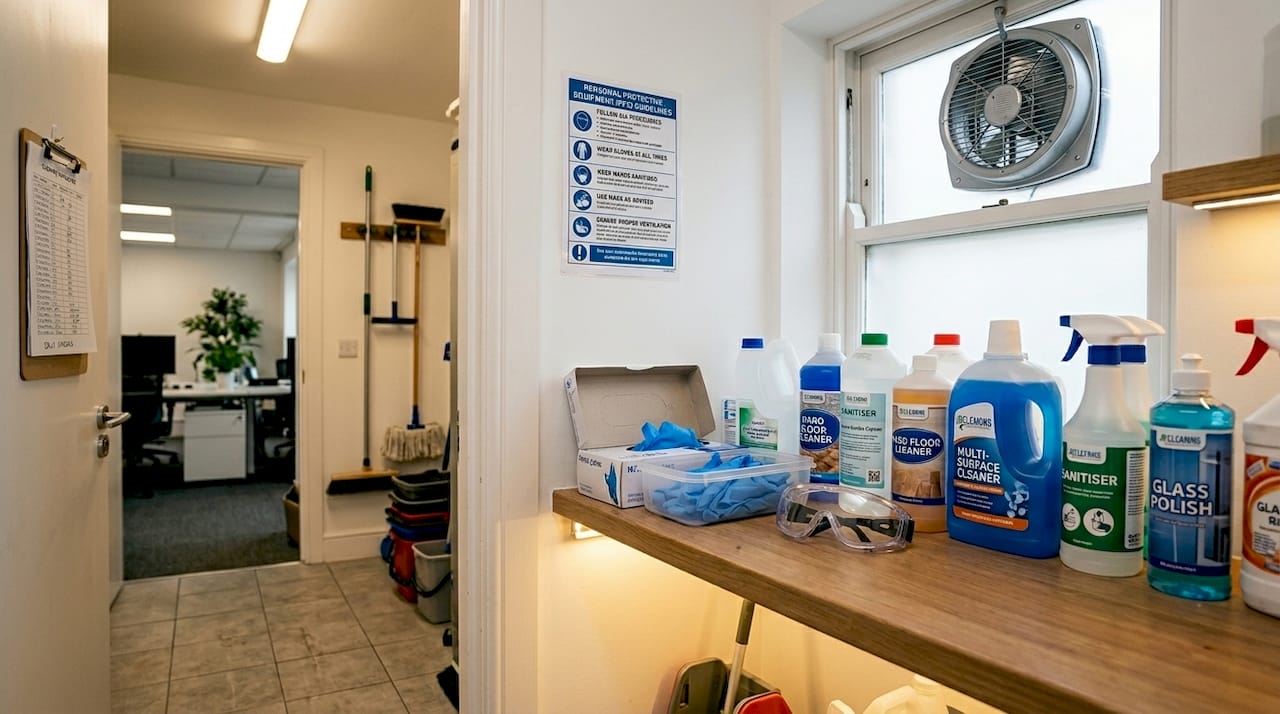
Safe cleaning is a system encompassing ventilation, PPE, and proper label usage, not just product choice. Before you pick up a cloth, you need the right gear in place.
Personal protective equipment
PPE is the first line of defence against chemical exposure through inhalation, skin contact, and eye splashes. Janitorial chemical safety requires appropriate PPE and sufficient ventilation as core controls, not optional extras. The minimum kit for most cleaning tasks includes:
- Gloves: Nitrile or rubber gloves protect skin from bleach, ammonia-based cleaners, and acidic descalers. Latex gloves are not suitable for prolonged chemical contact.
- Eye protection: Safety goggles or glasses are non-negotiable when using spray products, especially in overhead or confined spaces.
- Apron or protective clothing: A waterproof apron prevents chemical splashes from soaking through clothing to skin.
- Respiratory protection: For tasks involving strong disinfectants or enclosed spaces, an FFP2 or FFP3 mask reduces inhalation risk significantly.
Cleaning products and their risks
Common household and commercial products each carry specific hazards. Bleach-based cleaners are highly effective disinfectants but release chlorine gas when mixed with ammonia or acidic cleaners. Quaternary ammonium compounds (quats), found in many surface sprays, cause skin and respiratory irritation at high concentrations. Enzymatic cleaners are gentler but require longer contact times to work.
Pro Tip: Always store cleaning chemicals in their original labelled containers. This is not just good housekeeping. It facilitates emergency response and prevents accidental mixing or misuse.
Ventilation tools
Open windows and doors before starting. In commercial settings, mechanical extraction fans or kitchen duct systems actively remove chemical fumes from the air. Poor indoor ventilation concentrates fumes quickly, particularly in bathrooms and kitchens where cleaning products are used most heavily.
What are the steps for safe cleaning in residential spaces?
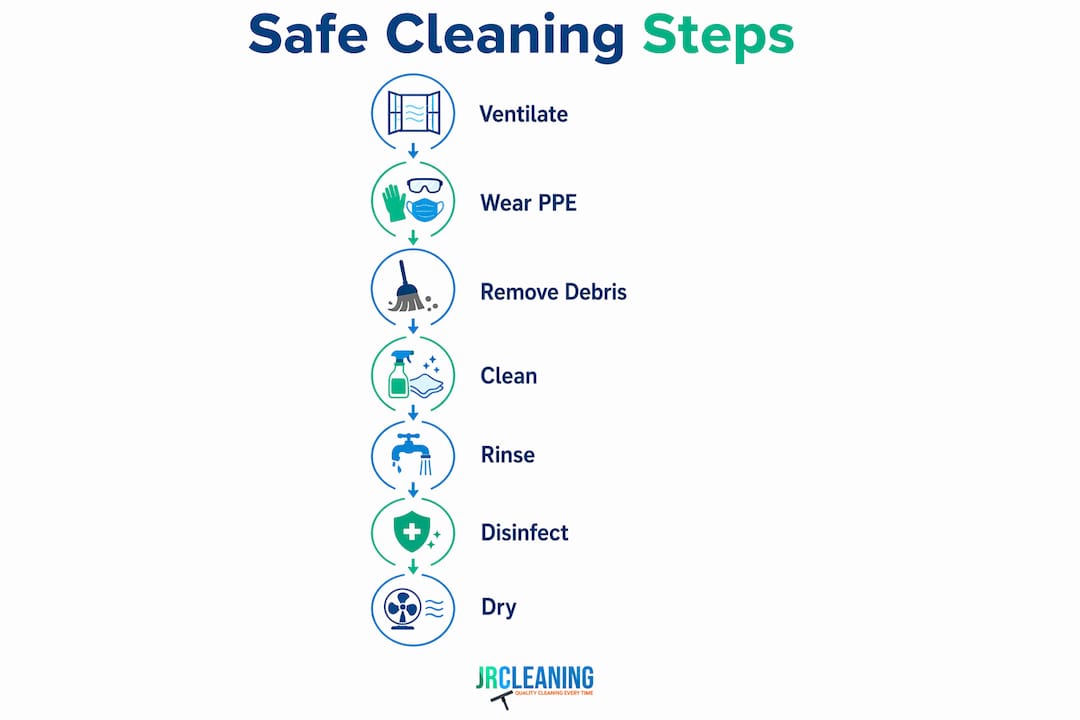
The steps for safe cleaning at home follow a clear sequence that prevents cross-contamination and protects both surfaces and the people using them. Skipping any stage, particularly rinsing or drying, undermines the entire process.
- Ventilate the space. Open windows and doors before you begin. This applies even to mild products.
- Put on your PPE. Gloves and eye protection go on before you open any product.
- Remove loose debris. Sweep, wipe, or vacuum surfaces to remove food particles, dust, and visible soiling. Applying disinfectant over debris reduces its effectiveness significantly.
- Clean with detergent. Apply a general-purpose detergent or washing-up liquid solution and scrub surfaces thoroughly. This step removes grease, organic matter, and most surface bacteria.
- Rinse thoroughly. Remove all detergent residue with clean water. Residual detergent interferes with disinfectants applied in the next step.
- Disinfect. Apply your chosen disinfectant and allow it to sit for the contact time specified on the label. For diluted bleach solutions on food-contact surfaces, wash with hot soapy water before sanitising. This sequencing is critical to microbial control.
- Rinse again (where required). Food-contact surfaces must be rinsed after disinfection to remove chemical residues.
- Dry the surface. Moisture left on surfaces encourages bacterial regrowth. Use a clean cloth or allow air drying.
Kitchen and bathroom specifics
In kitchens, pay particular attention to chopping boards, sink areas, and appliance handles, which carry the highest bacterial load. In bathrooms, toilet flush handles and tap fittings are high-touch surfaces that need disinfecting daily in shared households. For professional cleaning methods that go beyond the basics, the sequence above mirrors industry-standard practice.
Pro Tip: If you prefer to reduce chemical exposure at home, safer homemade cleaners such as baking soda paste or diluted white vinegar can handle many light-duty tasks. They still require the same ventilation and PPE precautions as commercial products.
How do safe cleaning procedures differ in commercial environments?
Steps for safe commercial cleaning go beyond the residential sequence because the stakes are higher. A contaminated surface in a commercial kitchen or healthcare setting can cause illness across dozens of people, not just one household.
Commercial kitchens and food preparation areas
The sequencing of cleaning then sanitising is critical in food safety because organic matter left on surfaces neutralises disinfectants before they can work. In commercial kitchens, this means a strict five-stage process: scrape, wash, rinse, sanitise, and air dry. One detail that catches many operators out: hot water deactivates bleach sanitisers, so sanitising solutions must be prepared with lukewarm water and made fresh daily. Using yesterday’s solution is the same as using no solution at all.
The table below summarises the key procedural differences between residential and commercial cleaning environments.
| Environment | Key procedural requirement | Critical hazard to control |
|---|---|---|
| Residential kitchen | Clean then disinfect; rinse food surfaces | Chemical residue on food-contact areas |
| Commercial kitchen | Daily fresh sanitiser; strict five-stage sequence | Microbial contamination and chemical mixing |
| Healthcare setting | Validated contact times; PPE at all times | Cross-contamination and chemical exposure |
| Biosafety laboratory | Lab staff prepare space before custodial entry | Biohazard exposure and surface contamination |
Healthcare and controlled environments
In healthcare settings, effective disinfection depends on verifying contact time, avoiding overdosing, and controlling residue formation through validated procedures. Overdosing a disinfectant does not improve kill rates. It leaves residues that can interfere with subsequent applications and create inhalation hazards for staff.
Biosafety Level 2 (BSL-2) laboratories represent the most controlled cleaning environment outside pharmaceutical manufacturing. At institutions such as Purdue University, custodial staff enter only after lab personnel have decontaminated surfaces and posted a clearance sign. Custodial duties are limited to floor cleaning using approved disinfectants with full PPE. They do not handle lab materials or waste under any circumstances. This “ready for cleaning†handoff model is worth borrowing in any high-risk commercial setting.
The role of cleaning in workplace safety extends well beyond hygiene. It is a documented compliance requirement in most UK commercial sectors.
What are the most common mistakes in cleaning safety?
Most cleaning injuries and ineffective outcomes trace back to a small number of repeated errors. Recognising them is the first step to correcting them.
- Mixing incompatible chemicals. Bleach and ammonia produce toxic chloramine gas. Bleach and acidic cleaners (including vinegar) release chlorine gas. Neither combination is safe at any concentration.
- Overusing cleaning products. Using more product than the label directs increases fumes and residues without improving cleaning effectiveness. This is one of the most common errors in both residential and commercial settings.
- Skipping the rinse stage. Detergent residue left on surfaces before disinfection reduces the disinfectant’s effectiveness. Disinfectant residue left on food-contact surfaces creates ingestion risks.
- Inadequate ventilation. Closing windows to “keep the smell in†concentrates fumes to levels that cause headaches, dizziness, and respiratory irritation within minutes.
- Ignoring PPE. Skin and eye exposure to cleaning chemicals is the primary injury pathway for cleaning staff. Gloves and eye protection are not optional for any task involving chemical products.
“Safe procedures must address inhalation, skin, and eye exposure explicitly rather than assuming product harmlessness.†This principle, drawn from occupational health guidance, applies equally to a homeowner cleaning a bathroom and a professional operative working in a commercial kitchen.
The health and safety cleaning guidelines for UK properties provide a useful compliance reference for residential landlords and commercial operators alike.
Key takeaways
Safe cleaning procedures work because correct sequencing, appropriate PPE, and controlled ventilation together prevent both contamination and chemical injury.
| Point | Details |
|---|---|
| Sequence matters | Always clean before disinfecting; residue from the first stage neutralises the second. |
| PPE is non-negotiable | Gloves, eye protection, and ventilation address inhalation, skin, and eye exposure. |
| Never mix chemicals | Bleach with ammonia or acid produces toxic gas at any concentration. |
| Commercial settings need stricter controls | Daily fresh sanitiser, validated contact times, and access protocols reduce risk significantly. |
| More product is not better | Exceeding label dosage increases fumes and residues without improving cleaning outcomes. |
What I have learned from two decades of cleaning work
After more than 20 years working across residential and commercial cleaning, the pattern I see most often is not ignorance of safety rules. It is the gradual erosion of them. A cleaner who knows the correct sequence cuts a step when they are under time pressure. A homeowner who reads the label once assumes they remember it correctly six months later. The hazards do not announce themselves. They accumulate quietly.
The commercial kitchen is where I have seen this most clearly. Operators who run tight schedules sometimes skip the rinse stage between cleaning and sanitising, reasoning that the disinfectant will handle everything. It will not. Organic matter physically blocks disinfectants from reaching the surface. The kitchen looks clean and tests positive for contamination. That gap between appearance and reality is where foodborne illness originates.
What actually works is treating the procedure as a fixed protocol, not a flexible checklist. In professional settings, that means written SOPs, regular refresher training, and spot checks. At home, it means reading the label every time, not just the first time. The products have not changed, but your memory of the instructions has.
The one piece of advice I give to every client, residential or commercial, is this: ventilation is not optional. Open the window before you open the bottle. It takes three seconds and it changes the risk profile of every cleaning task you do.
— jamie
Professional cleaning that puts safety first
Jrcleaning has delivered residential and commercial cleaning services across the UK for over 20 years, with every operative trained in current health and safety protocols. The team uses correctly labelled, approved products, wears full PPE on every job, and follows the same stepwise procedures outlined in this guide. Whether you need a one-off deep clean or a regular commercial contract, Jrcleaning’s residential and commercial cleaning services are fully insured and compliant with UK health and safety regulations. For commercial kitchens specifically, the team follows food-safe sanitisation sequences to the letter. Request a free quote today and let trained professionals handle the risk.
FAQ
What are the basic steps for safe cleaning at home?
The core steps are: ventilate the space, put on PPE, remove loose debris, clean with detergent, rinse, disinfect with the correct contact time, rinse food surfaces again, and dry. Skipping the rinse between cleaning and disinfecting reduces disinfectant effectiveness significantly.
Can you mix bleach with other cleaning products?
No. Bleach mixed with ammonia produces toxic chloramine gas, and bleach mixed with acidic cleaners releases chlorine gas. Both reactions occur at household concentrations and cause serious respiratory harm.
How often should sanitiser solutions be prepared in commercial kitchens?
Bleach-based sanitiser solutions should be prepared fresh daily because their effectiveness degrades quickly. Hot water also deactivates bleach sanitisers, so solutions must be made with lukewarm water.
What PPE is needed for general cleaning tasks?
Nitrile or rubber gloves, safety goggles or glasses, and a waterproof apron cover the minimum requirements for most cleaning tasks. Respiratory protection is needed for tasks involving strong disinfectants or poorly ventilated spaces.
How do commercial cleaning procedures differ from residential ones?
Commercial settings require stricter sequencing, validated disinfectant contact times, daily preparation of fresh sanitiser solutions, and formal access controls in high-risk environments such as healthcare facilities and laboratories. The commercial kitchen cleaning process, for example, follows a mandatory five-stage sequence that goes beyond standard household practice.
Recommended
- Health and safety cleaning guidelines for UK properties | J R Cleaning
- The role of cleaning in workplace safety | J R Cleaning
- Industrial facility cleaning: safety, compliance, efficiency | J R Cleaning
- Master the industrial site cleaning process: safer facilities | J R Cleaning

