Commercial window cleaning: benefits, methods & safety

Most business owners think of window cleaning as a finishing touch, something to arrange when things look noticeably grubby. In reality, your windows are working constantly, shaping how clients perceive your premises before they even step inside. Professional window cleaning enhances curb appeal, professionalism, and customer trust in ways that directly affect your bottom line. This guide covers the real business benefits, the main cleaning methods available, the safety regulations you must understand, and practical advice on costs and frequency so you can make informed decisions for your property.

Table of Contents

Key Takeaways

PointDetails
Appearance attracts businessClean windows signal professionalism, boosting client and customer trust.
Safety and complianceMeeting UK safety regulations protects your staff, clients, and business reputation.
Cost-effective maintenanceRegular cleaning prevents damage and reduces overall expenses.
Optimal methods varyChoosing the right cleaning option ensures safety and suits your property’s needs.
Provider credentials matterEnsure your cleaning provider is certified, compliant, and transparent about services.

The true business benefits of commercial window cleaning

Clean windows do far more than make a building look presentable. They signal to every visitor, client, and passerby that your business is well managed and takes pride in its environment. That first impression forms within seconds, and a grimy facade can undermine even the strongest brand reputation before a conversation begins.

Beyond appearances, there is a measurable impact on the people working inside. Natural light entry improves employee productivity, morale, and reduces energy costs by lessening reliance on artificial lighting. A brighter workspace is a more motivated one, and that translates directly into performance.

The business appearance benefits extend further than most property managers realise. Consider what clean windows actually deliver:

  • Stronger client confidence: Visitors associate a well-maintained exterior with a well-run operation.
  • Improved staff wellbeing: Increased daylight reduces eye strain and fatigue, particularly in open-plan offices.
  • Lower energy bills: Maximising natural light reduces the need for overhead lighting during daylight hours.
  • Extended window lifespan: Regular cleaning removes corrosive contaminants such as hard water deposits and pollution residue that etch glass over time.
  • Regulatory readiness: A clean, maintained building is easier to inspect and demonstrates duty of care to staff and visitors.

“Professional commercial window cleaning enhances property appearance, boosting curb appeal, professionalism, and customer trust.” This is not simply about aesthetics. It is about the signal your building sends every single day.

Building curb appeal is a cumulative effort. Windows are one of the largest visible surfaces on any commercial property, so neglecting them undermines every other investment you make in your premises. Pairing window cleaning with gutter cleaning solutions ensures the whole exterior presents a consistent, professional standard.

Methods used in commercial window cleaning

Not every building can be cleaned the same way. The method chosen depends on height, access, building design, and budget. Understanding your options helps you ask the right questions when hiring a contractor and ensures the work is done safely and effectively.

1774947175505 Technician prepares rope access window cleaning - J R Cleaning

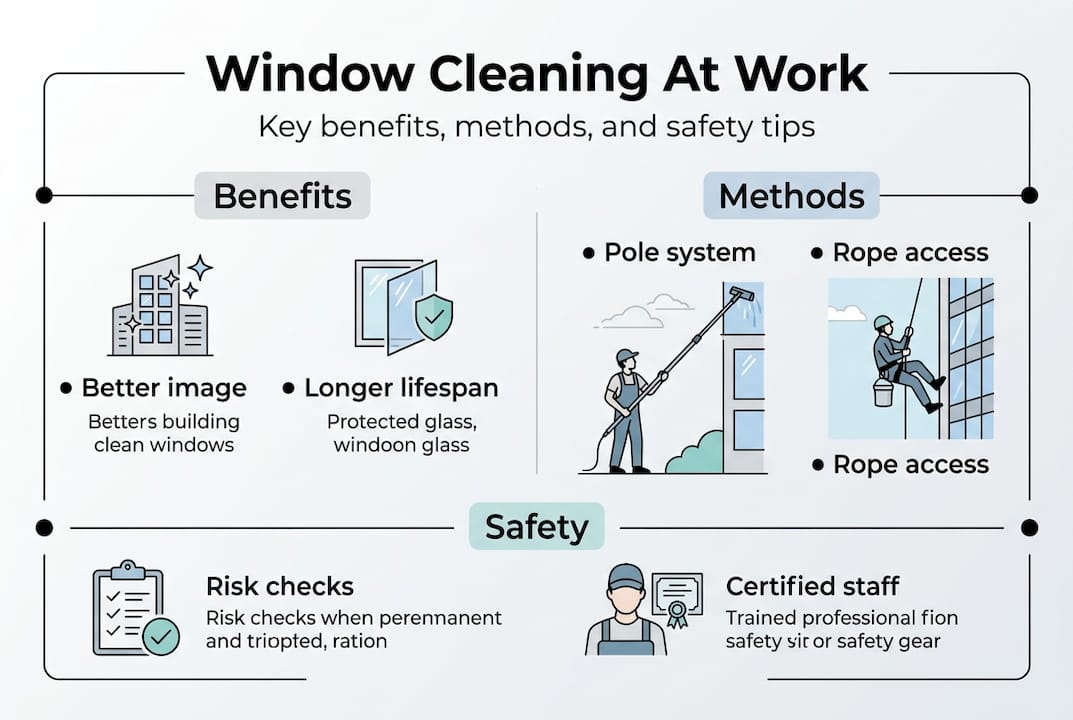
The primary methods used in commercial window cleaning are water-fed poles, mobile elevated work platforms (MEWPs), cradles and building maintenance units (BMUs), and rope access.

MethodBest suited forKey advantage
Water-fed poleLow to mid-rise (up to 4 storeys)Safest, most cost-effective, no scaffolding
MEWP/cherry pickerMid-rise with open ground accessFlexible, fast deployment
Cradle/BMUHigh-rise with permanent track systemsConsistent access for tall buildings
Rope accessComplex or high-rise urban buildingsReaches areas no other method can

Water-fed pole systems use purified water pumped through extendable poles with brush heads. Because the water is deionised, it leaves no mineral residue and dries streak-free. This method keeps operatives firmly on the ground, which is the safest possible position. For most UK commercial properties, particularly retail units, offices, and mid-rise blocks, this is the preferred approach.

MEWPs, often called cherry pickers, offer flexibility for buildings where ground access is available and height exceeds the reach of a water-fed pole. They require operators with IPAF certification and a suitable surface to operate from safely.

Rope access is a specialist discipline governed by IRATA (Industrial Rope Access Trade Association) standards. It suits complex urban facades, listed buildings, or structures where no other access method is practical. It requires highly trained operatives and detailed risk assessments. You can review window cleaning safety guidelines from the HSE to understand what is expected at each level.

Pro Tip: Always ask your contractor which method they plan to use before work begins. A reputable company will explain their choice based on your building’s specific characteristics, not just what equipment they happen to own.

For properties with complex facades, compliant cleaning methods matter as much as the cleaning itself. If your building has brick facade elements or solar panels, routine cleaning of all surfaces together is far more efficient than treating each in isolation.

Safety regulations and compliance in commercial window cleaning

This is where many property managers feel uncertain, and understandably so. The regulatory landscape for working at height is detailed, and getting it wrong carries real consequences including fines, liability, and serious injury.
1774947152652 Infographic shows benefits methods safety tips - J R Cleaning

The core framework is set by the Work at Height Regulations 2005 and the Health and Safety at Work Act 1974. These place duties on both employers and contractors to plan, supervise, and carry out all work at height safely. The guiding principle is straightforward: avoid working at height wherever possible. When it cannot be avoided, use the safest practicable method.

As a property manager or business owner commissioning cleaning work, you share responsibility for ensuring the contractor you hire meets legal standards. Here is what to verify before any work begins:

  1. Risk assessment: The contractor must provide a written risk assessment specific to your property.
  2. Method statement: A clear description of how the work will be carried out, including equipment and safety measures.
  3. Certifications: Check for IPAF certification for MEWP operators and IRATA certification for rope access operatives.
  4. Equipment inspection records: Under LOLER (Lifting Operations and Lifting Equipment Regulations), lifting equipment must be regularly inspected. Ask for current certificates.
  5. Public liability insurance: Confirm the contractor holds adequate cover for commercial premises.
  6. PPE compliance: Operatives should wear appropriate personal protective equipment for the method being used.

Pro Tip: Request copies of the risk assessment and insurance documents before signing any contract. A professional contractor will provide these without hesitation. If they cannot, that is a clear warning sign.

The HSE also provides specific access equipment recommendations for different scenarios, which is worth reviewing if your building presents unusual access challenges. For work at height compliance across all exterior services, the same standards apply whether you are cleaning windows, cladding, or commercial kitchen extraction systems.

Cost, frequency and practical tips for commercial window cleaning

Budgeting for commercial window cleaning is straightforward once you understand what drives the price. The main variables are building size, number of windows, height, chosen method, and how often you schedule the work.

Typical commercial window cleaning costs in the UK range from £100 to £500+ per clean depending on property size, with water-fed pole systems costing up to 40% less than cherry picker alternatives for comparable buildings. Regular maintenance also prevents costly repairs caused by etched or permanently stained glass.

Property typeSuggested frequencyEstimated cost per clean
Small retail unitEvery 4 to 6 weeks£100 to £200
Medium office blockEvery 8 to 12 weeks£200 to £400
Large commercial premisesMonthly or quarterly£400 to £800+
High-rise buildingQuarterly or biannuallyVariable, project-based

On frequency, the minimum recommended is at least twice yearly, but urban locations, busy roads, and industrial areas demand more. High-traffic ground floor windows may need monthly attention while upper floors can be cleaned quarterly. A tiered approach keeps costs manageable without compromising standards.

Here are practical steps to control costs without cutting corners:

  • Bundle services: Combining window cleaning with gutter cleaning packages or facade maintenance often reduces the overall price.
  • Schedule regularly: Ad hoc cleaning costs more per visit than a standing contract. Consistent scheduling also prevents the build-up that requires intensive, expensive cleans.
  • Choose the right method: Water-fed poles are cheaper to deploy than MEWPs. If your building height allows it, insist on this method.
  • Review your contract annually: Prices and your building’s needs change. Review terms each year to ensure you are getting fair value.

Pro Tip: When comparing quotes, ask each contractor to itemise their pricing. A breakdown by method, frequency, and any additional charges reveals far more than a single headline figure and makes genuine comparison possible.

When selecting a provider, check their commercial cleaning options to ensure they can handle your full range of exterior maintenance needs. Bundled cleaning services across multiple surfaces often deliver better value and a more consistent result than using separate contractors for each task.

Enhance your property with expert commercial window cleaning

Understanding the regulations, methods, and costs involved in commercial window cleaning makes it far easier to choose the right partner and get genuine value from the service. The next step is finding a provider who can deliver all of it reliably.

1774551979294 jrcleaning - J R Cleaning

JR Cleaning brings over 20 years of experience to commercial window cleaning across the UK, operating with full insurance and strict adherence to HSE safety standards. Whether your property needs water-fed pole cleaning for a mid-rise office or a comprehensive exterior maintenance programme, our team handles it with the certifications and professionalism your building deserves. Explore our full range of commercial cleaning services, from window and facade cleaning to gutter cleaning and beyond. Contact us today for a free, no-obligation quote.

Frequently asked questions

How often should commercial windows be cleaned for optimal results?

Commercial windows should be cleaned at least twice yearly as a minimum, with urban or high-traffic locations requiring quarterly or even monthly cleaning for ground-level glazing.

Which commercial window cleaning methods are safest?

Water-fed pole systems are the safest option for low to mid-rise properties as operatives remain on the ground, while rope access suits high-rise scenarios but requires specialist IRATA-certified training.

Do regulations affect commercial window cleaning choices?

Yes. The Work at Height Regulations 2005 and the Health and Safety at Work Act 1974 require certified staff, written risk assessments, and regular equipment inspections before any commercial window cleaning can legally proceed.

How can businesses reduce commercial window cleaning costs?

Using water-fed poles instead of cherry pickers, scheduling regular maintenance contracts, and bundling services can reduce costs by up to 40% while also preventing expensive glass repairs caused by long-term contamination.

What should property managers look for in a commercial window cleaning provider?

Verify HSE compliance, IPAF or IRATA certifications where applicable, current LOLER inspection records, public liability insurance, and transparent itemised pricing before committing to any contractor.
Protect your home value: Why clean gutters matter

Blocked gutters might seem like a minor inconvenience, but the financial reality tells a very different story. Neglecting gutters can reduce your property value by 5 to 10% and rack up repair bills exceeding £20,000 over a decade. Many UK homeowners treat gutters as an afterthought, yet they are one of the most critical lines of defence your home has against water damage. This article breaks down the evidence-backed reasons why clean gutters matter, what neglect actually costs, and how to protect your property with the right maintenance approach.

Table of Contents

Key Takeaways

PointDetails
Gutter cleaning protects valueRegular gutter maintenance prevents costly damage and helps keep your property’s value intact.
Neglect risks heavy costsIgnoring gutters can lead to thousands in repair bills and significant losses when selling your home.
Professional cleaning is safe and thoroughHiring experts ensures all issues are addressed, especially on tall or awkward homes where safety matters most.
Twice-yearly cleans are bestMost UK homes should have gutters cleaned every spring and autumn, more often if near trees or in wet regions.

Why clean gutters matter more than you think

Your gutters do one job: move rainwater away from your home. When they fail, the consequences spread fast and quietly. Blocked gutters cause overflow leading to roof leaks, rotting fascias and soffits, internal damp and mould, and even foundation erosion. The damage does not announce itself. It creeps through walls, under tiles, and into timber before you ever notice a stain on the ceiling.

Surveyors treat gutter condition as a direct signal of how well a home has been maintained. Damp caused by blocked gutters can trigger red flags during property surveys, affecting both your sale price and your ability to secure a mortgage. In fact, over 40% of damp claims in the UK are linked to gutter problems. That is not a small number.

Some UK homes carry extra risk. Areas with heavy rainfall, dense tree cover, or a high proportion of older Victorian properties face what experts call a heightened gutter risk. Cities like Preston and Swansea consistently appear in high-risk assessments. If you want to understand the signs of drainage issues before they escalate, catching them early is always cheaper than fixing them later.

“Surveyors use gutter condition as a maintenance signal. A blocked or damaged gutter is not just a cosmetic issue — it tells a buyer, a surveyor, and an insurer that the property may have been neglected.”

Key risks from blocked gutters include:

  • Roof leaks and damaged roofing felt
  • Rotting fascias, soffits, and timber frames
  • Internal damp and black mould growth
  • Foundation erosion and potential subsidence
  • Reduced kerb appeal and property value

For practical gutter maintenance tips that help you stay ahead of these issues, a consistent schedule makes all the difference.

The financial reality: How neglect costs UK homeowners

Let us put real numbers to the problem. Neglecting gutters can reduce your property value by 5 to 10%, with surveyors deducting anywhere from £2,000 to £30,000 from a property valuation depending on the extent of damage. For the average UK home, that is a significant hit.

1774861145917 image - J R Cleaning

Here is a breakdown of typical repair costs when gutter maintenance is ignored:

ProblemEstimated repair cost
Damp and mould treatment£300 to £2,000
Fascia and soffit replacement£600 to £5,000
Roof leak repairs£150 to £8,000
Foundation and subsidence work£300 to £30,000
Total over a decade£20,000+

Compare that to the cost of a professional gutter clean, which typically runs between £40 and £150 per visit. The maths is straightforward.

Insurance adds another layer of risk. Most home insurance policies cover sudden accidental damage, not gradual deterioration from neglect. If your insurer determines that damp or rot resulted from a blocked gutter you failed to maintain, your claim may be rejected outright. You can explore gutter repair costs and understand what is involved before problems arise.

Pro Tip: Spending £50 to £150 per year on affordable gutter cleaning is one of the most cost-effective home maintenance decisions you can make. It is far cheaper than a single damp remediation job, let alone a structural repair.

If you are already seeing signs of trouble, submitting gutter cleaning and repair requests early gives you the best chance of keeping costs manageable.

Professional cleaning vs DIY: What homeowners need to know

Many homeowners assume a ladder and a pair of gloves is all it takes. In reality, the gap between a DIY clean and a professional one is significant, both in thoroughness and safety.

Professional gutter cleaning follows a structured methodology: visual assessment of the full gutter run, manual debris removal, vacuum systems for hard-to-reach sections, flushing downpipes to confirm flow, and inspection of joints, brackets, and any sagging sections. That last step matters enormously. A professional will spot a failing bracket or a cracked joint that a DIY clean would completely miss.

Here is how the two approaches compare:

FactorDIYProfessional
Time required2 to 4 hours45 to 90 minutes
ThoroughnessPartialFull inspection included
SafetyHigher fall riskProper equipment used
CostLow upfront£40 to £250 per visit
Fault detectionUnlikelyRoutine part of service

A typical professional clean involves these steps:

  1. Full visual inspection of gutters, downpipes, and fixings
  2. Manual removal of leaves, moss, and compacted debris
  3. Vacuum extraction for fine debris and hard-to-reach runs
  4. Downpipe flush to confirm clear drainage
  5. Check and report on any damaged sections or joints

Pro Tip: If your home has a tall or awkward roofline, do not attempt it yourself. Professionals use specialist poles, vacuum systems, and where needed, cherry pickers. The risk of a fall from a ladder is simply not worth it.

For a closer look at detailed gutter maintenance and what a full service covers, it is worth reviewing what professional cleaning methods actually include. You might also find value in complimentary maintenance tasks that keep your exterior in top condition year-round.

How often should gutters be cleaned?

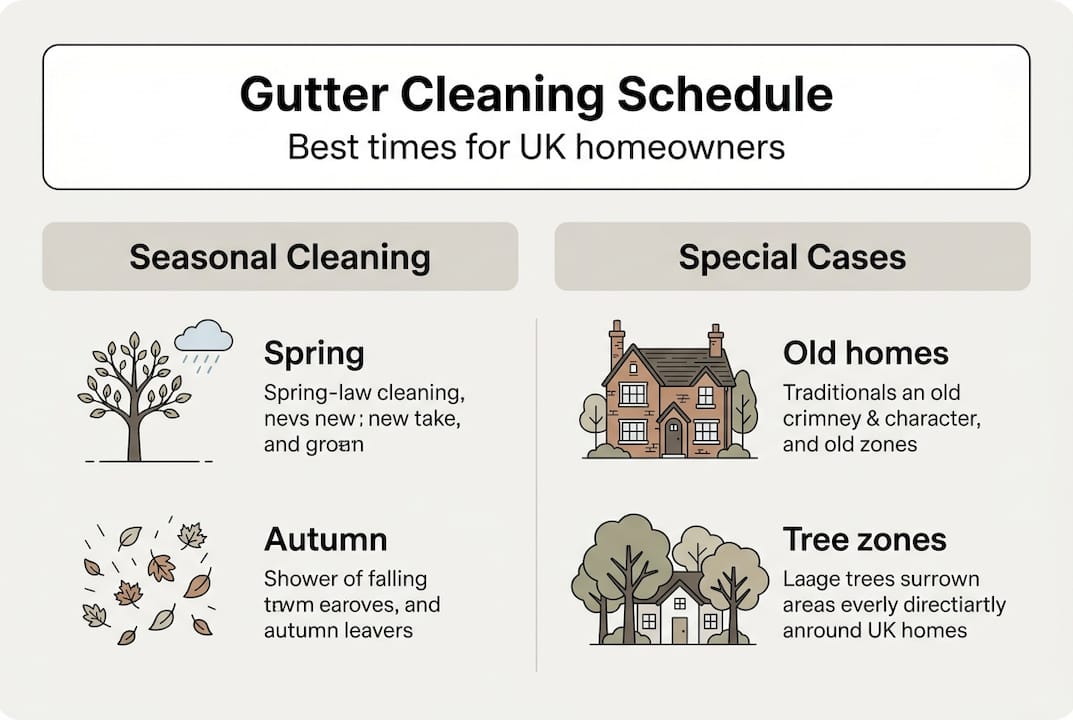
For most UK homes, twice a year is the baseline. Spring and autumn are the ideal times: spring clears winter debris and checks for frost damage, while autumn removes fallen leaves before winter rain arrives. Homes near trees or in high-rainfall regions may need three or four cleans per year.

1774861304517 Infographic on UK gutter cleaning schedule - J R Cleaning

Professional cleaning is recommended twice yearly, with costs ranging from £40 to £250 depending on property size and access difficulty. A terraced house with straightforward access sits at the lower end. A large detached property with complex rooflines will cost more.

Watch for these signs that you may need a clean sooner than scheduled:

  • Water spilling over the gutter edge during rain
  • Visible moss, weeds, or plant growth in the gutter channel
  • Staining or damp patches on exterior walls below the gutterline
  • Slow or gurgling drainage from downpipes
  • Sagging sections or gutters pulling away from the fascia

Older Victorian properties and homes in areas like Preston or Swansea should treat twice-yearly cleaning as a minimum, not a target. The combination of ageing infrastructure, heavy rainfall, and mature trees creates conditions where gutters block faster and damage spreads more quickly.

To get ahead of the season, you can schedule a gutter clean and lock in a time that works before the autumn rush.

Common challenges and special gutter cases in the UK

Not every gutter job is straightforward. UK homes present a range of challenges that make professional help not just convenient but genuinely necessary.

Edge cases in gutter cleaning include high or awkward access points requiring vacuum poles or cherry pickers, cast iron gutters prone to rust and cracking, winter ice blockages that expand and split joints, heavy moss growth requiring separate roof treatment, and downpipe blockages buried deep in the drainage run.

Cast iron gutters, common in older UK homes, need careful handling. They are heavy, brittle when cold, and prone to rust at joints. A professional will know not to apply pressure in the wrong place and will flag any sections that need resealing or replacement.

“After a storm or heavy rainfall, always check your gutters visually from the ground. Overflowing water, sagging sections, or debris hanging over the edge are all signs that a clean or repair is overdue.”

Gutter guards are worth mentioning here. They can reduce the volume of debris entering your gutters, but they do not eliminate the need for cleaning. Smaller particles, moss spores, and compacted fine debris still accumulate over time. Guards are a supplement to maintenance, not a replacement for it.

For seasonal maintenance tips that cover what to check after storms and how to prepare for winter, a consistent routine is your best protection.

Keep your home protected with JR Cleaning

At JR Cleaning, we have spent over 20 years helping UK homeowners protect their properties through professional exterior maintenance. We understand that gutters are not glamorous, but the damage they prevent is very real.

1774551979294 jrcleaning - J R Cleaning

Our fully insured team uses professional-grade equipment to clear, inspect, and report on your gutters safely and thoroughly. Whether you have a straightforward terraced house or a complex roofline with cast iron gutters, we have the tools and experience to handle it. We offer affordable gutter cleaning services across the UK, with free quotes and easy booking. If you are ready to protect your home and your property value, get in touch today through our gutter cleaning and repair requests form and we will take it from there.

Frequently asked questions

What happens if I never clean my gutters?

Blocked gutters cause overflow leading to roof leaks, internal damp, mould, rotten structural timber, and in serious cases, foundation damage. The costs compound quickly the longer the problem is left.

How much does professional gutter cleaning typically cost in the UK?

Professional gutter cleaning usually ranges from £40 to £250, depending on your property’s size and how accessible your gutters are. Most standard homes fall comfortably within the lower end of that range.

Is it worth hiring professionals instead of doing it myself?

Yes. Professionals carry the right equipment for tall or awkward gutters and routinely identify small faults before they become expensive structural problems. The safety benefit alone makes it worthwhile for most homes.

Are gutter guards a substitute for regular cleaning?

No. Guards reduce debris volume but smaller particles and moss still accumulate. Guards reduce but do not eliminate the need for periodic inspection and cleaning, so you still need a professional check at least once a year.

Which UK homes are at highest risk for gutter problems?

Homes in high-risk UK areas like Preston and Swansea, those near tall trees, and older Victorian properties face the greatest need for frequent gutter maintenance due to rainfall levels, leaf fall, and ageing infrastructure.

Domestic cleaning explained: methods, benefits & expert tips

Most homeowners assume domestic cleaning is simply a quick hoover and a wipe-down of the kitchen surfaces. In reality, it covers a far broader range of tasks, from tackling stubborn limescale in hard water areas to managing pet hair and sanitising high-touch zones that harbour bacteria. UK homes face specific challenges that basic tidying simply cannot address. This guide breaks down what domestic cleaning genuinely involves, who provides it, and how to choose a service that keeps your home consistently clean, safe, and healthy.

Table of Contents

Key Takeaways

PointDetails
Domestic cleaning basicsRoutine cleaning keeps your home hygienic and addresses typical UK household challenges.
Provider types comparedChoose between agencies and independents based on insurance, reliability, and cost.
Eco-friendly methods matterModern cleaning uses safe products and techniques, benefiting both your family and the environment.
Ensure clear agreementsSpecify duties, products, and qualifications with every cleaning service before they begin.

What is domestic cleaning?

Domestic cleaning refers to the regular cleaning and maintenance of private residential properties. It covers the routine tasks that keep a home hygienic and presentable on a day-to-day or weekly basis. This is distinct from commercial cleaning, which applies to offices, retail spaces, and commercial kitchen cleaning environments with different compliance requirements.

A common point of confusion is the difference between domestic cleaning and deep cleaning. Domestic cleaning is ongoing and preventative. Deep cleaning is intensive and periodic, targeting areas like behind appliances, inside ovens, and built-up grime that regular visits do not reach. Think of it this way: domestic cleaning maintains the standard, while deep cleaning resets it.

Typical domestic cleaning tasks include:

  • Dusting surfaces, shelves, and skirting boards
  • Hoovering carpets and rugs
  • Mopping hard floors
  • Sanitising bathrooms including toilets, sinks, and tiles
  • Wiping down kitchen surfaces and appliance exteriors
  • Emptying bins and replacing liners
  • Professional oven cleaning as an add-on service

Edge cases are more common than you might expect. Hard water limescale descaling is a real issue in London and the South East, where mineral deposits build up rapidly on taps, showerheads, and tiles. Pet hair control requires specific tools and techniques. Cluttered homes may need a pre-declutter before a cleaner can work effectively.

It is worth noting that self-employed cleaners are not classified as domestic servants under HSE guidance. If their work creates risks for others, they are still required to comply with health and safety regulations.

Understanding this distinction matters when you are hiring, because it affects insurance, liability, and the standard of care you should expect.

Key tasks and specialist areas in domestic cleaning

Standard domestic cleaning covers the visible, high-traffic areas of your home. But specialist tasks are where the real difference in hygiene is made. Knowing what falls into each category helps you have a more productive conversation with any provider you consider.

Standard tasks typically include:

  • Dusting and polishing furniture
  • Hoovering all floor types
  • Bathroom and toilet sanitisation
  • Kitchen surface and hob cleaning
  • Window sill and ledge wiping
  • Mopping tiled and laminate floors

Specialist tasks that may require additional expertise or equipment:

  • Limescale removal from taps, tiles, and shower screens in hard water areas
  • Pet hair extraction from upholstery, carpets, and curtains
  • Post-renovation cleaning after building work
  • Allergy-sensitive cleaning using non-toxic products
  • Carpet cleaning using hot water extraction or dry methods
  • Stone cleaning for natural stone floors and worktops
  • Kitchen duct cleaning for homes with heavy cooking activity

Knowing when to call for extra help is important. If you have recently had renovation work done, standard cleaning will not remove fine dust from vents, light fittings, and inside cupboards. If anyone in your household suffers from allergies, a specialist clean using HEPA-filter vacuums and fragrance-free products can make a measurable difference to air quality.

For kitchens specifically, thorough cleaning approaches that address grease build-up behind appliances and inside extraction fans are worth considering at least twice a year.

1774552161687 image - J R Cleaning

Pro Tip: Before booking any domestic cleaning service, ask for a written list of exactly which tasks are included. Many disputes arise from mismatched expectations about what a standard visit covers.

Types of domestic cleaning providers

Choosing the right type of provider is just as important as choosing the right tasks. There are three main options available to UK homeowners: independent self-employed cleaners, cleaning agencies, and specialist cleaning companies.

Independent cleaners tend to offer lower hourly rates and more flexibility around scheduling. However, you must verify their public liability insurance and, where relevant, their DBS (Disclosure and Barring Service) check status before allowing them into your home.

Cleaning agencies act as intermediaries, supplying vetted and insured cleaners. They typically charge more per hour, but the added reliability and cover for no-shows or damage claims can be worth the premium. If your regular cleaner is unavailable, the agency provides a replacement.

Specialist cleaning companies like JR Cleaning offer a broader range of services under one roof, from regular domestic visits to upholstery cleaning and exterior work. They are fully insured and operate to defined health and safety standards.

Provider typeTypical costInsuranceDBS checkFlexibilityCover for absences
Independent cleanerLowerVerify yourselfVerify yourselfHighNone
Cleaning agencyMedium to highIncludedIncludedMediumYes
Specialist companyMedium to highIncludedIncludedMediumYes

According to Checkatrade’s cleaning cost guide, committing to regular bookings rather than one-off visits often reduces the overall cost per session. Agencies provide insurance and reliability as standard, while independent cleaners may offer lower rates but require you to verify their credentials personally.

Under HSE guidance, self-employed cleaners working in your home are not exempt from health and safety obligations if their work poses risks to others. This is a practical reason to always confirm insurance before hiring.

Modern cleaning practices: eco-friendly and effective methods

The cleaning industry has shifted considerably in recent years. Harsh chemical products are increasingly being replaced by methods that are both effective and safer for your household and the environment. Understanding these methods helps you ask better questions when selecting a provider.

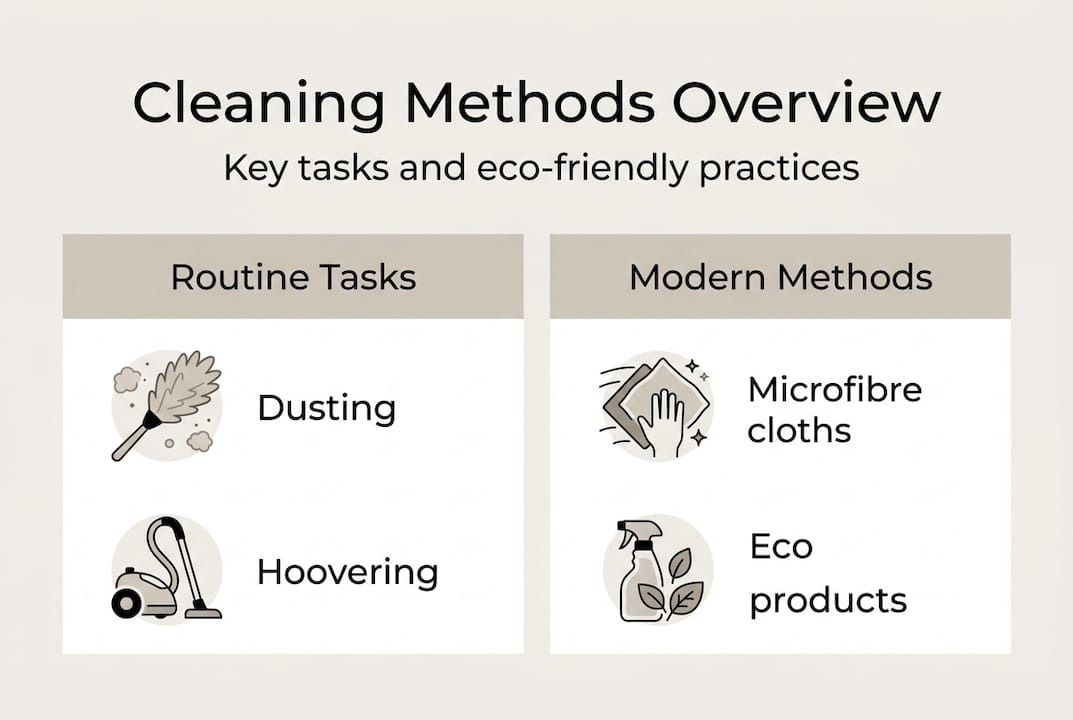
Top-down cleaning is a simple but highly effective technique. Cleaners start at the highest point in a room (ceiling cobwebs, light fittings) and work downwards, so that dust and debris fall onto surfaces that have not yet been cleaned. This prevents re-contamination and reduces the total time needed.

1774552065754 Infographic with cleaning methods and benefits - J R Cleaning

Zoned cleaning divides the home into areas with dedicated cloths and equipment for each zone. Bathroom cloths never touch kitchen surfaces. This prevents cross-contamination, which is a genuine hygiene risk in homes with young children or vulnerable adults.

Modern tools that make a real difference include:

  • Microfibre cloths: These trap bacteria and particles mechanically rather than just spreading them around. They require less chemical product and can be laundered and reused hundreds of times.
  • Steam cleaners: High-temperature steam sanitises surfaces without chemicals, making it ideal for bathrooms, tiles, and kitchen worktops. It is particularly effective for households managing allergies.
  • HEPA-filter vacuums: These capture fine particles including dust mites and pet dander rather than recirculating them into the air.

Modern cleaning methods that combine top-down and zoned approaches with eco-friendly tools consistently outperform traditional chemical-heavy routines in both hygiene outcomes and long-term surface care.

MethodEffectivenessEco-friendlyCostBest for
Traditional chemical productsHighNoLowGeneral surfaces
Microfibre clothsHighYesLowAll surfaces
Steam cleaningVery highYesMediumTiles, bathrooms, kitchens
HEPA vacuumingVery highYesMediumCarpets, allergy households

You can stay informed about evolving cleaning standards and product developments through cleaning news updates from reputable providers.

Pro Tip: When speaking to a potential cleaning provider, ask specifically whether they use microfibre cloths and colour-coded systems to prevent cross-contamination. A confident, detailed answer is a strong indicator of professional standards.

For carpets in particular, professional carpet cleaning using hot water extraction removes embedded dirt and allergens far more effectively than regular hoovering alone.

How to choose the right domestic cleaning service

With a clearer picture of tasks, providers, and methods, you are well placed to make a confident decision. Here is a practical step-by-step approach that works for most UK households.

  1. Define your needs clearly. List the rooms and tasks you want covered, the frequency you require (weekly, fortnightly, monthly), and any specialist needs such as pet hair control or allergy-sensitive products.
  2. Shortlist at least three providers. Use recommendations, local directories, and review platforms. Look for providers with verifiable track records and clear service descriptions.
  3. Verify insurance and DBS checks. Agencies provide these as standard, but if you are considering an independent cleaner, ask for written proof of both before any work begins.
  4. Ask about cleaning products and methods. Confirm whether eco-friendly or allergy-safe products are available. If you have natural stone floors or delicate surfaces, check that the provider has experience with stone cleaning and appropriate techniques.
  5. Agree on scope and rates in writing. A clear written agreement should specify which tasks are included, which are extras, the agreed rate, and the cancellation policy. This protects both parties.
  6. Check reviews and satisfaction guarantees. Look for consistent positive feedback over time rather than a handful of recent reviews. Ask whether the provider offers a re-clean if you are not satisfied.
  7. Consider regularity for better value. Regular bookings tend to cost less per visit than one-off cleans, and they keep your home at a consistently higher standard. If you also need specialist services such as upholstery cleaning, ask whether these can be bundled with your regular visits.

Frequency matters more than most homeowners realise. A fortnightly clean prevents the build-up that makes each session longer and more expensive. Monthly visits, by contrast, often require more time per visit to reach the same standard.

Why JR Cleaning is the right choice for your home

With over 20 years of experience serving UK homeowners, JR Cleaning brings professional standards, full insurance, and a genuine commitment to quality to every visit. Whether you need regular domestic cleaning, a one-off deep clean, or specialist services, our team is equipped to handle it properly.

1774551979294 jrcleaning - J R Cleaning

We use eco-friendly products and proven techniques to protect your home and your family’s health. Every member of our team is vetted, insured, and trained to work safely and efficiently. From routine weekly visits to specialist tasks like carpet and upholstery cleaning, we tailor our service to your household’s specific needs. Getting started is straightforward. Contact us today for a free, no-obligation quote and find out why so many UK homeowners trust JR Cleaning to keep their homes at their best.

Frequently asked questions

What does a domestic cleaner typically do?

A domestic cleaner usually carries out dusting, hoovering, bathroom sanitation, kitchen cleaning, and sometimes specialist tasks such as limescale removal or pet hair control if agreed in advance.

How is domestic cleaning different from deep cleaning?

Domestic cleaning focuses on regular surface maintenance to keep your home hygienic day to day, while deep cleaning is a periodic, intensive process targeting built-up grime and hard-to-reach areas.

Do I need to supply cleaning products?

Most professional providers supply their own products, including eco-friendly options, but it is always worth confirming this before your first visit to avoid any confusion.

Are domestic cleaners insured and DBS checked?

Reputable agencies and specialist companies include both as standard. If you hire an independent cleaner, ask for written proof of insurance and DBS status before they begin work.

What specialist domestic cleaning services are available?

Specialist options include oven cleaning, carpet and upholstery cleaning, allergy-sensitive or pet hair removal services, limescale treatment for hard water homes, and stone floor care.

Article generated by BabyLoveGrowth

Gutter maintenance

guttercleaningservice2 300x75 - J R Cleaning


The Importance of Gutter Clearing and Repair: Advantages and Drawbacks

Introduction

Gutters may not be the most glamorous part of your home, but they play a crucial role in protecting it from water damage. Proper maintenance, including regular clearing and repair, is essential to ensure they function effectively. In this article, we will explore the importance of gutter clearing and repair and discuss the advantages and drawbacks of keeping your gutters in good condition.

The Importance of Gutter Clearing and Repair

Prevention of Water Damage

Gutters are designed to channel rainwater away from your home’s foundation and exterior. When gutters become clogged with leaves, debris, and dirt, they cannot perform this vital function effectively. As a result, water may overflow and infiltrate your home’s structure, leading to costly water damage, including foundation cracks, basement flooding, and interior wall and ceiling damage.

Preservation of Structural Integrity

Clogged or damaged gutters can compromise the structural integrity of your property. The weight of water trapped in clogged gutters can cause them to sag or pull away from the house. This not only damages the gutters themselves but can also damage the roofline and the fascia boards to which they are attached.

Prevention of Pest Infestations

Clogged gutters can become a haven for pests such as mosquitoes, ants, and birds. Stagnant water in clogged gutters provides a breeding ground for insects, while leaves and debris offer nesting materials for birds and rodents. Keeping your gutters clear and in good repair helps prevent these unwanted infestations.

Advantages of Gutter Clearing and Repair

Avoid Costly Repairs

Regular gutter clearing and maintenance are more cost-effective than repairing extensive water damage to your home’s structure. By investing in preventative measures, you can save money in the long run and avoid expensive repairs.

Extend the Lifespan of Your Gutters

Proper maintenance and timely repairs can extend the lifespan of your gutters. Well-maintained gutters can last for decades, providing reliable protection for your home.

Enhance Curb Appeal

Clean and well-maintained gutters contribute to your home’s curb appeal. Clogged or damaged gutters can make your property look neglected and unattractive. By keeping your gutters in good condition, you maintain the overall aesthetic appeal of your home.

Drawbacks of Neglecting Gutter Maintenance

Water Damage

The most significant drawback of neglecting gutter maintenance is the risk of water damage to your home. Water infiltration can lead to costly repairs and decrease the value of your property.

Pest Infestations

Clogged gutters can attract pests, which can be a nuisance and lead to further issues in and around your home.

Health Risks

Stagnant water in clogged gutters can become a breeding ground for disease-carrying mosquitoes, posing health risks to you and your family.

Conclusion

Regular gutter clearing and repair are essential for maintaining the integrity and longevity of your home. By preventing water damage, structural issues, and pest infestations, you can enjoy the many advantages of well-maintained gutters, including cost savings and enhanced curb appeal. Neglecting gutter maintenance can lead to costly repairs and health hazards, making it a task that should not be overlooked. Ensure your gutters are in good condition to protect your home and preserve its value.