

Most people assume the biggest threat to indoor air quality is dust or mould. In reality, the products we use to fight that dirt are often the problem. Conventional cleaning sprays, disinfectants, and multi-surface wipes release volatile organic compounds (VOCs) into the air, and research confirms that plant-based, biodegradable alternatives lower VOC emissions and reduce respiratory risks significantly. For UK homeowners and businesses seeking cleaner, safer spaces, understanding what eco-friendly cleaning actually means, and what it does not, is where lasting change begins.
Table of Contents
- Why eco-friendly cleaning matters for your health and the planet
- What makes a cleaning solution eco-friendly?
- Eco-friendly cleaning in action: Methods and real-world outcomes
- Balancing efficacy, compliance, and true sustainability in the UK
- A fresh perspective on eco-friendly cleaning: What most guides miss
- Take the next step with professional eco-friendly cleaning
- Frequently asked questions
Key Takeaways
| Point | Details |
|---|---|
| Healthier indoor air | Eco-cleaning reduces chemical residues and VOCs, supporting better indoor air for all occupants. |
| Verified eco-certifications | Trust products with EU Ecolabel or Green Seal to ensure true environmental and health safety. |
| Hybrid methods work best | Combining physical action and certified eco products often delivers optimal cleaning outcomes. |
| Compliance for businesses | Businesses should balance eco credentials with UK standards and efficacy needs for sustainability. |
| Product selection matters | Choose formats and labels carefully as wipes, even ‘green’, may not be ideal for sensitive users. |
Why eco-friendly cleaning matters for your health and the planet
Switching to greener cleaning is not simply about buying a bottle with a leaf on the label. The real case for eco-friendly cleaning is rooted in measurable health and environmental outcomes that affect everyone who spends time in your home or workplace.
Conventional cleaning products contain synthetic fragrances, ammonia, chlorine-based compounds, and surfactants that linger in indoor air long after the surface looks clean. Over time, repeated exposure to these compounds contributes to respiratory irritation, skin sensitisation, and worsened asthma symptoms. Eco-friendly products formulated with plant-based, biodegradable ingredients significantly cut VOC emissions and chemical residues, which translates directly into better indoor air quality for both residential and commercial settings.
The environmental gains are equally striking. A lifecycle assessment published in a peer-reviewed sustainability journal found that green cleaning protocols reduce CO2 emissions by between 49.6% and 53.3% compared to traditional cleaning methods, while simultaneously achieving superior microbial reduction in high-risk zones. That is not a marginal improvement. It means that switching to responsible cleaning practices can effectively halve your cleaning operation’s carbon footprint.
“Green cleaning protocols reduce CO2 emissions by 49.6% to 53.3% compared to traditional methods while achieving superior microbial reduction in high-risk zones.â€
Sustainability, Efficacy, and Impact of Green Cleaning Methods, MDPI 2025
Here is a snapshot of how these benefits play out differently for homes and businesses:
Immediate benefits for homeowners:
- Reduced exposure to synthetic chemicals for children, elderly residents, and allergy sufferers
- Improved indoor air quality throughout living spaces
- Safer surfaces for pets and sensitive skin
- Less chemical waste entering the water supply via drains
Long-term gains for businesses:
- Easier compliance with evolving UK and EU environmental standards
- Reduced liability around occupant health and safety
- Lower product costs through concentrated, reusable formats
- Enhanced reputation with eco-conscious clients and staff
Exploring verified eco-cleaning options is the first practical step, especially when you need results that go beyond surface appearance and contribute to genuinely healthier spaces. For organisations interested in a broader view, reviewing services for sustainable cleaning reveals how professional support can integrate environmental responsibility from the outset.
What makes a cleaning solution eco-friendly?
The word “eco†is used loosely. Brands apply it to products containing petrochemical surfactants, synthetic preservatives, and non-biodegradable packaging simply because they have removed one or two harsh ingredients. Genuine eco-friendly cleaning products meet specific, verifiable criteria, and in the UK and wider Europe, several credible certification schemes exist to help you tell the difference.
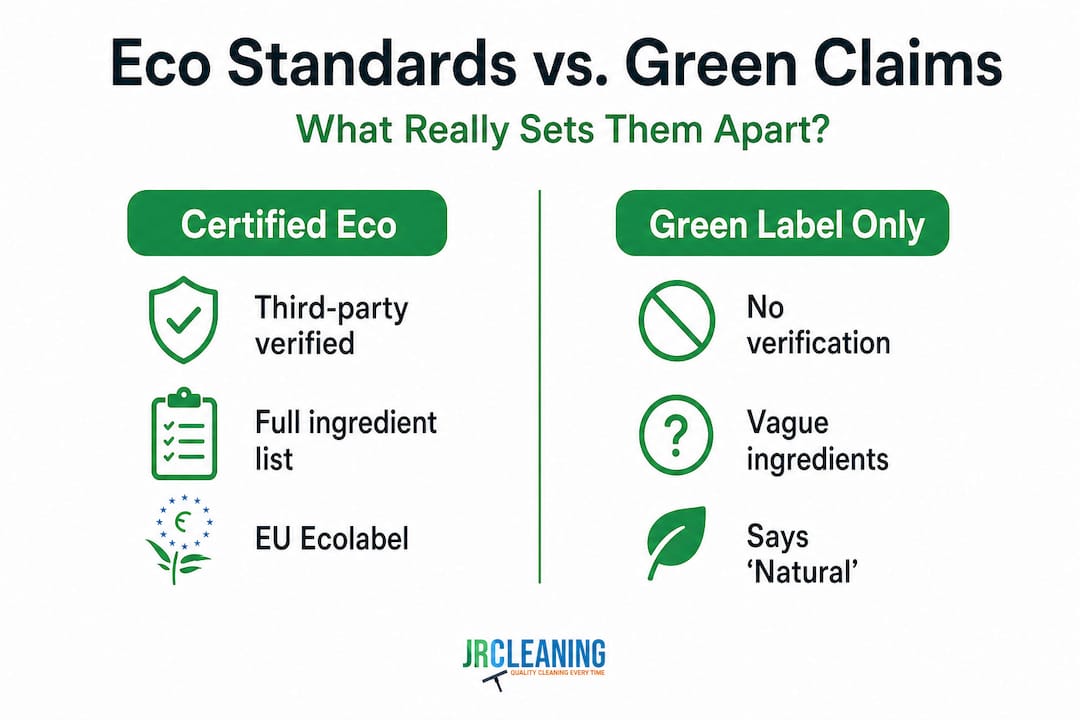
The most reliable markers are third-party certifications. EU Ecolabel and Green Seal are two of the most recognised standards. Both verify that a product’s environmental and health safety has been assessed across its full lifecycle, from raw material extraction through to disposal. They check biodegradability, aquatic toxicity, packaging requirements, and ingredient restrictions. A product carrying one of these marks has earned it through independent testing, not marketing decisions.
Here is how certified labels compare to common unverified claims:
| Criterion | EU Ecolabel / Green Seal | “Natural†or “Green†label (unverified) |
|---|---|---|
| Independent verification | Yes, third-party assessed | No, self-declared |
| Biodegradability testing | Required | Not required |
| VOC limits | Enforced | No standard applied |
| Aquatic toxicity | Assessed | Rarely considered |
| Packaging requirements | Included | Not assessed |
| Lifecycle reviewed | Full lifecycle | Ingredients only, often incomplete |
| Recognised in UK contracts | Often required | Rarely accepted |
The table makes clear why it matters to look beyond the front of the label. A product might use the word “botanical†or display green leaf imagery while containing preservatives or fragrance chemicals known to cause sensitisation. Checking the back of the bottle for certification logos, or using supplier documentation for business purchases, takes seconds and removes all doubt.
Pro Tip: When sourcing products for a business or large home, prioritise suppliers who can provide full Safety Data Sheets alongside their eco certification. Vague claims about “natural ingredients†with no documentation are a reliable sign of greenwashing.
Understanding certified cleaning standards also helps when evaluating whether a professional cleaning company truly operates to a green standard, rather than simply claiming to.
Eco-friendly cleaning in action: Methods and real-world outcomes
Labels and certifications matter enormously, but they only tell half the story. What you actually do with the product, the method, tool, and surface you are working with, determines whether eco-friendly cleaning delivers real results or falls short.
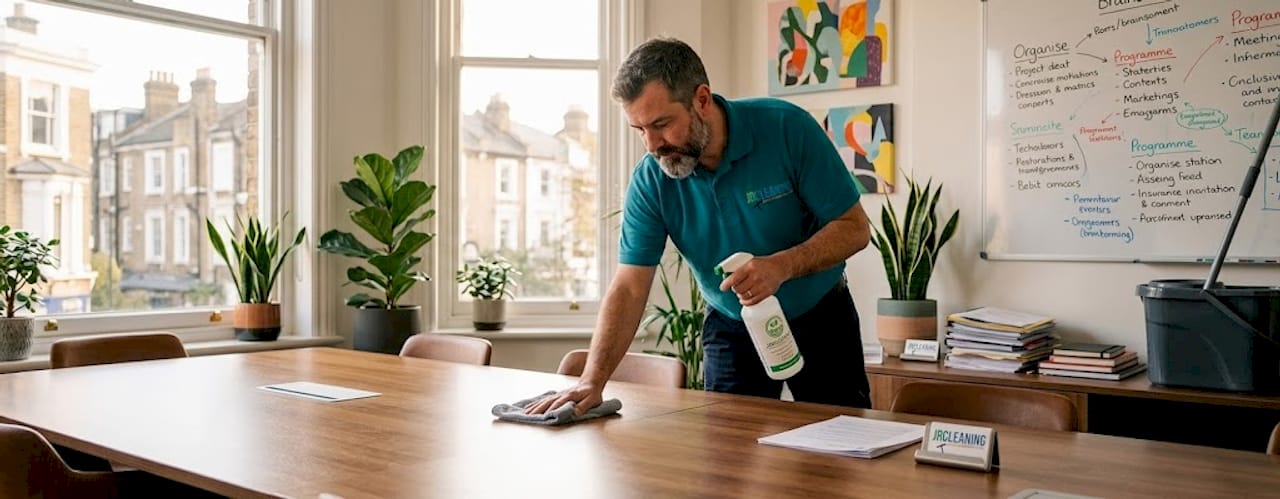
Research comparing approaches found that physical scrubbing with hot water rivals chemical disinfectants in cleaning efficacy and outperforms vinegar or baking soda, particularly when surface type is taken into account. This is a genuinely useful insight. It means mechanical action, the physical effort of scrubbing, is itself a powerful cleaning tool that amplifies the performance of any product you pair it with. You do not need harsher chemicals if your method is thorough.
Here is a practical comparison of approaches:
| Approach | Best suited for | Limitations |
|---|---|---|
| Hot water and scrubbing | Everyday surfaces, tiles, floors | Time-intensive for large areas |
| Certified eco-surfactant spray | Kitchens, bathrooms, worktops | Less effective on baked-on grease |
| Steam cleaning | Deep cleaning upholstery, grout | Equipment cost, not portable for all |
| Microfibre cloths (dry or damp) | Dust, light grime, glass | Require proper laundering |
| Plant-based concentrated cleaner | Multi-surface, diluted as needed | Requires accurate dilution |
Pro Tip: Green wipes are convenient, but even certified eco wipes can contain preservatives that trigger asthma or cause skin reactions in sensitive individuals. For ongoing use, a reusable microfibre cloth with a certified spray solution is both safer and more cost-effective.
Here is a straightforward eco-cleaning routine that works for most UK homes and businesses:
- Remove loose debris first using a dry microfibre cloth or brush before applying any product. This reduces how much cleaner you need and improves results.
- Apply a certified eco-surfactant spray to the surface and allow it to dwell for 30 to 60 seconds before wiping. Dwell time significantly improves microbial reduction.
- Scrub using a damp microfibre cloth or appropriate brush with firm, consistent pressure. The mechanical action does the heavy lifting.
- Rinse with clean water where required (food preparation areas, bathrooms) to remove surfactant residue.
- Dry the surface promptly to prevent moisture build-up and potential mould growth.
- For businesses, log the products used, dilution rates, and dates for audit trail purposes.
For more detail on the essentials that make a real difference in interior spaces, spotless results essentials covers the tools and techniques worth investing in. Combining the right method with a verified product is consistently more effective than choosing a stronger chemical alternative.
Balancing efficacy, compliance, and true sustainability in the UK
For private homeowners, eco-friendly cleaning is largely a personal choice governed by preference, health needs, and values. For UK businesses, the picture is considerably more structured. Legal frameworks, sector-specific standards, and contractual requirements all influence which cleaning methods are acceptable, and “eco†alone is rarely sufficient as a compliance strategy.
The NHS approach illustrates this balance clearly. NHS Supply Chain emphasises dosed chemical use to reduce waste, while the National IPC (Infection Prevention and Control) Manual mandates cleaning standards that prioritise efficacy above eco-specific credentials. In clinical environments, the priority is eliminating pathogens reliably. Sustainability must work within that constraint, not override it.
“Effective cleaning in healthcare and high-risk settings requires standards that prioritise efficacy. Eco protocols can and should reduce waste, but must not compromise infection control outcomes.â€
NHS Supply Chain Guidance on Cleaning Supplies
For businesses outside healthcare, the balance is more flexible but still requires strategic thinking. Here is when to prioritise each approach:
Prioritise efficacy first when:
- Working in healthcare, food production, or childcare settings
- Dealing with biohazard risks, mould, or category-specific pathogens
- Contract requirements specify regulated disinfectants
- Heavy soiling, grease, or industrial residues are involved
Prioritise eco credentials first when:
- Operating in office, retail, or hospitality environments
- Your client base or brand values sustainability visibly
- Staff health and reduced sick leave are key business concerns
- Waste reduction and cost efficiency are operational goals
Hybrid strategies are often the most practical answer for mixed-use UK settings. A business might use certified eco-surfactants for daily maintenance across most areas while keeping a compliant chemical disinfectant for specific risk zones, logged and applied at controlled concentrations. This approach satisfies both regulatory and environmental goals without sacrificing either.
Detailed guidance on office cleaning compliance and broader business cleaning guidance can help you map out which approach applies to your particular setting.
A fresh perspective on eco-friendly cleaning: What most guides miss
After years of working in professional cleaning across residential and commercial settings, one pattern stands out. Most people who want to clean more sustainably focus entirely on what is in the bottle. They read ingredient lists, check for plant-based claims, and feel reassured. But the ingredient list is only one part of the picture.
True sustainability in cleaning requires thinking about the full lifecycle of every decision. That includes how concentrated the product is and whether you are using more than needed. It includes what format you choose: a single-use wipe uses far more packaging and product per clean than a concentrated refillable spray, even when both carry an eco certification. It includes whether your microfibre cloths are being washed at the right temperature to actually clean them rather than just recirculating bacteria.
Here is the point that most articles skip entirely: human behaviour matters more than product choice. A perfectly certified eco-cleaner used incorrectly, in excess, or with the wrong tool on the wrong surface, will underperform a conventional product used with good technique. This is not an argument for conventional chemicals. It is an argument for training, consistency, and thoughtful application.
Green wipes are a perfect example. Even certified ones can contain preservatives like methylisothiazolinone that are recognised asthma triggers. The “green†label addresses some environmental criteria but does not guarantee that every ingredient is safe for sensitive users. Format matters as much as formulation.
The most effective and genuinely sustainable approach we have observed is a disciplined hybrid: mechanical action first, a verified certified product second, matched carefully to the surface and setting. This outperforms both the “just use eco products†school and the “you need industrial-strength cleaners†camp. The goal is not the greenest product on the shelf. It is the method that achieves the result with the least harm and waste.
If you want a cleaner that reflects these values in practice, reviewing eco cleaning insights gives you a clear view of what responsible professional cleaning actually looks like when applied consistently.
Take the next step with professional eco-friendly cleaning
Understanding eco-friendly cleaning in theory is one thing. Applying it consistently, across different surfaces, settings, and compliance requirements, is where professional expertise makes a genuine difference. At JR Cleaning, we bring over 20 years of experience in residential and commercial cleaning across the UK, with a clear commitment to health, safety, and environmental responsibility.
Whether you are a homeowner wanting cleaner indoor air or a business owner managing compliance and sustainability targets, our team can deliver results using verified, environmentally responsible methods. Browse our full range of professional cleaning services to find the right fit, explore our cleaning services in detail, or learn specifically about our eco-friendly solutions and how they are applied in practice. Contact us today for a free, no-obligation quote.
Frequently asked questions
Are eco-friendly cleaning products really effective for deep cleaning?
Paired with physical scrubbing and hot water, eco-friendly products can match or outperform traditional chemicals for most cleaning tasks. They may struggle with heavy grease or baked-on residues, where a targeted approach combining technique and a certified concentrated formula works best, supported by evidence on physical cleaning efficacy.
How do I verify if a cleaning product is truly eco-friendly?
Look for credible third-party certifications such as the EU Ecolabel or Green Seal, which verify environmental and health safety across the full product lifecycle. Vague terms like “natural†or “botanical†without independent verification carry no guaranteed standards.
Can eco-friendly cleaning help reduce allergies and respiratory problems?
Yes. By replacing high-VOC conventional products with plant-based, low-emission alternatives, eco-cleaning directly reduces indoor air pollution and chemical residues that trigger respiratory symptoms and skin reactions.
What cleaning standards must UK businesses follow for sustainability?
Businesses should align with relevant certifications and sector standards, recognising that for regulated environments like healthcare, NHS Supply Chain guidance prioritises efficacy over eco credentials alone. A blended strategy usually satisfies both compliance and sustainability objectives.
Are all “green†cleaning wipes safe for sensitive users?
Not always. Some green-labelled wipes still contain preservatives and fragrance compounds that can trigger asthma or cause reactions in sensitive individuals. Always review the full ingredient list rather than relying solely on the front-label marketing.
Recommended
- Professional cleaning methods for spotless UK homes | J R Cleaning
- Eco-Friendly | J R Cleaning
- Top services for UK homes and businesses 2026 | J R Cleaning
- Top services for UK homes and businesses 2026 | J R Cleaning

