

Facility maintenance tips are systematic practices that keep buildings, equipment, and critical systems operating safely, efficiently, and within regulatory compliance. Known formally as planned preventive maintenance (PPM) in the UK facilities management sector, these strategies cover everything from HVAC filter checks to fire safety inspections and seasonal exterior upkeep. Whether you manage a commercial site, run a business from a dedicated premises, or own a residential property, a structured approach to upkeep prevents costly reactive repairs, protects asset value, and keeps occupants safe. Tools like CMMS software, standards from NFPA and ASHRAE, and documented checklists form the backbone of any credible programme.
1. Build a preventive maintenance programme first
A documented PM schedule with task-specific checklists is the single most important foundation for consistent, auditable facility upkeep. Without it, maintenance becomes reactive, expensive, and impossible to audit. The programme should cover frequency tiers: daily walkthroughs, weekly system checks, monthly inspections, quarterly servicing, and annual full assessments.
Each checklist must go beyond a simple tick-box. Specify the exact inspection steps, the tools required, pass/fail criteria, and who is accountable. Link every task to a specific asset ID in your inventory so nothing falls through the gaps. Common maintenance failures include treating checklists as the end goal rather than the means, and failing to connect tasks to individual assets, which leads to missed or incorrect work.
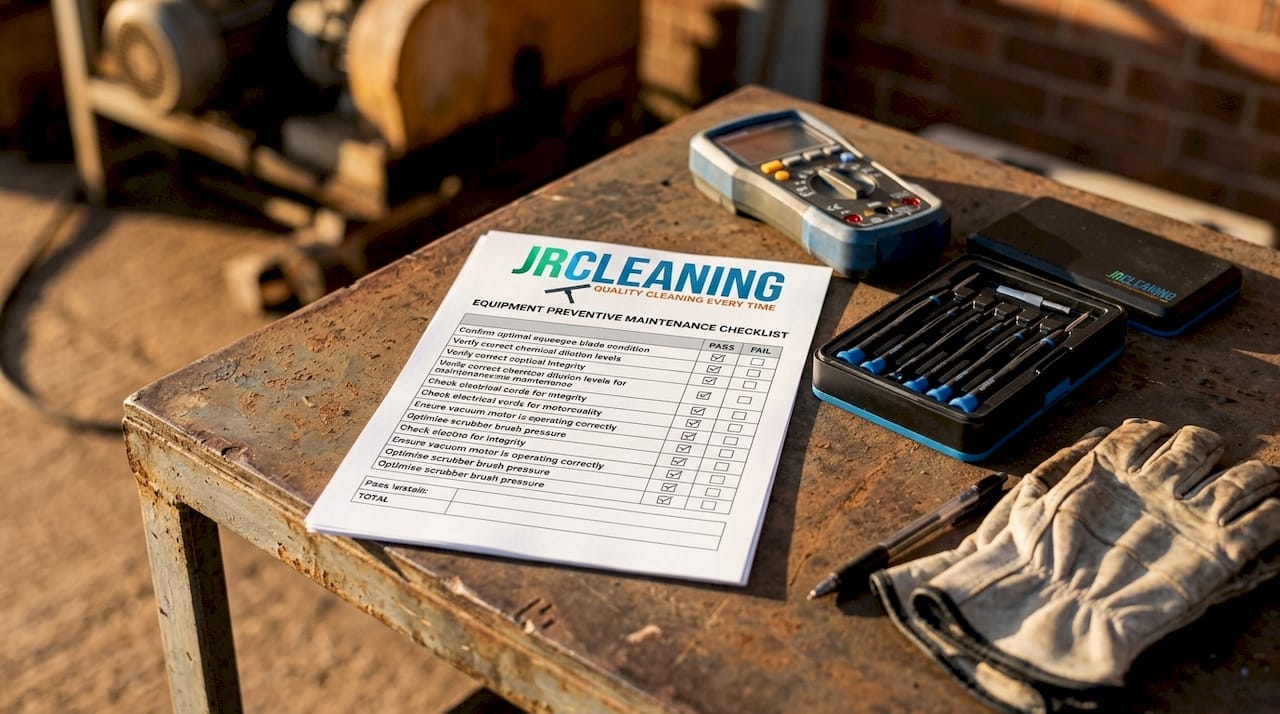
Assign a named owner and a backup for every critical task. If one person is absent, the work still gets done. Review your schedule quarterly and adjust based on actual failure history, not assumptions.
Pro Tip: Start with your five most critical assets, build detailed checklists for those first, then expand. A focused programme you actually follow beats a comprehensive one you ignore.
2. Maintain HVAC systems with condition-based triggers
HVAC is the highest-energy system in most facilities, and poor maintenance directly raises running costs and degrades indoor air quality. ASHRAE 180 recommends monthly inspections with filter replacement triggered by measured pressure differentials rather than fixed calendar dates. This condition-based approach protects system components and air quality far more reliably than swapping filters on a set schedule regardless of actual loading.
Beyond filters, coil cleaning is frequently neglected. Dirty evaporator and condenser coils reduce heat transfer efficiency and force the system to work harder, shortening its lifespan. Airflow checks across supply and return registers identify blockages or duct leaks before they become expensive faults.
For commercial facilities, energy management frameworks such as ISO 50001 integrate HVAC maintenance with systematic energy planning and performance measurement, reducing operational costs over time. Even for smaller sites, tracking energy consumption alongside maintenance activity reveals patterns that justify investment in upgrades.
3. Follow NFPA schedules for fire safety systems
Fire safety compliance is non-negotiable, and the consequences of missed inspections extend well beyond fines. NFPA 25 mandates tiered schedules for fire sprinkler systems: monthly gauge checks, quarterly flow alarm tests, annual full inspections, and five-year internal pipe inspections. Each tier must be completed independently. Skipping one because another is due soon creates compliance gaps and genuine safety risk.
Fire alarm systems, extinguishers, and suppression systems each carry their own inspection frequencies under NFPA codes. Multi-component life-safety compliance requires tracking sprinkler heads, valves, gauges, and detection devices separately, with clear documentation for every test. A single missed record can fail an audit even when the physical work was completed.
Use licensed contractors for annual and five-year inspections. In-house staff can handle weekly visual checks and monthly gauge readings, but statutory tests require qualified third parties and formal sign-off.
Pro Tip: Keep a dedicated fire safety compliance folder, physical or digital, with every test record, contractor certificate, and corrective action note. Auditors look for the paper trail first.
4. Protect electrical and emergency power systems
Electrical systems are the most frequently overlooked area in routine building maintenance advice, yet failures here cause the most disruptive and costly downtime. Weekly visual inspections of distribution boards, cable runs, and emergency lighting units catch early signs of overheating, moisture ingress, or physical damage before they escalate.
Emergency generators require particular attention. Generator failures are most commonly linked to missed routine checks rather than catastrophic component failure. A proper generator PM programme includes weekly inspections, regular load testing, oil and filter changes on schedule, and keeping the unit clean and free of debris. A generator that has not been load-tested recently is not a reliable backup, regardless of how new it is.
UPS systems protecting servers, medical equipment, or security infrastructure need battery tests at least annually. Most batteries degrade silently and fail under load without warning. Testing under realistic conditions is the only way to confirm readiness.
5. Apply seasonal maintenance to reduce risk and cost
Seasonal facility maintenance aligned with specific risk windows targets the right hazards at the right time, improving resilience and reducing energy waste. Each season brings distinct priorities:
- Winter: Lag exposed pipework, inspect boilers and heating systems before the cold sets in, and clear gutters of leaf debris to prevent ice damming and water ingress. Winter gutter maintenance is one of the most cost-effective seasonal tasks for UK properties.
- Spring: Inspect roofing and flashings for freeze-thaw damage, check drainage systems after heavy rainfall, and service air conditioning units before summer demand peaks.
- Summer: Focus on fire safety for exterior areas, inspect cooling systems under load, and address any vegetation encroaching on the building envelope.
- Autumn: Prepare heating systems, inspect window seals and external cladding, and clear drainage before the wet season begins.
Seasonal checklists work best when they sit alongside, not instead of, your routine monthly and quarterly schedules. They address weather-driven risks; your standard programme covers everything else.
Pro Tip: Schedule your spring and autumn inspections at least four weeks before the season peaks. Contractors book up fast, and reactive repairs in peak periods cost significantly more.
6. Common mistakes that undermine your maintenance programme
Even well-intentioned facilities teams make errors that erode the value of their maintenance work. Recognising these patterns is the first step to correcting them.
- Relying solely on calendar-based schedules. Fixed dates ignore actual equipment condition. HVAC filters replaced on the first of every month regardless of pressure differential waste money when clean and fail to protect when heavily loaded.
- Ignoring manufacturer and regulatory standards. NFPA 25, ASHRAE 180, and equipment manufacturer guidelines exist for good reason. Substituting your own judgement for these standards creates both safety and liability exposure.
- Poor documentation and no follow-up on failures. A failed inspection that generates no corrective action is worse than no inspection at all. It creates a paper record of a known fault without resolution.
- Underusing technology. Paper-based maintenance systems produce PM compliance rates of 55 to 70 per cent. Digital CMMS platforms raise compliance by 20 to 35 percentage points, reaching 90 per cent or above within months. That gap represents real safety and cost exposure.
- No named accountability. Tasks without a named owner and backup get skipped when people are busy or absent. Accountability is structural, not motivational.
- Insufficient training. Technicians who do not understand what they are looking for cannot identify early failure signs. Checklists guide the process; training builds the judgement to act on what is found.
7. Measure maintenance performance with clear KPIs
A maintenance programme without measurement cannot improve. The primary leading indicator is PM compliance rate: the percentage of scheduled tasks completed on time. A target of 90 per cent or above is the recognised benchmark, and digital CMMS tools make tracking this straightforward through automated reporting and alerts.
Beyond compliance rate, track these metrics to build a complete picture:
| Metric | What it tells you |
|---|---|
| Mean time between failures (MTBF) | How reliably assets perform between maintenance interventions |
| Corrective action close-out rate | Whether failed inspections are being resolved, not just logged |
| Reactive vs. planned work ratio | A high reactive ratio signals the PM programme is not preventing failures |
| Energy consumption per square metre | Whether maintenance activity is translating into efficiency gains |
Use failure trend data to adjust PM frequencies. If a specific pump consistently fails between quarterly services, move it to monthly. If a piece of equipment has had no issues in three years of monthly checks, quarterly may be sufficient. Combining regular inspections with preventive maintenance beats reactive fixes for sustained reliability, but the schedule must reflect real-world performance data, not initial assumptions.
Continuous training keeps the programme sharp. Standards update, equipment changes, and team knowledge must keep pace. A quarterly briefing on recent failures, near misses, and regulatory changes costs little and pays back significantly.
Key takeaways
Effective facility maintenance combines a documented preventive programme, condition-based system checks, and seasonal strategies to protect assets, maintain compliance, and reduce costs.
| Point | Details |
|---|---|
| Preventive programme first | Build a schedule with frequency tiers and asset-linked checklists before anything else. |
| Condition-based HVAC care | Replace filters on pressure differential, not fixed dates, to protect performance and air quality. |
| Fire safety compliance | Follow all NFPA 25 interval tiers independently and document every test with corrective actions. |
| Seasonal alignment | Match maintenance tasks to seasonal risk windows to reduce reactive repairs and energy waste. |
| Measure PM compliance | Target 90 per cent or above using CMMS reporting; adjust schedules based on actual failure data. |
What 20 years of maintenance work has taught me
The most consistent pattern I see across both residential and commercial sites is the gap between having a maintenance plan and actually trusting it. Facilities teams often build solid PM schedules, then override them the moment something more urgent appears. The schedule slips, compliance drops, and the first sign of trouble is a boiler failure in January or a failed fire inspection.
The uncomfortable truth about preventive maintenance for homeowners and facility managers alike is that the programme only works when it is treated as non-negotiable. The tasks that feel least urgent, checking a generator under load, inspecting a backflow preventer, clearing gutters before the first frost, are precisely the ones that prevent the most expensive failures.
Digital tools have genuinely changed what is achievable here. When I see teams move from paper checklists to a CMMS platform, the compliance rate improvement is almost immediate. Not because the work changes, but because nothing falls through the gaps. Automated reminders, linked asset records, and audit-ready reports remove the reliance on individual memory and goodwill.
My advice: stop treating your maintenance programme as a document and start treating it as infrastructure. It deserves the same investment of time and attention as the systems it protects. The facilities that perform best over a decade are not the ones with the newest equipment. They are the ones with the most consistent maintenance culture.
— jamie
Keep your facility in top condition with Jrcleaning

Maintaining a facility goes beyond scheduled inspections. Cleaning is a core part of commercial facility upkeep, and neglected surfaces, drainage, and kitchen environments create compliance risks and accelerate asset deterioration. Jrcleaning has delivered professional residential and commercial cleaning services across the UK for over 20 years, fully insured and operating to strict health and safety standards.
From commercial kitchen cleaning that meets hygiene regulations to gutter clearing that protects your drainage and roofline through every season, Jrcleaning handles the specialist tasks that sit alongside your maintenance schedule. Contact the team for a free quote via phone, email, or WhatsApp.
FAQ
What is preventive maintenance in facility management?
Preventive maintenance (PM) is a planned programme of scheduled inspections, servicing, and repairs designed to prevent equipment failure before it occurs. It covers frequency tiers from daily checks to annual assessments, with documented checklists linked to specific assets.
How often should HVAC filters be replaced?
ASHRAE 180 recommends replacing HVAC filters based on measured pressure differential rather than fixed calendar dates. Monthly inspections allow you to assess actual filter loading and replace only when performance thresholds are reached.
What does NFPA 25 require for fire sprinkler systems?
NFPA 25 mandates weekly, monthly, quarterly, annual, and five-year inspection and testing cycles for different sprinkler system components. Each tier must be completed independently, with full documentation retained for audit purposes.
What is a good PM compliance rate to target?
A PM compliance rate of 90 per cent or above is the recognised benchmark for effective facility maintenance. Digital CMMS platforms consistently achieve this level, whereas paper-based systems typically produce compliance rates of 55 to 70 per cent.
How does seasonal maintenance differ from routine maintenance?
Seasonal maintenance targets weather-driven risks specific to each time of year, such as freeze-thaw damage in spring or drainage preparation in autumn. Routine maintenance covers ongoing system checks and servicing on fixed frequency cycles regardless of season.
Recommended
- Industrial facility cleaning: safety, compliance, efficiency | J R Cleaning
- Commercial window cleaning steps for facility managers | J R Cleaning
- Master the industrial site cleaning process: safer facilities | J R Cleaning
- How to manage cleaning contracts for quality and compliance | J R Cleaning

