

Most UK homeowners assume gutter cleaning is a quick job involving a ladder and a handful of soggy leaves. The reality is far more serious. Blocked gutters are one of the leading causes of preventable property damage in the UK, contributing to damp walls, rotting fascias, and even foundation problems. As experts note, gutter cleaning involves removing leaves, moss, twigs, silt, and nesting materials from gutters and downpipes to maintain proper rainwater flow. This guide explains exactly what gutter cleaning entails, how professionals do it, and why staying on top of it is one of the smartest decisions you can make as a homeowner.
Table of Contents
- What gutter cleaning actually means
- How professionals clean gutters: step-by-step process
- DIY or professional? What UK homeowners need to know
- How often should gutters be cleaned in the UK?
- The overlooked truths about gutter cleaning
- Protect your home with expert gutter care
- Frequently asked questions
Key Takeaways
| Point | Details |
|---|---|
| More than just leaves | Gutter cleaning involves removing all types of debris to prevent property damage and damp. |
| Pros use specialist tools | Professional cleaning ensures thorough debris removal, inspection, and safer methods for all UK homes. |
| Regular frequency matters | Twice-yearly cleans are ideal for most homes, more often if surrounded by trees or moss. |
| DIY has risks | While some can DIY, professionals offer better safety, completeness, and insurance-backed peace of mind. |
What gutter cleaning actually means
Gutter cleaning is not simply scooping out a few leaves once a year. It is a systematic process that covers the full rainwater drainage system attached to your home, including the gutters themselves, the downpipes that carry water to the ground, and the joints and brackets that hold everything together. As industry professionals confirm, the process removes leaves, moss, twigs, dirt, silt, and nesting materials to ensure proper rainwater flow and prevent water damage.
The purpose is straightforward. When rainwater cannot flow freely through your guttering, it has nowhere to go but over the edge or back towards your property. Over time, this causes serious structural harm that is expensive to fix.
Common debris found in UK gutters includes:
- Autumn leaves from nearby trees, which compact and form a thick, soggy blockage
- Moss and algae, which grow rapidly in the UK’s damp climate and can weigh down gutters
- Roofing granules shed from ageing felt or tile roofs
- Silt and fine grit, which washes down from the roof and settles at low points
- Bird and squirrel nests, which can completely block downpipes
- Twigs and seed pods, carried by wind from surrounding trees
When these materials accumulate, the consequences go well beyond a bit of overflow. Blocked gutters can cause:
- Damp patches on interior walls and ceilings
- Rotting timber fascias and soffits
- Cracked or bowed guttering from the weight of standing water
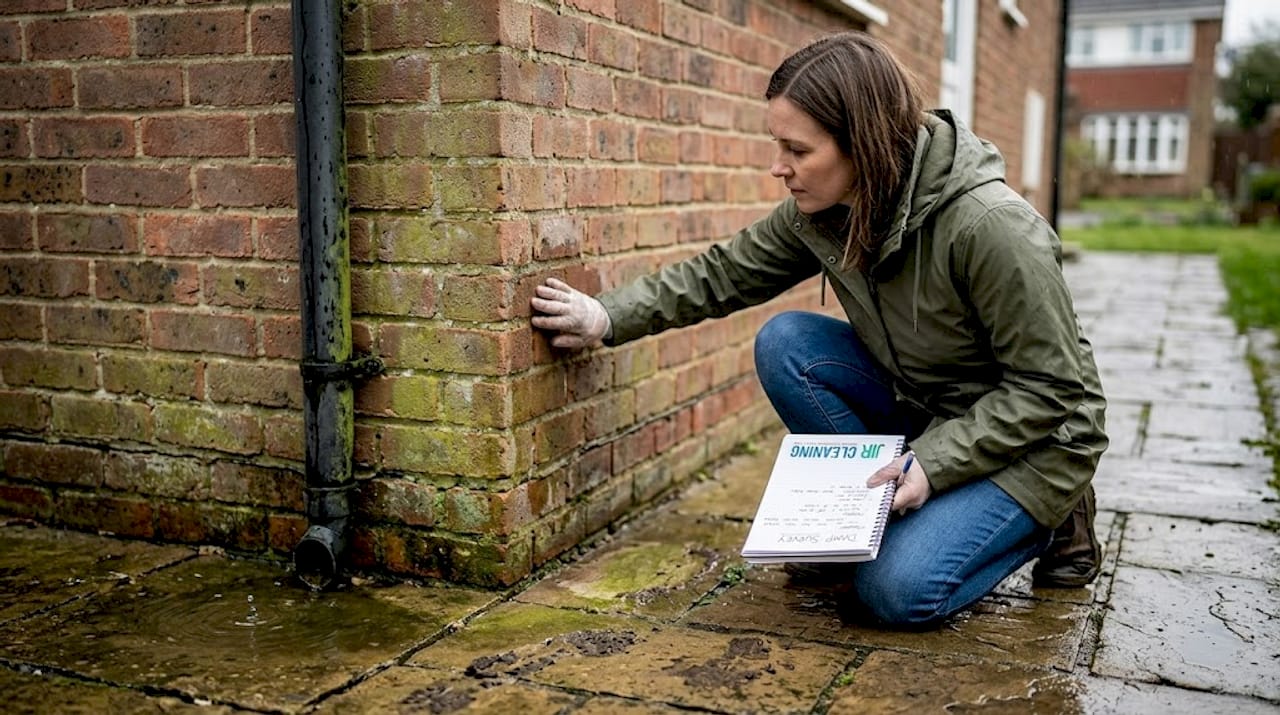
- Damage to brickwork and mortar from constant saturation
- Mould growth inside the property
- Foundation erosion from water pooling at the base of the building
Understanding why clean gutters matter goes beyond aesthetics. A well-maintained drainage system actively protects your property’s value and structural integrity. As blocked gutter drain advice from drainage specialists confirms, even partial blockages can redirect water into areas of your home that are costly to repair. Consistent gutter maintenance is not optional; it is essential.
How professionals clean gutters: step-by-step process
With a clear definition in mind, it helps to understand how professionals actually tackle the job and why their approach is so different from a DIY attempt on a Saturday afternoon.
According to industry guidance, professional cleaning follows a structured step-by-step process covering inspection, preparation, debris removal, vacuuming, flushing, downpipe clearing, and final checks for leaks or misalignment. Here is what that looks like in practice:
- Initial inspection of the gutters, downpipes, and fascias to identify blockages, damage, or sagging
- Site preparation, including laying protective sheeting and setting up access equipment safely
- Manual debris removal using specialist scoops and trowels to clear large accumulations
- Vacuum suction using ground-based telescopic systems to extract fine silt and residue
- Flushing with water to clear remaining debris and test flow through the system
- Downpipe clearing using rods or high-pressure jets to remove compacted blockages
- Final checks for leaks, joint failures, sagging, and correct water flow direction
Professionals use a range of gutter cleaning tools depending on the property. The most common methods are compared below.
| Method | Safety | Thoroughness | Typical use |
|---|---|---|---|
| Manual with ladders | Moderate risk | Good for light debris | Single-storey or low roofs |
| Telescopic vacuum system | High safety | Excellent, no ladder needed | Most UK homes, all heights |
| Pressure washing | Moderate risk | Very thorough, removes moss | Heavily soiled or mossy gutters |
| Cherry picker access | Very safe | Excellent for complex rooflines | Multi-storey or awkward access |
Many professionals now use camera inspections to document blockages before and after cleaning, which is especially useful for insurance purposes. Reviewing professional gutter cleaning steps in detail reveals just how thorough a proper job should be. For homes with heavily blocked downpipes, drain unblocking tips from drainage specialists can also be useful.
Pro Tip: For most UK homes, a telescopic vacuum system is the safest and most effective method. It keeps operatives off ladders, causes no mess on driveways, and reaches all gutter sections without disturbing roof tiles. Ask your contractor which system they use before booking.
DIY or professional? What UK homeowners need to know
Knowing the process, the next key decision is whether to do it yourself or hire a professional. This is where many homeowners underestimate the risks involved.
DIY gutter cleaning carries real dangers. Falls from ladders account for a significant proportion of serious home accidents in the UK each year. Beyond safety, DIY attempts often miss compacted sludge deep in downpipes and fail to spot early signs of gutter damage. As professional cleaning is worth it evidence confirms, DIY risks incomplete cleaning and ladder falls, while professionals provide thoroughness, insurance cover, photographic evidence, and early damage detection.
DIY may be feasible if:
- Your home is a bungalow or has very low eaves
- You have proper ladder safety equipment and a helper
- The gutters have only light, recent debris
- You are confident inspecting downpipes and joints
You should call a professional if:
- Your home is two storeys or higher and ladder access is risky
- Gutters are heavily blocked with compacted moss or silt
- You have gutter guards that need removing and refitting
- You have experienced previous blockages or water damage
- Your gutters are old or fragile and could crack under pressure
The benefits of regular gutter cleaning extend beyond the clean itself. Professionals spot cracked joints, failing brackets, and early signs of rot that a homeowner on a ladder would almost certainly miss. If damage is found, accessing gutter repairs early prevents small problems from becoming expensive ones. Specialist drain cleaning services can also assist when downpipes connect to underground drainage systems.
Pro Tip: Always ask for before and after photographs when hiring a professional. A reputable company will provide these as standard. If a contractor cannot show you evidence of the work completed, that is a warning sign worth heeding.
How often should gutters be cleaned in the UK?
Regardless of who does the work, how frequently should you schedule gutter cleaning? The answer depends on your property, its surroundings, and the local environment.
The standard UK recommendation, as confirmed by cleaning frequency guidance, is twice yearly for most homes, typically in spring and autumn. Properties near trees, in coastal areas, or with mossy roofs should increase this to three or four times per year. No property should go more than 12 months without a clean.
| Property type | Recommended frequency |
|---|---|
| Standard home, no nearby trees | Twice yearly (spring and autumn) |
| Home near deciduous trees | Three times yearly |
| Coastal or high-rainfall area | Three to four times yearly |
| Property with mossy or aged roof | Three to four times yearly |
| Home with gutter guards fitted | Once to twice yearly |
You should also watch for signs that an interim clean is needed between scheduled visits:
- Water overflowing during or after rainfall
- Visible moss, weeds, or plant growth in the gutters
- Staining on external walls below the gutterline
- Birds or squirrels repeatedly visiting the roofline
- A recent storm that brought down significant leaf or branch debris
Seasonal timing matters too. Winter gutter cleaning is particularly important because blocked gutters in freezing temperatures can fill with ice, adding significant weight and causing sections to crack or pull away from the fascia entirely. Spring cleaning clears the debris that has accumulated over winter, while autumn cleaning prepares the system for the heavy rainfall and leaf fall ahead.
Key stat: Gutters left uncleaned for more than 12 months are significantly more likely to develop structural faults, according to drainage and property maintenance specialists. The cost of repairing water-damaged fascias, soffits, or brickwork far exceeds the cost of two professional cleans per year.
The overlooked truths about gutter cleaning
Having covered the facts and essential advice, here is an insider perspective on what is truly at stake for UK homeowners.
The most common mistake we see is treating gutters as invisible. Because they sit above eye level, homeowners assume everything is fine until water starts dripping down the wall. By that point, the damage is already done. The real cost of neglect is not just the repair bill. It is the damp that creeps into bedroom walls, the insurance claim that gets disputed because maintenance was overdue, and the surveyor’s report that flags gutter condition as a concern during a property sale.
Gutter guards are another area where expectations do not match reality. Many homeowners install them believing they will never need to clean their gutters again. In practice, moss and fine debris still accumulate underneath and around guards, and the guards themselves can trap material in ways that make blockages worse. As step-by-step gutter cleaning insights make clear, guards reduce frequency but never eliminate the need for professional attention.
The uncomfortable truth is that regular professional cleaning is one of the most cost-effective forms of home maintenance available. It costs far less than a single damp remediation job, and it keeps your property in the condition that insurers, surveyors, and future buyers expect.
Protect your home with expert gutter care
Understanding what gutter cleaning involves is the first step. Acting on that knowledge is what protects your home.

At JR Cleaning, we have over 20 years of experience helping UK homeowners maintain safe, functional guttering systems. Our fully insured team uses professional-grade equipment, provides before and after photographic evidence, and identifies any damage before it becomes a costly problem. Whether you need a routine clear-out or have noticed signs of blockage, our expert gutter cleaning service is designed to give you complete peace of mind. We also offer dedicated gutter repairs if our team spots any damage during the clean. Get in touch today for a free, no-obligation quote.
Frequently asked questions
What happens if I don’t clean my gutters?
Blocked gutters cause rainwater to overflow and saturate walls, leading to damp, structural damage, rotting fascias, and potential foundation issues that can seriously hurt your property’s value.
How can I tell if my gutters need cleaning?
Overflowing water during rain, visible moss or weeds growing in the gutterline, and birds repeatedly nesting near the roofline are all clear signals, and as frequency guidance confirms, no home should go more than 12 months without a professional check.
Are gutter guards a substitute for cleaning?
No. Gutter guards reduce how often cleaning is needed, but as industry evidence shows, moss, fine debris, and compacted silt still accumulate and require regular professional attention.
How long does professional gutter cleaning take?
Most domestic jobs take one to two hours depending on property size and debris levels, following the structured professional process from initial inspection through to final flow checks.
Recommended
- Gutter cleaning step by step: keep your UK home safe | J R Cleaning
- Protect your home value: Why clean gutters matter | J R Cleaning
- Why clean gutters in winter: protect your UK home | J R Cleaning
- Gutter Cleaning and Clearing | J R Cleaning
- Best Guide About Blocked Gutter Drain in 2024

