

Your roof is one of the first things people notice about your property, and a faded, moss-covered surface can make even a well-maintained home look neglected. For Victoria homeowners and property managers, roof spray painting offers a practical way to restore appearance and extend roof life without the enormous cost of a full replacement. A typical professional workflow starts with inspection, pressure cleaning, repairs, priming, and two protective top coats. This guide walks you through every stage so you know exactly what a quality job looks like and how to avoid the pitfalls that cut years off a coating’s life.
Table of Contents
- What you need before starting
- Step-by-step roof spray painting guide
- Common mistakes and how to avoid them
- Expected results, costs and how to maximise roof longevity
- Why the right process matters more than the paint
- Get professional help for your roof spray painting project
- Frequently asked questions
Key Takeaways
| Point | Details |
|---|---|
| Preparation is critical | Thorough roof inspection, repairs, and cleaning are non-negotiable for a durable, attractive result. |
| Spray vs brush/roller | Spraying is faster and better for most roofs, but a hybrid method ensures best finish and longevity. |
| Durability with upkeep | A properly sprayed roof can last up to 15 years—regular cleaning and maintenance are needed. |
| Professional safety | Proper fall protection and respiratory safety gear are mandatory for all roof spray painting jobs. |
What you need before starting
Before you start the actual spray painting, preparation is everything. Let’s cover what’s required.
Skipping the preparation stage is the single most common reason roof coatings fail early. Before any paint touches your roof, you need the right equipment, a thorough inspection, and a clear understanding of the safety risks involved. Getting this stage right sets up everything that follows.
Safety first
Working on a roof combines two serious hazards: working at height and exposure to spray mist and paint fumes. Falls risk control and respiratory protection are specifically highlighted in Victoria workplace guidance for painting contractors. That means a properly anchored fall arrest system, non-slip footwear, and an appropriate respirator rated for organic vapours, not just a basic dust mask.
Never rely on a ladder alone for roof access. Roof anchor points, harnesses, and safety lines are the minimum standard for any pitched roof work. If you are assessing a contractor, ask specifically about their fall protection setup before they start.
Essential tools and materials
Here is a summary of what a professional roof spray painting job requires:
| Item | Purpose |
|---|---|
| Pressure washer (min. 2,500 PSI) | Remove moss, lichen, dirt, and loose paint |
| Roof primer/sealer | Promote adhesion and seal porous surfaces |
| Weatherproof roof paint (UV-resistant) | Provide durable, weather-resistant finish |
| Airless spray gun | Apply paint evenly at correct pressure |
| Back-roller (short nap) | Improve adhesion immediately after spraying |
| Masking film and tape | Protect gutters, solar panels, skylights |
| Respirator (organic vapour rated) | Protect from fumes and spray mist |
| Fall arrest harness and anchor | Essential height safety |
| Caulk and roof repair compound | Fill cracks and seal loose fittings before painting |
Understanding the overview of painting requirements helps you appreciate why each item on this list earns its place. Cutting corners on any of these, particularly the safety gear or the pressure washer, will compromise the result.
Roof inspection checklist
Before a single drop of water hits the roof, carry out a systematic inspection. Look for:
- Cracked, broken, or slipped tiles that need replacing or re-bedding
- Loose or corroded flashing around chimneys, vents, and valleys
- Active moss, lichen, or algae growth that must be treated and removed
- Rust spots on metal roofing that require treatment with a rust converter
- Blocked or damaged gutters that could cause water to back up under tiles
- Existing peeling paint that needs scraping back to a sound surface
Address every item on this list before proceeding. Painting over problems does not hide them. It locks them in and accelerates deterioration beneath the coating.
Pro Tip: Schedule your roof spray painting work for a calm, dry period with low wind. Wind increases overspray risk significantly, wasting paint and potentially coating neighbouring surfaces, solar panels, or garden furniture.
“Proper preparation is not just best practice; it is the foundation that determines whether your coating lasts five years or fifteen.â€
Learning roof cleaning basics before you begin will give you a much clearer picture of what a properly cleaned surface should look like before paint is applied.
Step-by-step roof spray painting guide
With your materials on hand and safety checked, move confidently into the process itself: here is how to do a roof spray painting job, step by step.
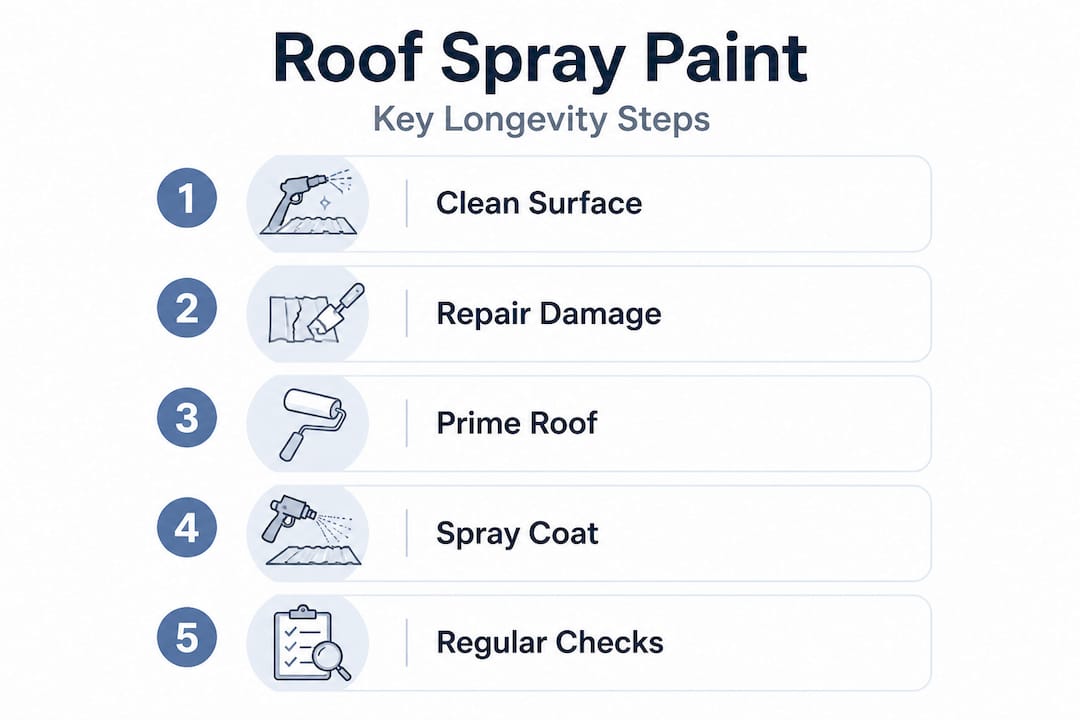
A professional roof spray painting workflow follows a logical sequence from inspection through to final checks. Rushing or skipping any stage compromises the whole job.
The full process
- Inspect the roof thoroughly using the checklist above. Document any damage.
- Carry out repairs before any cleaning begins. Replace broken tiles, re-bed loose ones, treat rust, and seal cracks.
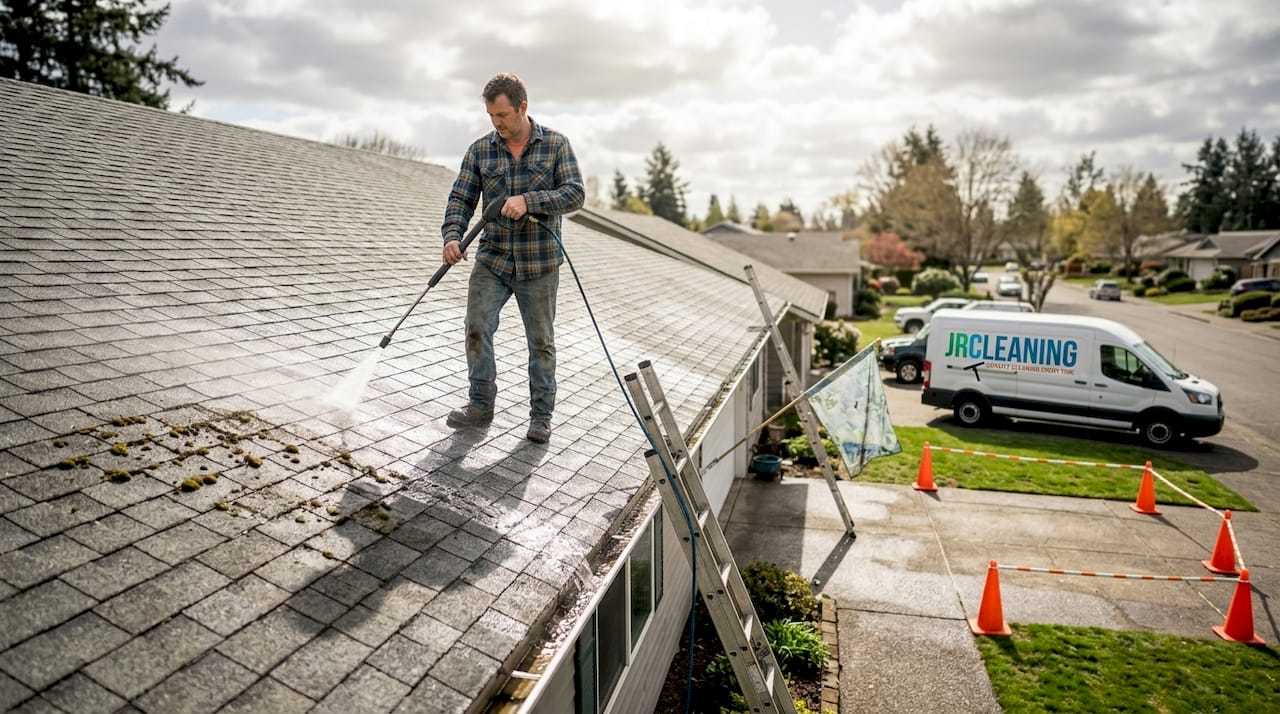
- Pressure wash the entire surface to remove moss, lichen, dirt, and any loose existing coating. Allow 24 to 48 hours to dry completely.
- Apply a moss treatment or biocide if growth was present, and allow it to work before rinsing.
- Mask all areas that must not be painted: gutters, fascias, skylights, solar panels, and any roof fixtures.
- Apply primer or sealer to the entire surface, paying extra attention to porous or repaired areas. Allow to cure fully.
- Apply the first top coat using an airless sprayer, working in overlapping passes. Back-roll immediately while the paint is still wet.
- Allow the first coat to dry according to the manufacturer’s instructions, typically four to six hours in good conditions.
- Apply the second top coat using the same technique. Two coats are standard for durability and even colour coverage.
- Final inspection: check for missed areas, thin patches, or overspray on surrounding surfaces. Touch up as needed.
Spray vs brush vs hybrid: which method is best?
The trade-offs between spraying and brush or roller are important to understand, especially on textured or uneven roof surfaces.
| Method | Speed | Finish quality | Skill required | Overspray risk |
|---|---|---|---|---|
| Airless sprayer | Fast | Excellent on textured surfaces | High | Moderate to high |
| Brush/roller | Slow | Good, very controlled | Moderate | Very low |
| Hybrid (spray + back-roll) | Moderate | Best overall | High | Moderate |
The hybrid approach is widely regarded as the best option for most roofs. Spraying reaches into every crevice and textured surface quickly, while back-rolling immediately after ensures the paint bonds properly to the substrate rather than sitting on the surface.
Pro Tip: Always test your spray pattern on a small, inconspicuous patch before starting the main job. Adjust pressure and nozzle size until you achieve an even, consistent fan pattern. Back-rolling while the paint is still wet is not optional; it is what separates a coating that lasts a decade from one that peels within two years.
For a closer look at the detailed roof coating process we follow, you can see exactly how each stage is approached to professional standards.
Common mistakes and how to avoid them
Even with a solid process, one mistake can ruin the outcome. Here is what to avoid and why these errors matter.
Roof spray painting is unforgiving. A mistake made during preparation or application can cause premature peeling, uneven colour, or even structural damage beneath the coating. Painting over damaged sections without repair, uneven coats, and inadequate pressure-cleaning are among the most common causes of early coating failure.
The most costly mistakes
- Skipping or rushing the pressure wash. Moss, dirt, and old paint residue prevent adhesion. If the surface is not properly clean and dry, the new coating will lift within months.
- Painting in unsuitable weather. Painting in high humidity, rain, or extreme heat causes blistering, poor adhesion, and uneven drying. Aim for dry conditions between 10°C and 30°C.
- Inadequate masking. Overspray on solar panels, skylights, or gutters is difficult to remove and can damage surfaces. Take the time to mask thoroughly.
- Ignoring roof pitch hazards. Steep pitches and difficult access significantly increase both labour time and safety risk. Underestimating this leads to rushed work and unsafe conditions.
- Neglecting safety protocols. Falls from roofs are among the most serious workplace injuries. Skipping fall protection because “it’s just a quick job†is never acceptable.
“Never paint over active leaks, moss, or rust. Repairs come first for coatings to last over a decade.â€
The coating longevity insights available from experienced contractors consistently point to preparation as the deciding factor between a coating that performs and one that fails.
For additional guidance on staying safe while working on your roof, the roof cleaning safety tips we have published cover the key risks in detail. You can also review common roof cleaning errors that apply equally to spray painting projects.
Pro Tip: If your roof is steep, high, or has complex features like multiple valleys, dormers, or solar panels, engage a professional. The risk and skill required increase substantially, and the cost of getting it wrong far exceeds the cost of professional help.
Expected results, costs and how to maximise roof longevity
After your roof spray painting is complete, knowing what to expect and how to care for your investment ensures years of benefits.
How long will it last?
A professionally sprayed roof typically lasts 10 to 15 years when correctly prepared and maintained. That figure assumes proper pressure cleaning, full repairs before painting, quality primer, and two full top coats. Cut any of those corners and you can expect to see peeling or fading within three to five years.
Proper preparation and regular maintenance can effectively double the working life of a painted roof compared to one that is painted and forgotten.
What does it cost in Victoria?
Roof spray painting in Australia typically costs between $20 and $40 per square metre, with a single-storey home in Victoria commonly falling in the range of $4,000 to $7,500 for a complete job. The final figure depends on several variables:
| Roof material | Typical durability | Cost influence |
|---|---|---|
| Concrete tiles | 10–15 years | Moderate; porous surface needs primer |
| Terracotta tiles | 12–15 years | Higher; fragile, needs careful access |
| Colorbond metal | 10–12 years | Lower prep cost; rust treatment if needed |
| Corrugated iron | 8–12 years | Rust treatment often required; adds cost |
Maintenance must-dos after painting
Keeping your newly painted roof in excellent condition does not require much effort, but consistency matters:
- Clear debris regularly. Leaves and branches trap moisture and accelerate moss regrowth.
- Inspect for cracks or chips after severe weather events and touch up promptly.
- Treat any moss or algae as soon as it appears rather than waiting for a full clean.
- Check gutters and downpipes to ensure water drains freely and does not back up onto the painted surface.
- Schedule a professional inspection every two to three years to catch issues early.
Staying on top of essential roof cleaning between paint jobs is one of the most effective ways to extend coating life. A maintenance checklist for long-lasting roofs can help you stay organised year-round.
If heat management is a concern for your property, consider a reflective or light-coloured coating. These can meaningfully reduce heat absorption and lower cooling costs during Victoria’s hot summers.
Why the right process matters more than the paint
Here is something we have learnt from over 20 years in the industry: most homeowners ask about paint brands. Very few ask about the process. That is the wrong priority.
The quality of the coating you choose matters, of course. But the brand on the tin accounts for perhaps 20% of the final result. The other 80% comes down to how thoroughly the roof was cleaned, how carefully the repairs were made, how evenly the primer was applied, and how disciplined the applicator was about back-rolling and coat thickness.
We have seen premium paints fail within two years because a contractor skipped the pressure wash or painted over a patch of live moss. We have also seen modest coatings last well over a decade because every preparation step was followed without compromise. The paint does not save a bad preparation job. It never will.
This matters practically when you are choosing a contractor. Ask them to walk you through their full workflow before you agree to anything. How long do they allow for the roof to dry after pressure washing? Do they use a primer, and if so, which one and why? How do they handle moss-affected areas? A contractor who gives vague answers to these questions is telling you something important about how they work.
Our roof coating expertise is built around a disciplined, stage-by-stage process because we know that is where longevity is actually created. The paint is the final step, not the most important one.
Pro Tip: Always ask a prospective contractor for their full written workflow before accepting a quote. If they cannot or will not provide it, that is a strong signal to look elsewhere.
Get professional help for your roof spray painting project
If you want guaranteed quality, safety, and maximum roof longevity, it is worth engaging seasoned professionals who follow the complete workflow.
At JR Cleaning, we bring over 20 years of experience to every professional roof spray painting project across Victoria. We understand local roof types, Victoria’s weather patterns, and the specific safety compliance requirements that protect both our team and your property.

From thorough roof cleaning and moss removal through to priming, coating, and final inspection, we follow every stage of the process without shortcuts. We are fully insured, work to strict health and safety standards, and provide clear, detailed quotes so you know exactly what you are paying for. Whether you need a full roof spray painting job or an expert assessment of your current roof’s condition, get in touch today for a free, no-obligation quote.
Frequently asked questions
How long does roof spray painting last in Victoria?
When properly prepared and maintained, a sprayed roof typically lasts 10 to 15 years, depending on the material and the quality of preparation carried out before painting.
What influences the cost of roof spray painting?
Key factors include roof size, pitch, material, and the extent of prep and repair needed. Cost drivers in Australia also include coating type, access difficulty, and overspray management around fixtures such as solar panels.
Do you need to clean a roof before spray painting?
Yes, pressure-cleaning is essential. A professional workflow always begins with inspection and thorough pressure washing to remove moss, dirt, and loose material before any primer or paint is applied.
Is roof spray painting safe for all roof types?
Most tiled and metal roofs can be spray painted effectively. However, material-specific preparation is important: terracotta tiles need careful handling, and metal roofs often require rust treatment before priming.
What safety measures are required for roof spray painting?
Falls risk control and respiratory protection are the two most critical requirements. This means a properly anchored fall arrest system, appropriate respirator, non-slip footwear, and weather checks before starting any roof spray work.
Recommended
- Roof Coating | J R Cleaning
- Roof Cleaning London | J R Cleaning
- Roof Cleaning & Moss Removal | J R Cleaning
- Painting | Buffalo Roofing & Exteriors | San Antonio to Corpus Christi, TX

