

Most people think clean windows are simply a cosmetic concern, something to tackle before a viewing or after a particularly muddy storm. In reality, allergens, dust mites, mould, and bacteria accumulate in windowsills and tracks constantly, quietly degrading indoor air quality and driving up energy costs without a single obvious warning sign. Whether you own a family home in Victoria or manage a busy commercial premises, the state of your windows has far greater consequences than a streaky view. This guide breaks down precisely what is at stake and what you can do about it.
Table of Contents
- The hidden impact of grime: Health and efficiency
- Professional cleaning vs DIY: What’s the real difference?
- How often should windows be cleaned? Benchmarks and best practice
- Lasting effects: Kerb appeal, asset value, and safety
- Why most people underestimate the true value of spotless windows
- Professional support: Clean windows made easy
- Frequently asked questions
Key Takeaways
| Point | Details |
|---|---|
| Healthier environment | Routine window cleaning reduces allergens, dust, and mould, improving air quality for everyone inside. |
| Preserves value | Clean windows boost kerb appeal and ensure property assets remain in top condition longer. |
| Saves money long term | Preventative cleaning prevents costly glass damage and avoids bigger repairs later on. |
| Professional is safer | Experts use safe, eco-friendly methods that protect your property and deliver streak-free results. |
The hidden impact of grime: Health and efficiency
Having set the stage for the broader significance of clean windows, let us look at the concrete health and efficiency reasons that make regular cleaning genuinely important rather than optional.
Most people never think about the invisible layer of material that settles on window glass, frames, and tracks. Pollen, mould spores, pet dander, and fine particulate matter from traffic and industry drift indoors and settle on every available surface. Windowsills and tracks are especially vulnerable because they sit at the boundary between outside air and your indoor environment, trapping debris in grooves and corners where standard dusting cannot reach.
Regularly removing allergens from windowsills reduces the load on the indoor air you breathe every day. For families with young children, asthma sufferers, or anyone with pets, this is not a minor consideration. In commercial settings, it directly affects workplace hygiene standards and the duty of care employers owe to staff and visitors. A meeting room with mould-lined window frames is not just unpleasant; it is a potential health liability.
The efficiency argument is equally compelling. Natural light passing through grimy glass is diffused and weakened, meaning you rely more on artificial lighting. Soiling on glass surfaces can produce a 2 to 7% efficiency loss, a figure drawn from solar panel studies but directly analogous to how dirt reduces light transmission through any glass surface. For a commercial building with dozens of windows, that translates into a measurable rise in electricity costs over a year.
| Problem caused by dirty windows | Practical consequence |
|---|---|
| Dust and allergen accumulation | Respiratory irritation, worsened allergies |
| Mould growth in frames | Indoor air contamination, structural damage |
| Reduced light transmission | Higher reliance on artificial lighting |
| Bacterial build-up on tracks | Risk to vulnerable occupants and staff |
| Surface grime on glass | Gradual etching and permanent staining |
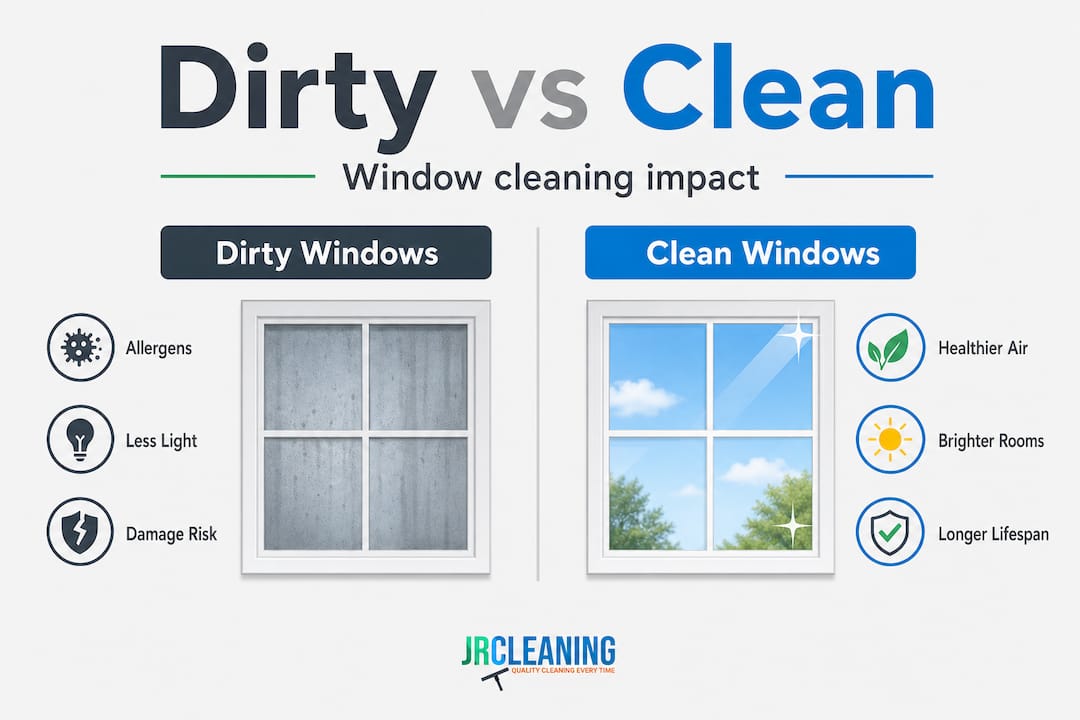
Understanding why routine glass cleaning matters goes well beyond aesthetics. It is genuinely a maintenance and health issue that accumulates quietly until the damage becomes expensive to reverse. Properties that neglect windows for extended periods often find that glass has been etched by hard water minerals or acid rain deposits, damage that no amount of cleaning can fully undo without professional restoration.
Key health and efficiency risks from neglected windows:
- Mould and mildew growth in damp frame channels
- Increased pollen and dust settlement near window openings
- Reduced natural light leading to higher energy consumption
- Permanent glass surface etching from mineral deposits
- Bacterial contamination in high-traffic commercial spaces
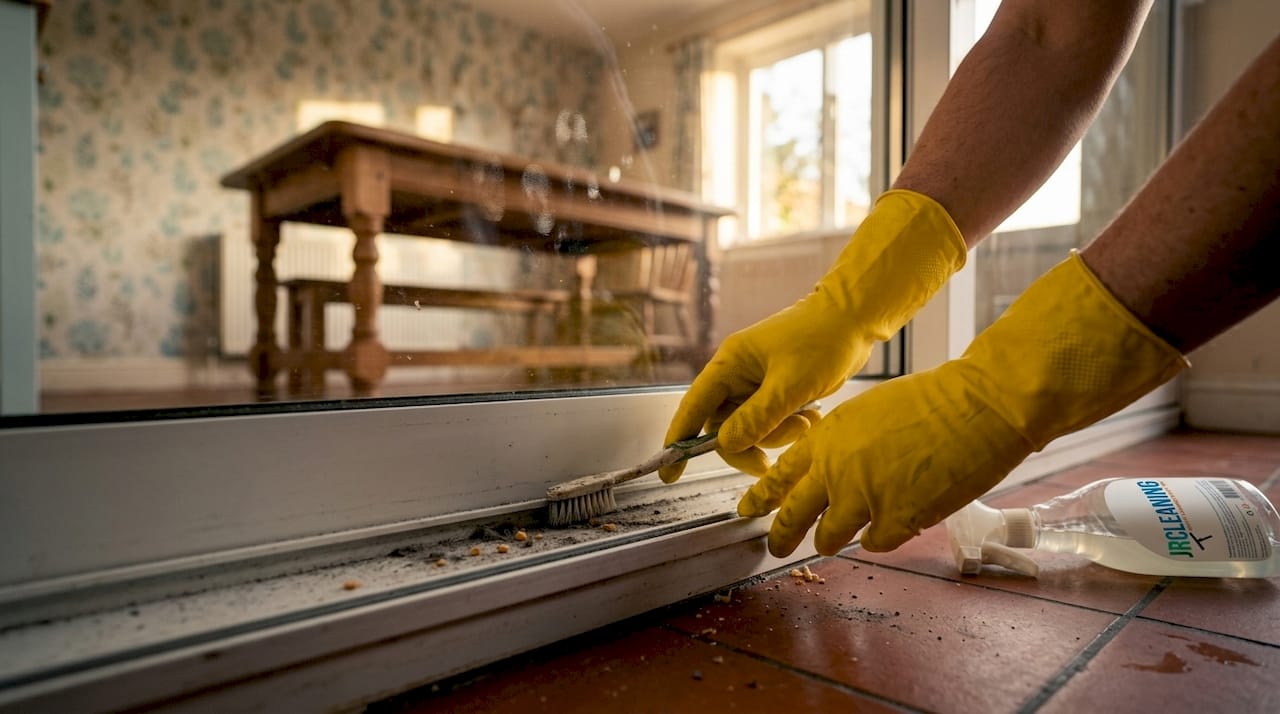
Pro Tip: Pay attention to the window tracks. These channels collect the most grime and are often skipped during a quick clean. A cotton bud or a narrow brush used during a thorough clean can remove the build-up that affects air quality most directly.
Protecting your property value through maintenance starts with these small but consistent actions. Windows are one of the first things to show wear, and addressing the problem early is always less costly than dealing with degradation later.
Professional cleaning vs DIY: What’s the real difference?
Now that the dangers of dirty windows are clear, the next question is whether it pays to use professionals or to simply roll up your sleeves and do it yourself.
The honest answer is that both approaches have a place, but the risks and outcomes are genuinely different. Most homeowners reach for a spray bottle and a cloth, which works adequately for light surface dust. The problem arises when that cloth is slightly abrasive, when the spray contains ammonia, or when the technique leaves moisture sitting in the frame channels.
Professional services use pH-balanced solutions, distilled or purified water, and specialist microfibre tools that lift contaminants without scratching or leaving residue. Ammonia-based products, commonly found in supermarket window sprays, can gradually cloud glass coatings and are hazardous around children and pets. Pure water systems, used by trained professionals, leave no mineral spots because the water itself is stripped of the dissolved solids that cause those familiar white streaks.
| Factor | DIY approach | Professional service |
|---|---|---|
| Tools used | Household cloths, spray bottles | Microfibre pads, squeegees, pure water systems |
| Solutions | Off-the-shelf sprays, often ammonia-based | pH-balanced, eco-friendly, non-toxic formulas |
| Height access | Risky without proper ladders | Full safety training and specialist equipment |
| Results | Variable, often streaky | Consistent streak-free finish |
| Frame and track care | Often overlooked | Included as standard |
| Risk of damage | Scratches, coating damage, moisture trapping | Minimal when carried out correctly |
Safety at height is another area where professional training makes a significant difference. Cleaning upper-storey windows on a ladder without proper training and footing is one of the most common causes of domestic accidents. Professionals are trained and equipped for exactly these conditions. The external window cleaning methods used by experienced teams, including water-fed poles and reach-and-wash systems, remove the need for ladders entirely in many cases.
“Using the wrong products on windows is one of the most common and costly mistakes homeowners make. A clean-looking result achieved with an abrasive cloth or ammonia spray can quietly damage coatings and seals that protect the glass long-term.â€
There is also an important dimension around eco-friendly practice. Responsible professional cleaners use sustainable cleaning practices that avoid harsh chemicals entering drainage systems, which matters in residential areas and commercial properties with environmental obligations.
Benefits of using professional window cleaners:
- Streak-free results using purified water and specialist tools
- No risk of scratching glass or destroying protective coatings
- Safe access to difficult or high-level windows
- Thorough cleaning of frames, sills, and tracks
- Eco-friendly solutions safe for children, pets, and the environment
For anyone who wants to try maintaining windows between professional visits, following safe window cleaning tips can help extend the cleanliness and protect surfaces between scheduled cleans.
Pro Tip: Always use a dedicated microfibre cloth that has been laundered without fabric conditioner. Fabric conditioner leaves a residue that causes streaking on glass, even with the best cleaning solution.
How often should windows be cleaned? Benchmarks and best practice
Understanding the difference between DIY and professional routes leads naturally to the practical question of timing and frequency. How often is actually necessary?
The honest answer is that it depends on your environment, the use of your building, and the materials involved. There is no universal rule, but research points to some useful benchmarks. Studies analogous to window soiling show a measurable efficiency loss from grime that begins to accumulate far faster than most property owners expect. In practice, this means that waiting until windows look visibly dirty means you have already allowed significant build-up to occur.
A practical guide to cleaning frequency by property type:
- Domestic homes in low-pollution areas: Every two to three months for exterior glass; interior glass every four to six weeks as needed.
- Domestic homes near main roads or industrial areas: Every four to six weeks given the faster accumulation of traffic pollution and particulate matter.
- Commercial retail spaces: Monthly is the minimum for premises where first impressions and display visibility matter directly to sales.
- Offices and managed workplaces: At least quarterly, more frequently in high-footfall entrance areas and glass partitions.
- Hospitality and food service venues: Monthly as a minimum, or whenever visible soiling is present, to meet hygiene expectations and comply with standards.
| Property type | Recommended frequency | Key reason |
|---|---|---|
| Standard domestic home | Every 2 to 3 months | Maintains health and appearance |
| Roadside or urban property | Every 4 to 6 weeks | High pollution and particulate levels |
| Retail or hospitality premises | Monthly | Client impression and hygiene standards |
| Office environments | Quarterly minimum | Staff wellbeing and duty of care |
| Large commercial buildings | As per maintenance contract | Structural protection and compliance |
Seasonal timing also matters. Spring is ideal for a thorough professional clean after winter has deposited road salt spray, debris, and moss onto exposed glass. Autumn cleaning before winter protects seals and frames from moisture being trapped under an existing layer of grime. The benefits of regular exterior maintenance apply to windows just as much as to gutters: small preventative actions avoid expensive reactive repairs.
Visual checks are a simple way to confirm when cleaning is overdue. If you can see a haze on the glass when standing indoors, if the frames show dark patches, or if condensation is leaving mineral rings on the glass, the window is past due for attention. The principle behind soft washing for building longevity applies equally to windows: gentle, regular maintenance preserves surfaces far better than occasional harsh intervention.
Lasting effects: Kerb appeal, asset value, and safety
Armed with best practice guidance, you can now appreciate the wider and lasting benefits that regular window cleaning delivers across the life of a property.
Clean windows are one of the most powerful signals of a well-maintained property. Whether a potential buyer is walking past your home or a client is arriving at your business premises for the first time, the state of the glass makes an immediate impression. Dirt-covered or streaked windows suggest general neglect, regardless of how clean everything else might be. This is not a superficial concern. Estate agents consistently cite kerb appeal as one of the most important factors in achieving a good sale price, and windows are a highly visible element of that impression.
The structural argument is equally important. When grime, mould, and mineral deposits are allowed to build up over months and years, they do not just sit on the surface. They interact with the glass chemically, creating micro-abrasions and weakening seals. Once glass is etched or frames have developed persistent mould, the repair or replacement cost far exceeds what regular cleaning would have cost over the same period.
“Neglecting window maintenance is not a neutral decision. It is a slow accumulation of costs, both to your health and to the structural integrity of your property.â€
For business owners, there is a legal dimension too. Premises with public access have obligations around safety and hygiene, and professional cleaning that supports hygiene standards is part of meeting those obligations responsibly. A business that visibly invests in its environment also signals professionalism and care to everyone who walks through the door.
The lasting benefits of regular professional window cleaning:
- Enhanced kerb appeal that supports property value
- Prevention of costly glass etching and seal failure
- Positive first impressions for clients, visitors, and buyers
- Reduced liability risk in commercial and public-facing premises
- Extended lifespan of window frames, seals, and glass
Stay updated with the latest advice and service offerings through the JR Cleaning news section, which covers seasonal tips, new techniques, and regional updates relevant to Victoria property owners.
Why most people underestimate the true value of spotless windows
We have covered the concrete, evidence-backed reasons for regular window cleaning. But there is a more fundamental issue worth naming directly: most people simply do not notice their windows until something goes obviously wrong.
Windows are transparent by design. They sit at the periphery of your attention. You look through them, not at them. This makes it psychologically easy to let weeks and months pass without considering their condition. By the time the glass is visibly murky or the frames are clearly stained, the build-up has been working against your health and your property for a long time already.
The contaminants we are dealing with, mould, mineral deposits, bacteria, and allergens, are cumulative. They do not announce themselves. They quietly reduce your air quality, weaken your frames, and raise your energy bills in increments too small to notice day to day. Reactive cleaning, the kind triggered only by obvious dirt, is always more expensive and less effective than a steady routine. You end up using harsher products for longer periods, and some damage simply cannot be undone.
There is also a broader mindset shift happening in the cleaning industry that is worth paying attention to. Eco-friendly techniques, pure water systems, and proactive maintenance contracts are increasingly replacing the old model of infrequent, intensive cleaning. Property owners who adopt this approach find that their windows last longer, their premises look consistently better, and the cost per clean over a year is lower than the reactive alternative.
The window cleaning best practices being adopted by leading professionals reflect this shift toward consistency and care. Getting ahead of the problem is always simpler and more cost-effective than catching up with it. If you are still waiting for your windows to look dirty before you act, you are already behind the curve.
Professional support: Clean windows made easy
If the evidence in this guide has shifted how you think about your windows, the good news is that getting expert help is genuinely straightforward.

At JR Cleaning, our team brings over 20 years of experience to both residential and commercial window cleaning across Victoria. We use eco-friendly, pH-balanced solutions and pure water systems to deliver streak-free results safely, whether your property is a family home, a retail unit, or a large office building. We are fully insured and trained to work at height, so you never need to compromise on safety or quality.
Our window cleaning experts offer one-off cleans as well as regular maintenance contracts tailored to your schedule and budget. Explore the full range of Victoria cleaning services we offer and request a free quote today. Clean windows should not be a worry. Let us take care of them for you.
Frequently asked questions
How does regular window cleaning improve indoor air quality?
By removing dust, mould, and allergens from window frames and tracks, regular cleaning helps prevent respiratory irritation and keeps air fresher indoors. This is especially important for households with children, pets, or allergy sufferers.
What are the risks of using the wrong products on windows?
Harsh chemicals or incorrect tools can scratch glass, destroy special coatings, and leave streaks or hazardous residues. Professional services avoid ammonia and use proper tools specifically to prevent this kind of damage.
How often should business owners schedule professional window cleaning?
Most commercial spaces benefit from quarterly or even monthly cleaning to meet hygiene and appearance standards, though local conditions and building use make a real difference. Soiling studies confirm that efficiency and appearance degrade faster than most owners expect.
Can regular cleaning really increase property value?
Yes. Well-maintained windows enhance kerb appeal and protect against costly deterioration, supporting both resale price and long-term structural integrity. Professional cleaning supports overall building maintenance in ways that directly translate into asset value.
Recommended
- Commercial window cleaning: benefits, methods & safety | J R Cleaning
- Window cleaning tips: Easy methods for spotless results | J R Cleaning
- Protect your home value: Why clean gutters matter | J R Cleaning
- J R Cleaning news | J R Cleaning
