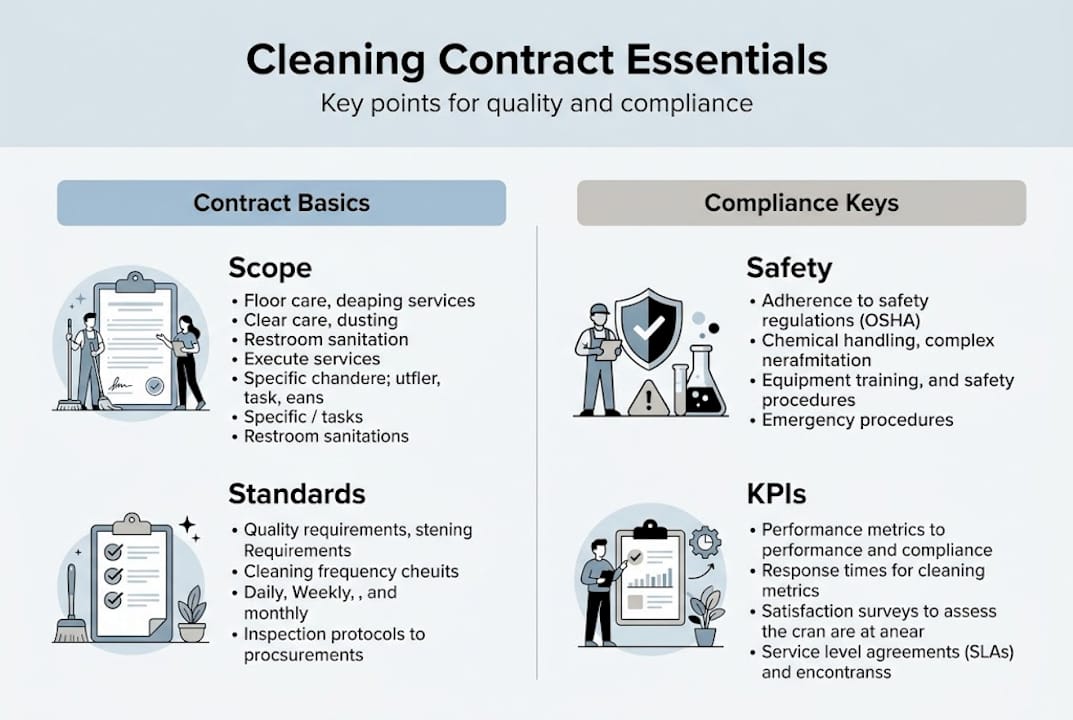
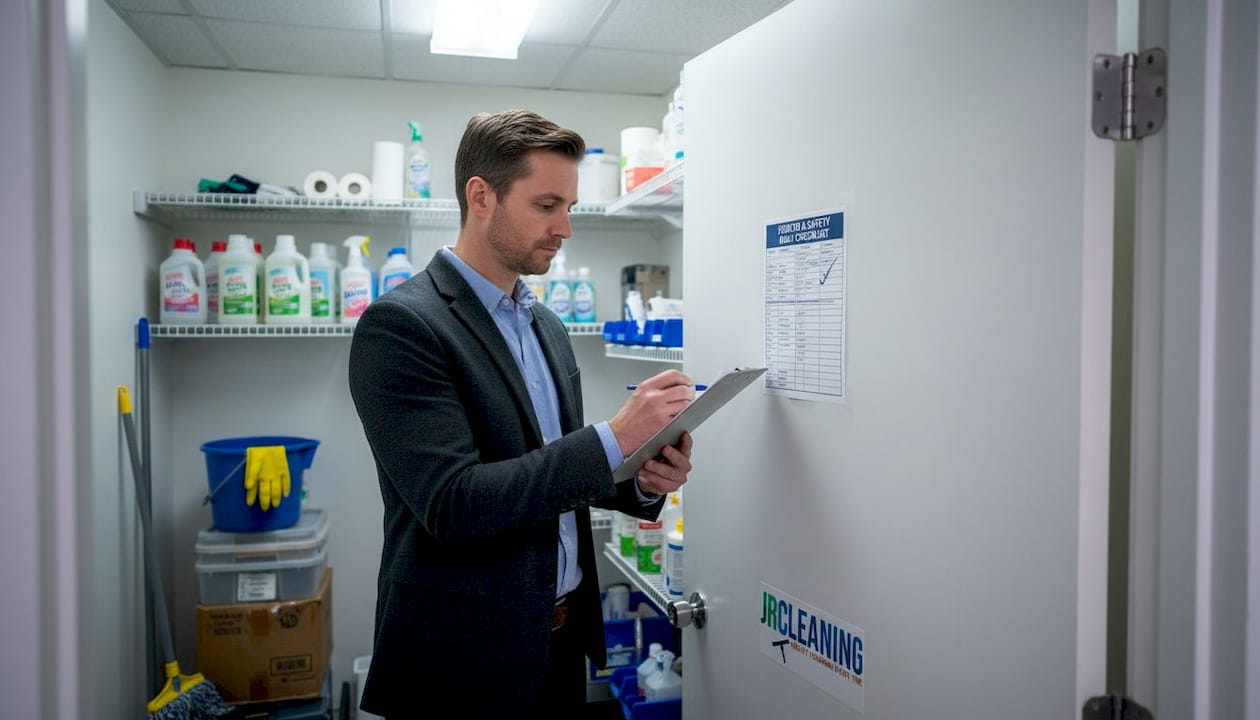
Why local cleaning services matter for Victoria homes

Many homeowners and small business owners in Victoria assume that bigger automatically means better when it comes to cleaning services. The thinking goes that national chains have more resources, stricter systems, and greater accountability. In practice, the opposite is often true. Local cleaning providers have far more at stake in every single job they complete, because their reputation lives and dies by word of mouth in the same streets and neighbourhoods where they work. This guide breaks down the real advantages of choosing local, from economic impact to everyday practicality, so you can make a confident, informed decision for your property.

Table of Contents

Key Takeaways

PointDetails
Stronger community tiesLocal cleaning services invest in relationships and keep economic benefits within Victoria.
Superior personal serviceVictoria companies are praised for reliability, attention to detail, and accountability.
Better value for moneyLow margins motivate quality work and competitive pricing from local cleaners.
Faster response and supportSmall businesses often respond quicker to urgent needs and communicate more effectively.

Local economic impact and community trust

To understand why ‘local’ really means something in Victoria, let’s start with the local impact.

When you hire a local cleaning company, your money does not simply disappear into a corporate head office. It circulates. It pays wages for people who live nearby, supports local suppliers, and feeds back into the community through everyday spending. Local services support the Victoria economy by creating jobs, keeping money in the community, and fostering relationships, with a larger portion of spending retained locally compared to national chains.

This matters more than people realise. When a local cleaner earns a wage, they spend it at nearby shops, cafes, and services. That multiplier effect strengthens the whole neighbourhood. National franchise cleaners, by contrast, siphon a significant portion of revenue out of the local area entirely.

“Choosing a local cleaning service is not just a practical decision. It is a vote for the kind of community you want to live and work in.”

Local cleaners are also deeply invested in their reputation in a way that large chains simply cannot replicate. If a national company does a poor job at your property, a complaint might get lost in a customer service queue. If a local cleaner does a poor job, their neighbour hears about it by Thursday. That social accountability creates a powerful incentive to get things right every single time.

Here is what that community investment often looks like in practice:

  • Sponsoring local school fetes or community events
  • Supporting other small local businesses through referrals
  • Building long-term relationships with regular clients in the same streets
  • Offering flexible arrangements that suit local needs rather than national policies
  • Participating in neighbourhood associations and local business networks

National or franchise cleaners rarely offer this level of involvement. They operate on volume, not relationships. Exploring the community cleaning sector benefits makes it clear that the personal touch is not a marketing phrase. It is a structural advantage.

Quality service and reputation: What locals do differently

With local economic impact established, let’s see what that means for quality and experience.

Local cleaning services are consistently praised in reviews for their attention to detail and personal accountability. Industry margins of 6.2 to 6.5% mean quality local providers must prioritise reputation over volume, because losing a client genuinely hurts. That financial reality drives a quality standard that larger companies, cushioned by scale, rarely match.

This is not just theory. Think about how a local cleaning relationship typically develops:

  1. Initial enquiry and quote. A local provider visits your property in person, asks specific questions, and tailors the quote to your actual situation rather than a generic price list.
  2. First clean. The team arrives knowing your preferences. They note the things that matter most to you, whether that is a particular floor type, a sensitive surface, or a pet-friendly product requirement.
  3. Feedback loop. You speak directly with the person responsible, not a call centre. Issues are resolved immediately, not logged as a ticket.
  4. Ongoing relationship. Over time, the cleaner knows your property as well as you do. Standards remain consistent because the same people return each visit.
  5. Trust and flexibility. Need a reschedule? A local provider can accommodate that without a formal process. They value keeping you happy far more than sticking rigidly to a booking system.

This kind of customer care in local cleaning is not accidental. It is built into the business model. The local provider benefits extend well beyond cost, touching on consistency, communication, and genuine care for your property.

Pro Tip: When evaluating a local cleaner, ask for two or three references from clients in your area, and check whether their online reviews mention specific details like punctuality, product choice, or how issues were handled. Generic five-star reviews with no detail are less reliable than a handful of specific, honest ones.

Industry landscape: Victoria’s cleaning market at a glance

Zooming out from personal experience, Victoria’s cleaning industry statistics reinforce the importance of local providers.

Victoria accounts for 26 to 27% of Australia’s cleaning industry, which is valued between $14 billion and $15.8 billion, and the sector is dominated by SMEs, with 95% of businesses classified as micro or small. That is not a coincidence. It reflects the reality that cleaning is an inherently local, relationship-driven service.

FeatureLocal SMEsLarge chains
Market shareDominant (95% of businesses)Minority
Jobs created locallyHighLow to moderate
Revenue retained locallyHighLow
Client relationshipsLong-term, personalTransactional
FlexibilityHighLimited
AccountabilityDirectIndirect

This data tells a clear story. The cleaning industry growth in Victoria is being driven by small, local operators, not by national giants. When you hire locally, you are joining the majority, not taking a risk on an unknown quantity.

Key stat: With 95% of Victoria’s cleaning businesses classified as micro or small, the industry is structurally built around local expertise and community relationships.
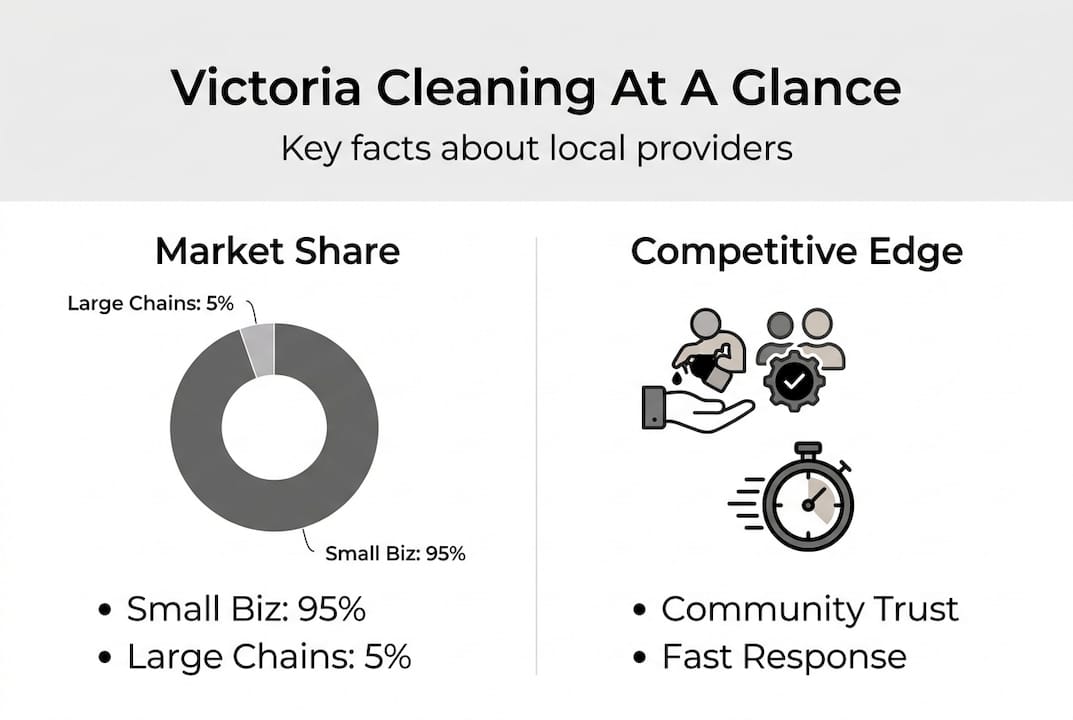
1776522803184 Infographic of Victoria cleaning industry snapshot - J R Cleaning

For property owners, this means the local market is mature, competitive, and full of experienced operators who have earned their reputations over years of consistent work.

Practical advantages for property owners

Understanding the market leads directly to the personal, everyday advantages for Victoria property owners.

The most immediate benefit is responsiveness. If you have a cleaning emergency, whether a leak has left residue across your office floor or a tenant has vacated a property in poor condition, a local provider can often respond the same day or within hours. National chains typically require advance booking and offer little flexibility outside standard schedules.
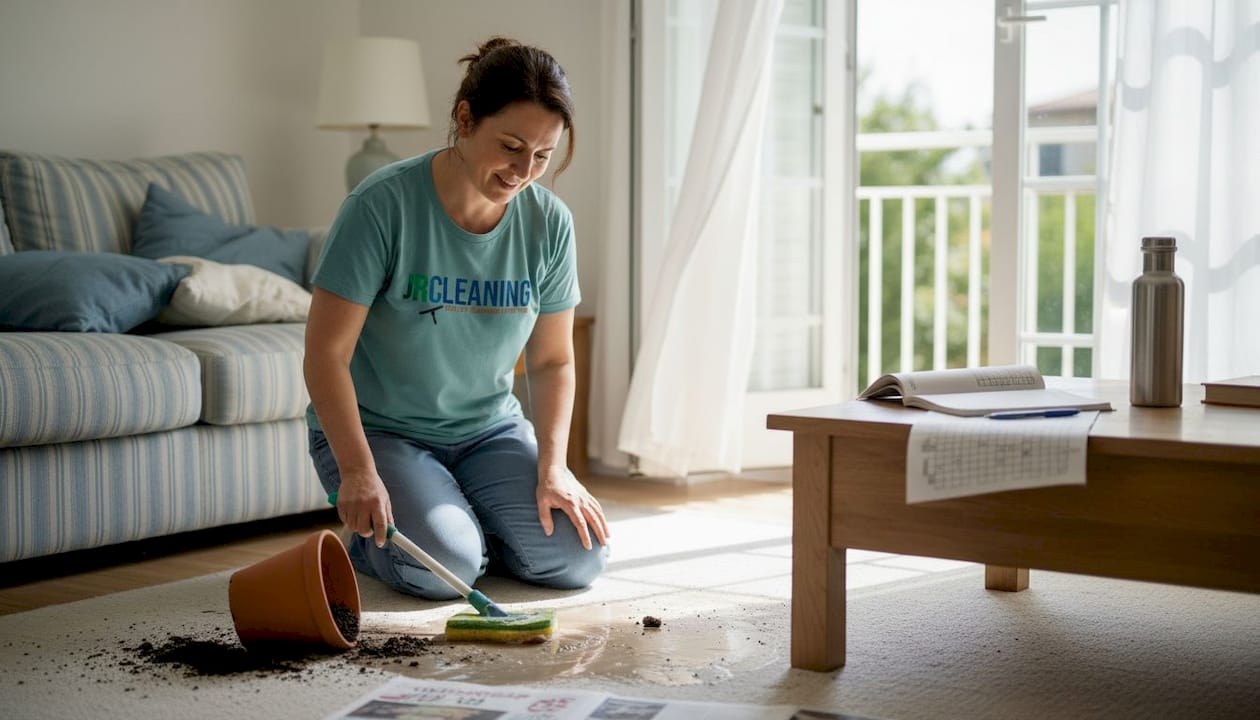
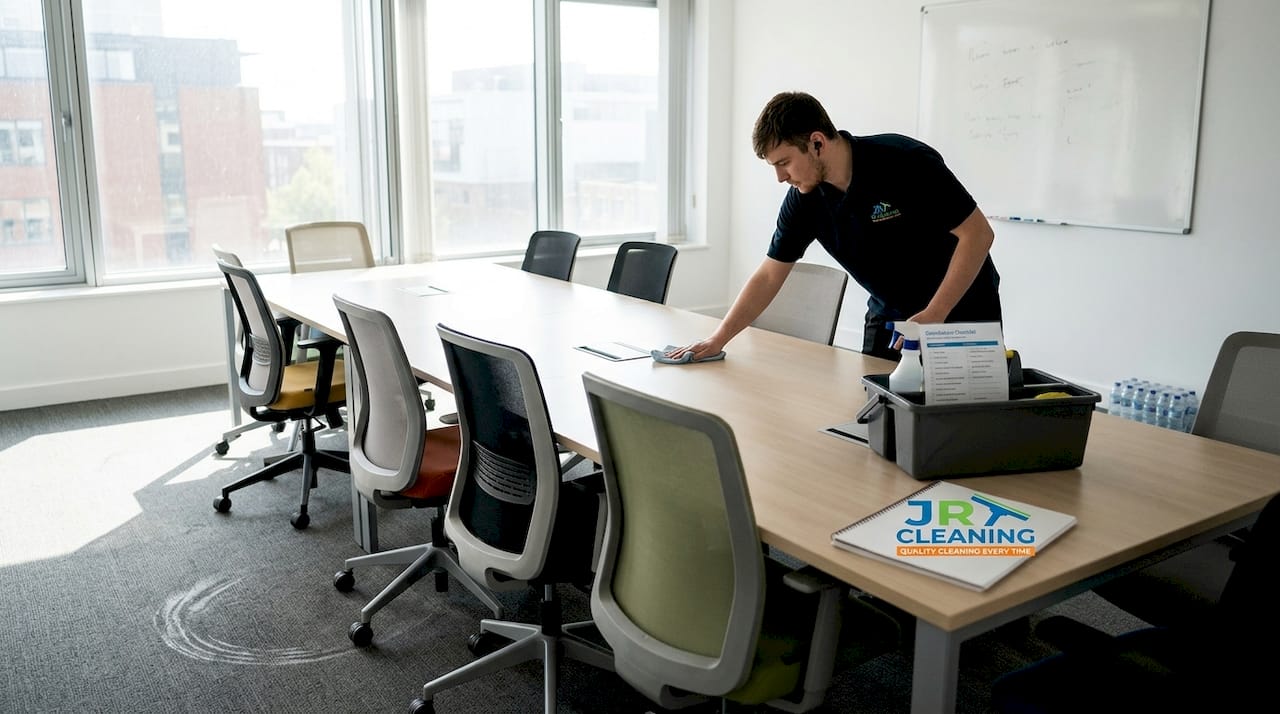
1776522965923 image - J R Cleaning

Communication is another area where local services consistently outperform larger operators. Knowing your provider by name, and knowing they know your property, removes a huge amount of friction. You do not need to re-explain your preferences every visit. You do not need to navigate an automated phone system to raise a concern. Engaging with micro and small cleaning providers is one of the most practical steps a homeowner can take to protect and maintain their property’s value.

FactorLocal providerMajor firm
Response timeSame day possible48 to 72 hours typical
CostCompetitive, low overheadsOften higher due to admin
AftercareDirect contact, quick resolutionCall centre, logged tickets
ConsistencySame team, regular visitsVariable staff rotation

Before you hire any local cleaner, run through this checklist:

  • Are they fully insured and compliant with health and safety regulations?
  • Can they provide references from clients in your area?
  • Do they use appropriate products for your property type?
  • Are their pricing and service terms clearly explained in writing?
  • Do they offer a satisfaction guarantee or a clear process for raising concerns?

For more on what good practice looks like, exploring expert hygiene safety standards and how to manage cleaning contracts locally will give you a solid foundation before you commit to any provider.

The local difference: What most overlook in choosing cleaning services

Having explored all the evidence, here is a perspective born from hands-on experience with Victoria’s local cleaning industry.

Most people focus on price when choosing a cleaner. That is understandable. But the real cost of a poor cleaning relationship is not the invoice. It is the time spent chasing follow-ups, the stress of inconsistent results, and the slow deterioration of a property that never quite gets the attention it deserves.

We have seen what happens when a property owner switches from a faceless national chain to a trusted local provider. The difference is not just in the cleaning. It is in the peace of mind. You know who is coming. You know they care about their local reputation. You know that if something is not right, a real conversation will fix it.

The intangible value of that relationship is something no advertising budget can manufacture. Quality contract compliance and consistent standards come naturally when the person doing the work lives in the same community as the person paying for it. That accountability is not a policy. It is personal. Homes and businesses that invest in local cleaning relationships see long-term value that those chasing the cheapest national deal rarely experience.

Find a trusted Victoria cleaning provider

If you are ready to experience the benefits of local, professional cleaning, taking the next step is straightforward.
1774551979294 jrcleaning - J R Cleaning

At JR Cleaning, we bring over 20 years of experience to every job, whether that is a family home or a commercial premises in Victoria. Our residential and commercial cleaning services are fully insured, health and safety compliant, and tailored to your specific property. From professional gutter cleaning to specialist commercial kitchen cleaning services, we offer the full range your property needs. Get in touch today for a free, no-obligation quote and find out why so many Victoria homeowners and businesses trust us with their most important spaces.

Frequently asked questions

How do local cleaning companies contribute to Victoria’s economy?

Local services create jobs, support other small businesses, and keep money circulating within the Victoria community rather than flowing to distant head offices.

Are local cleaning services more expensive than national chains?

No. Low industry margins of 6.2 to 6.5% mean local providers keep overheads lean and often offer more competitive pricing alongside better personal service.

What guarantees do Victoria’s local cleaners offer?

Most provide satisfaction guarantees and flexible service agreements tailored to each client, with direct communication to resolve any concerns quickly.

Why choose a micro or small cleaning service over a large provider?

Small services focus on long-term relationships and consistent quality. With 95% of Victoria’s cleaning businesses classified as micro or small, the sector is built around personal accountability and local expertise.
The essential business property cleaning guide for UK success

Neglected premises cost UK businesses far more than a cleaning bill. A single failed hygiene inspection can trigger fines, accelerate staff turnover, and send clients straight to a competitor. Property managers who treat cleaning as an afterthought often discover the true price only after the damage is done. This guide gives you a clear, structured approach to commercial property cleaning in the UK, covering the standards you must meet, the tools you need, a step-by-step cleaning sequence, and the verification checks that keep your premises safe, compliant, and genuinely impressive to everyone who walks through your doors.

Table of Contents

Key Takeaways

PointDetails
Follow set standardsAdhering to BICSc and UK guidelines helps ensure legal compliance and safety.
Prepare the right toolsProper equipment, products, and staff training are essential for effective cleaning.
Use an audit processRegular checks and outcome-based audits maintain high cleaning standards.
Avoid common mistakesPay attention to cross-contamination and overlooked areas to prevent cleaning failures.
Cleaning drives resultsStrategic cleaning supports staff wellbeing, brand reputation, and business growth.

Understanding UK business cleaning standards

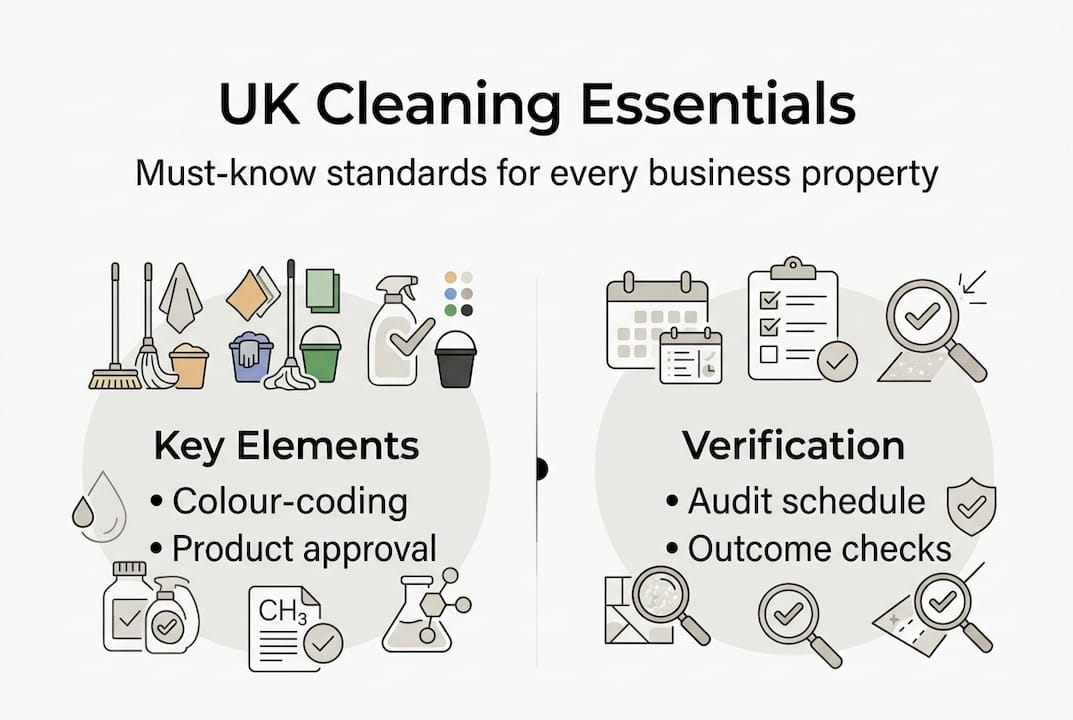
Before you buy a single mop or book a contractor, you need to know what you are actually working towards. The British Institute of Cleaning Science (BICSc) sets the benchmark for professional cleaning across the UK. Its colour-coding and measurement criteria define exactly what good looks like, from the cloths used in kitchens versus washrooms to the productivity rates expected of cleaning staff.

BICSc standards are not just paperwork. They exist because cross-contamination between high-risk areas, such as food preparation surfaces and toilet facilities, is a genuine health hazard. Colour-coded equipment ensures a cloth used in a washroom never touches a kitchen counter. That simple discipline, applied consistently, reduces the spread of harmful bacteria and protects your duty of care to staff and visitors alike.

For day-to-day operations, three tools keep your premises on track:

  • Colour-coded equipment schedules that assign specific colours to specific zones
  • Regular outcome-based audits that measure results against agreed criteria
  • Service level agreements (SLAs) that set clear expectations for frequency, quality, and accountability

Non-compliance is costly. Businesses that fall short of health and safety cleaning obligations under UK law risk enforcement notices, fines, and reputational harm that is difficult to recover from. Getting your office cleaning essentials right from the outset is far cheaper than reacting to a complaint or inspection failure.

“A cleaning programme without defined outcome criteria is just activity. Real standards require measurable results.”

Standard elementPurposeReview frequency
Colour-codingPrevent cross-contaminationOngoing
Outcome criteriaMeasure cleaning effectivenessPer audit cycle
SLAsDefine contractor accountabilityQuarterly or annually
Staff training recordsVerify competencyAnnually at minimum

For businesses operating in complex environments, cleaning contract compliance requires embedding these standards into every contract and service agreement you sign. Warehouses and manufacturing sites face additional obligations, which you can explore through industrial facility compliance guidance specific to those sectors.

Pro Tip: Review both national BICSc guidance and your local authority’s environmental health requirements at least once a year. Regulations shift, and gaps in awareness can appear without warning.

What you need before starting: Tools, products, and key preparations

Even the most motivated cleaning team will underperform without the right equipment. Before any session begins, you should have a fully stocked, properly organised kit that meets industry expectations. Effective cleaning depends on correct tools, products, and trained staff working together.

Here is the core equipment list every commercial premises should hold:

  • Colour-coded microfibre cloths (minimum four colours: red, blue, green, yellow)
  • Colour-coded mop heads and buckets
  • Backpack or upright vacuum with HEPA filtration
  • Personal protective equipment (PPE): gloves, aprons, eye protection as needed
  • Trigger sprays and dilution dispensers for chemical products
  • Scrubbing pads and specialist brushes for grout, drains, and fixtures

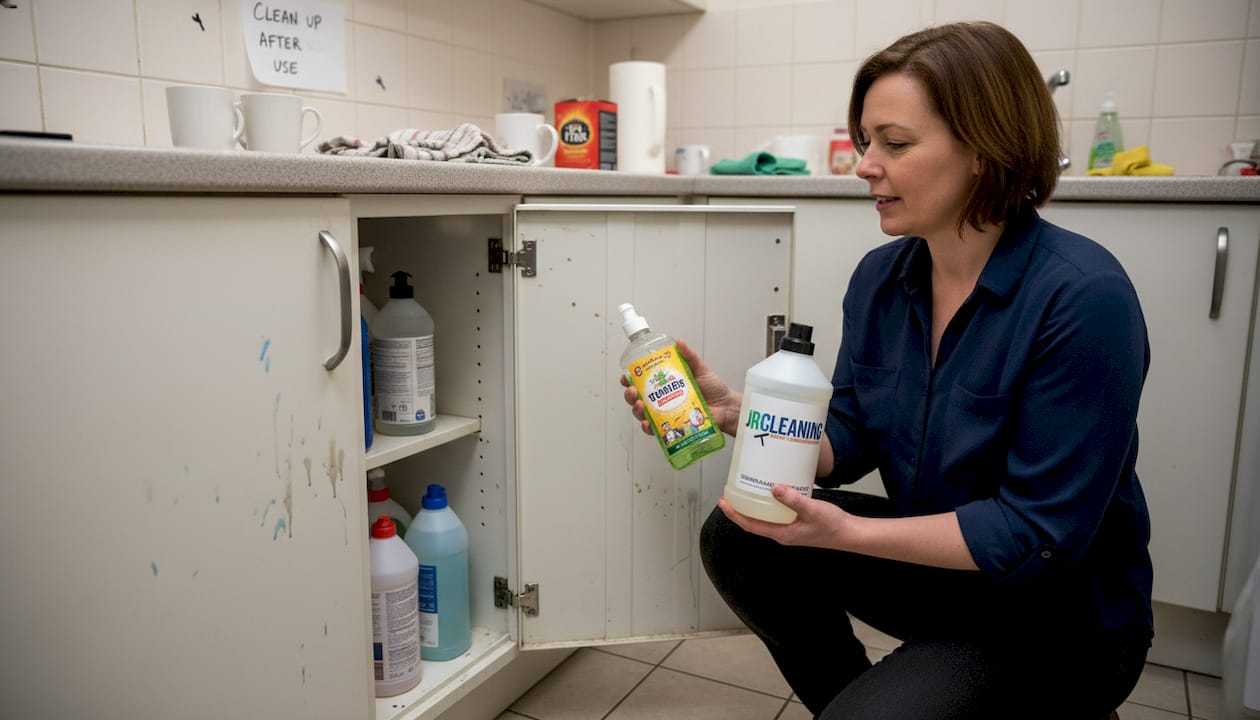
Chemical safety is non-negotiable. The Control of Substances Hazardous to Health (COSHH) regulations require that every cleaning chemical used in a workplace has a written risk assessment and a safe storage plan. Products must be stored in locked, clearly labelled cupboards, away from food and high-traffic areas. Staff must understand the dilution ratios, not just the application method.

Product typeCostEffectivenessCompliance benefit
Off-the-shelf retailLowModerateLimited
Professional-gradeModerate to highHighFull COSHH alignment
BICSc-approved productsModerate to highHighIndustry benchmark

The gap between retail and professional-grade products is significant. Retail cleaners are formulated for occasional domestic use. Professional products are designed for repeated, heavy-duty application, with consistent results across different surface types. They also come with proper technical data sheets, which your COSHH records require.

1776434549405 image - J R Cleaning

You can find a fuller breakdown of essential cleaning tools suited to commercial interiors in our dedicated guide. Staff preparation matters just as much as the kit itself. Training should cover correct dilution, colour-coding discipline, safe chemical handling, and what to do if a spill or incident occurs.

Pro Tip: Only purchase cleaning products that carry BICSc endorsement or equivalent professional approval. This one decision simplifies your COSHH documentation and removes uncertainty about product suitability.

A step-by-step guide to cleaning commercial properties

With your team trained and your kit assembled, the cleaning sequence itself follows a logical order. Skipping steps or cleaning in the wrong direction (high to low, clean to dirty) is one of the most common sources of poor results. Structure matters.

Daily tasks

  1. Remove waste from all bins and replace liners
  2. Wipe down high-touch surfaces: door handles, light switches, reception desks, shared equipment
  3. Clean and disinfect washrooms using colour-coded equipment
  4. Vacuum or sweep hard floors and carpeted areas
  5. Mop hard floors using the appropriate colour-coded mop and correctly diluted solution
  6. Restock consumables: soap, paper towels, toilet rolls

Weekly tasks

  1. Damp-wipe skirting boards, window ledges, and partition screens
  2. Clean internal glass panels and mirrors
  3. Descale taps, sinks, and sanitaryware
  4. Spot-clean upholstery and soft furnishings
  5. Record all tasks completed in the site log

Deep cleaning tasks (quarterly or as risk-assessed)

  1. Strip and re-seal hard floors
  2. Clean behind and beneath fixed furniture and equipment
  3. Degrease kitchen extraction systems and behind appliances
  4. Clean air conditioning vents and diffusers
  5. Conduct a full outcome-based audit and compare results against SLA criteria

Regular audits reduce workplace hygiene complaints by up to 30%, which translates directly into fewer HR escalations, fewer sick days, and better staff retention. The top business cleaning services all build audit cycles into their contracts because verification is what separates a clean-looking space from a genuinely safe one.

Stat to note: Businesses that implement structured cleaning audits report up to 30% fewer hygiene-related complaints from staff and visitors.

Pro Tip: Set your audit schedule to follow BICSc-recommended frequency intervals. Monthly spot checks and quarterly full audits give you a reliable evidence trail if your premises are ever inspected. Explore professional cleaning methods for further technique guidance.

Troubleshooting: Common mistakes and essential verification checks

Even experienced teams make errors when processes are not reinforced. Knowing the most common pitfalls saves you time, money, and potential embarrassment during an inspection.

The five most frequent mistakes in commercial property cleaning are:

  • Cross-contamination from incorrect colour-coding or reusing equipment between zones
  • Missed areas due to unclear task assignments or no written checklist
  • Poor record-keeping that leaves no audit trail for inspectors or insurers
  • Incorrect chemical dilution leading to either ineffective cleaning or surface damage
  • Inconsistent frequency where deep cleaning is deferred indefinitely

“Regular verification ensures nothing is left to chance. Without it, cleaning becomes invisible and standards drift.”

SLAs and outcome-based auditing are the most reliable tools for catching these mistakes before they compound. An SLA defines exactly what standard each area must reach; an audit confirms it was reached. Together, they create a feedback loop that improves performance over time.

AreaVerification methodFrequency
Kitchen and food prepVisual audit + ATP swab testWeekly
Office and shared spacesChecklist review + spot inspectionWeekly
WashroomsOutcome criteria assessmentDaily
Exterior and car parkVisual walkthroughMonthly
Specialist surfacesThird-party auditQuarterly

For more complex properties, specialist cleaning audits provide an independent layer of accountability that internal teams alone cannot replicate. If you are questioning whether your current provider meets the mark, our guide on hiring specialist cleaning outlines exactly what to look for in a credible contractor.

1776434848182 Infographic of key business cleaning standards - J R Cleaning

A fresh take: Why cleaning is your most undervalued business investment

Most businesses track marketing spend, IT costs, and energy bills to the penny. Cleaning? It sits quietly in the facilities budget, underfunded and rarely reviewed. That is a strategic mistake.

The return on a well-managed cleaning programme is real but largely invisible until it disappears. Staff who work in clean, well-maintained environments report higher satisfaction and lower absenteeism. Clients who visit clean premises form an immediate, positive impression that no marketing material can manufacture. Accident rates drop when floors are consistently maintained and hazards are removed on schedule.

“Every surface is a reflection of your brand.” That is not a slogan. It is the reality your clients experience before they have spoken to a single member of your team.

Forward-thinking property managers are already building cleaning strategy into core operations, not tacking it on as an afterthought. They review SLAs alongside financial targets. They treat audit results with the same seriousness as a quarterly sales report. Our overview of high-impact services shows just how varied and commercially significant a professional cleaning programme can be. The businesses that will stand out in 2026 are the ones that recognise cleaning as a growth driver, not just a hygiene obligation.

Connect with expert business cleaners today

You now have the framework to build a cleaning operation that protects your staff, satisfies regulators, and impresses clients. But knowing the steps and executing them consistently are two different things.

1774551979294 jrcleaning - J R Cleaning

At JR Cleaning, we have spent over 20 years delivering standards-based commercial cleaning services to business owners and property managers across the UK. Whether you need a tailored ongoing contract, a scheduled deep clean, or specialist exterior work including professional gutter cleaning, we build every programme around your specific property and risk profile. We are fully insured, BICSc-aware, and committed to the audit trail your business needs. Get in touch today for a free, no-obligation quote.

Frequently asked questions

UK businesses should follow BICSc standards covering colour-coding, outcome criteria, audits, and SLAs to meet their health and safety obligations and maintain compliance.

What is the best way to verify cleaning quality in a business setting?

Regular outcome-based audits, written checklists, and periodic third-party assessments are the most reliable methods, with BICSc auditing methods providing the recognised framework for verification.

How often should business premises be deep cleaned?

Deep cleaning should take place at least quarterly, or more frequently where your risk assessment demands it, in line with BICSc SLA recommendations for your property type.

What can cause cleaning failures in commercial properties?

Missed areas, improper product use, and absent audit records are the primary culprits, all of which outcome-based verification and colour-coding discipline are specifically designed to prevent.

Is it better to use off-the-shelf or professional-grade cleaning products?

Professional-grade products, ideally BICSc-endorsed options, consistently outperform retail alternatives and align with COSHH documentation requirements for safer, more effective commercial cleaning.

Master the industrial site cleaning process: safer facilities

Neglecting cleaning on an industrial site is never just an inconvenience. Fines, equipment failures, and serious workplace accidents are all real consequences when cleaning is treated as an afterthought, and poor cleaning practices can result in exactly those outcomes. For facility managers, the pressure to keep sites safe, compliant, and productive is constant. This guide walks you through every stage of the industrial site cleaning process, from initial planning and hazard identification right through to verification and ongoing compliance, so you have a clear, practical framework you can act on immediately.

Table of Contents

Key Takeaways

PointDetails
Comprehensive planningRisk assessment and method selection are vital for safe and compliant industrial cleaning.
Step-by-step execution mattersFollowing proper cleaning procedures prevents accidents and keeps operations running smoothly.
Verification ensures complianceConsistent inspection and documentation prove your site meets UK health and safety expectations.
Working with specialistsPartnering with expert cleaning contractors reduces risk in high-stakes environments.

Understanding the industrial site cleaning process

Industrial site cleaning is far more involved than a standard office tidy-up. It covers the removal of hazardous substances, industrial waste, machinery residues, and accumulated grime across large, complex environments. The scope includes everything from production floors and loading bays to chemical storage areas and staff welfare facilities. Getting it right requires a structured, repeatable approach rather than ad hoc effort.

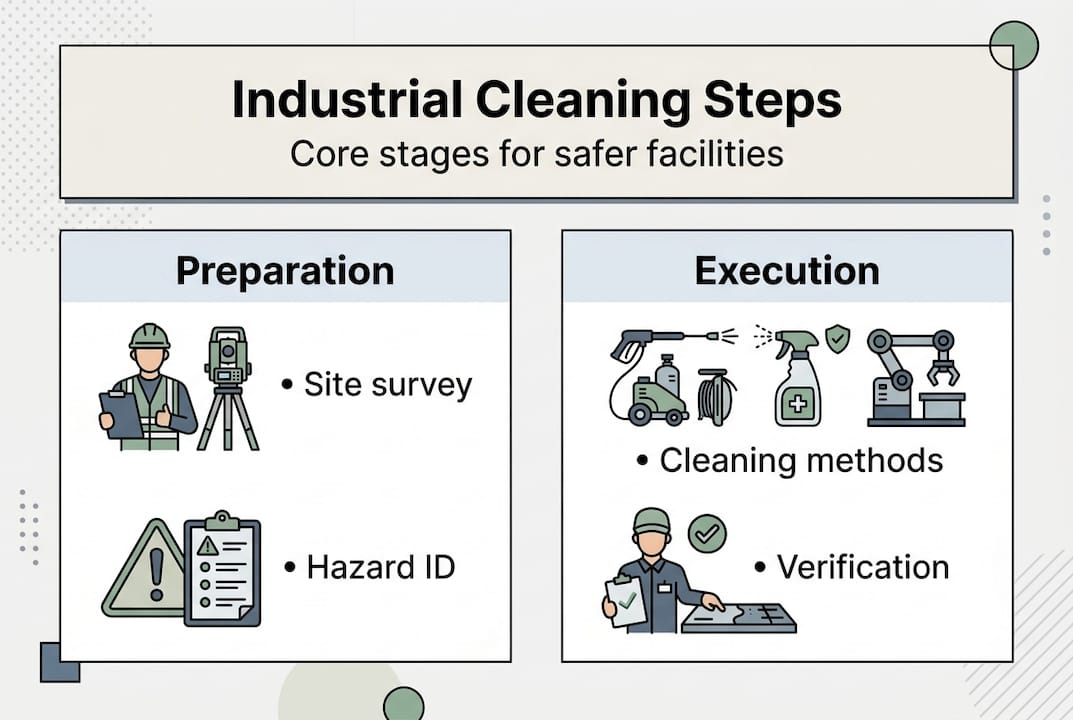
A typical industrial cleaning process moves through four core stages:

  • Assessment: Identifying the site’s specific hazards, contamination types, and regulatory requirements before any cleaning begins.
  • Planning: Selecting appropriate methods, equipment, and personnel, and producing a compliant cleaning schedule.
  • Execution: Carrying out the cleaning work safely, following all relevant health and safety protocols.
  • Verification: Confirming that the work meets the required standards and that records are complete.

Following HSE cleaning standards is not optional. The Health and Safety at Work Act 1974 places a legal duty on employers to maintain safe, clean workplaces. Failing to meet this duty can result in enforcement notices, prosecution, and significant financial penalties.

A structured process is essential to ensure all health and safety requirements are met consistently. Without it, gaps appear, corners get cut, and compliance becomes a matter of luck rather than design.

1776446132272 Infographic showing industrial cleaning process steps - J R Cleaning

StageKey activityCompliance significance
AssessmentHazard identification, site surveyInforms risk assessment documentation
PlanningMethod selection, schedulingEnsures correct procedures are followed
ExecutionCleaning tasks, safety checksReduces risk of incidents and exposure
VerificationInspection, audit, record-keepingProvides evidence of compliance

Each stage feeds directly into the next. Skipping or rushing any one of them creates vulnerabilities that can surface during an inspection or, worse, during an incident investigation.

Planning and preparing for industrial site cleaning

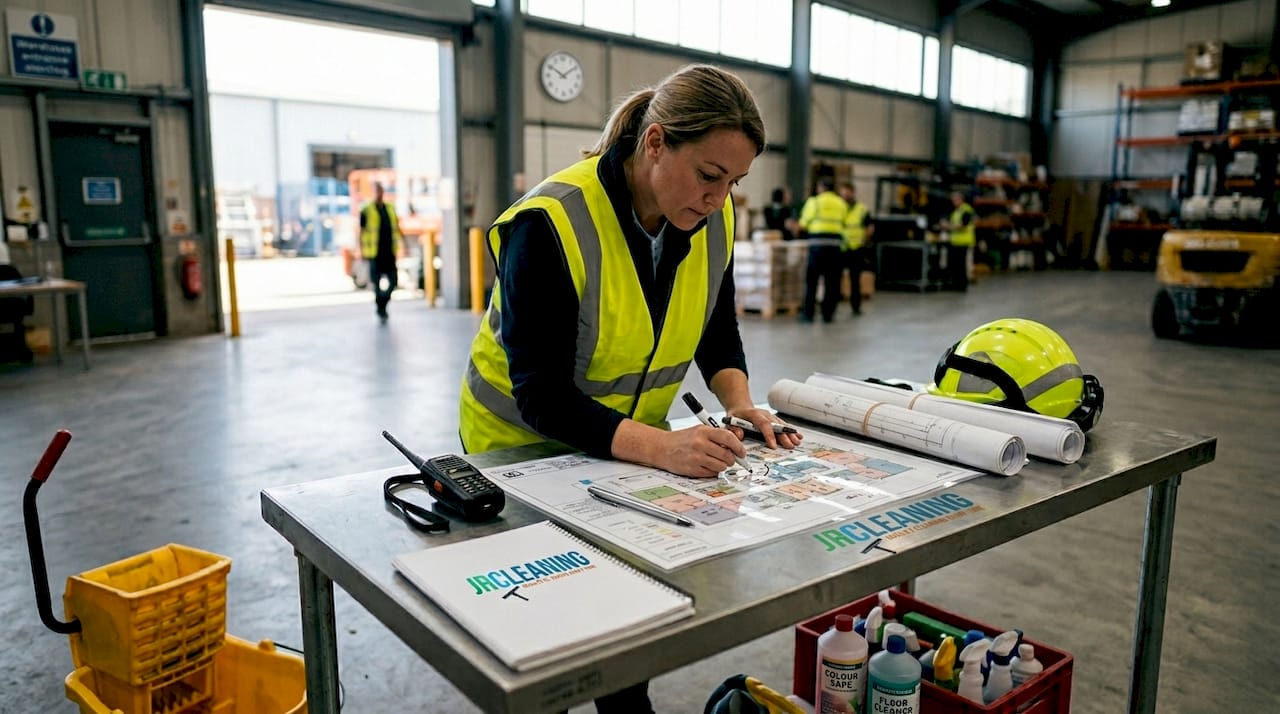
Thorough preparation is what separates a cleaning operation that runs smoothly from one that creates new hazards. Before any equipment is moved or chemical is opened, you need a clear picture of the site and its risks.

1776446020054 Manager prepares industrial cleaning checklist - J R Cleaning

Start with a full site survey. Walk the facility and document every area that requires cleaning, noting the types of contamination present, access restrictions, and any machinery or processes that cannot be shut down. Thorough preparation can help identify site-specific hazards and ensure safe, efficient operations from the outset.

Next, decide on your cleaning approach. The choice between manual cleaning and mechanised or specialist contractor methods depends on the nature of the hazards and the scale of the work.

ApproachBest suited forKey considerations
Manual cleaningLower-risk areas, routine maintenanceLabour-intensive, suitable for accessible surfaces
Specialist contractorHigh-risk, large-scale, or hazardous environmentsExpertise, specialist equipment, full compliance

Here is a practical preparation checklist to work through before any industrial clean:

  1. Complete a written risk assessment covering all identified hazards.
  2. Confirm that all personnel hold relevant training and certifications.
  3. Identify and source all required cleaning chemicals, checking British Safety Council guidelines for compliance.
  4. Arrange access to all areas, including confined spaces or elevated surfaces.
  5. Prepare safety data sheets for every chemical to be used.
  6. Agree on a cleaning schedule and communicate it to all relevant staff.
  7. Set up a documentation system for recording completed tasks.

Pro Tip: Engage your specialist contractor during the planning phase, not just on the day. Their knowledge of professional cleaning techniques and site-specific challenges can significantly reduce preparation time and flag risks you might have missed.

Compliance documentation should be prepared before work begins, not assembled after the fact. Cleaning schedules, method statements, and risk assessments must all be in place and accessible to anyone working on site.

Executing the industrial cleaning step by step

With careful preparation in place, safely and efficiently executing the cleaning process is the next crucial phase. A clear sequence of steps keeps the work on track and reduces the likelihood of incidents.

  1. Brief all personnel on the day’s tasks, hazards, and emergency procedures before work begins.
  2. Conduct pre-clean safety checks: confirm PPE is worn correctly, machinery is isolated where required, and access routes are clear.
  3. Begin with dry removal: sweep, vacuum, or mechanically remove loose debris before introducing any liquids or chemicals.
  4. Apply cleaning agents in accordance with COSHH regulations, ensuring correct dilution rates and contact times are observed.
  5. Work systematically from high surfaces to low, and from clean zones towards contaminated areas to avoid cross-contamination.
  6. Monitor in progress: assign a supervisor to check that methods are being followed and to document any deviations or unexpected hazards.
  7. Dispose of waste in line with environmental and health and safety requirements.
  8. Complete a post-clean walkthrough to confirm all areas have been addressed before signing off.

Safety reminder: Never mix cleaning chemicals without checking compatibility. Certain combinations produce toxic gases that can cause serious harm in enclosed industrial spaces. Always follow the product’s safety data sheet.

Roles and responsibilities must be clearly defined before work starts. The site manager holds overall accountability, while the cleaning supervisor is responsible for day-to-day execution and in-process monitoring. Proper execution ensures that health risks are minimised and sites remain operationally efficient throughout the process.

Pro Tip: Keep a simple site log running throughout the clean. Note start and finish times, any hazards encountered, and any areas that needed additional attention. This takes minutes but provides invaluable evidence if a compliance question arises later. For guidance on interior cleaning essentials that apply across facility types, it is worth reviewing what best practice looks like in comparable environments.

Site surprises happen. A piece of machinery may be unexpectedly in use, or a spill may have occurred overnight. Build flexibility into your plan by agreeing in advance on how deviations will be escalated and documented.

Verification and maintaining ongoing compliance

After cleaning, maintaining standards and documenting compliance are just as vital as the clean itself. Verification is the stage where you confirm that the work done actually meets the required standards, and where your documentation becomes your protection.

Verification ensures not only that the site is safe but that documentation can be produced if audited. This is not a formality. Regulators and insurers expect to see evidence, not just assurances.

Verification methods include:

  • Visual inspection: A structured walkthrough against a pre-agreed checklist, covering every area cleaned.
  • ATP testing: Adenosine triphosphate testing provides rapid, objective measurement of biological contamination on surfaces.
  • Third-party audit: An independent review against ISO 9001 standards or sector-specific requirements.
  • Photographic records: Time-stamped images of completed areas provide clear before-and-after evidence.
DocumentRetention periodPurpose
Cleaning schedulesMinimum 3 yearsDemonstrates regularity and planning
Risk assessmentsDuration of activity plus 3 yearsEvidence of hazard management
Safety data sheetsDuration of chemical useCOSHH compliance
Inspection checklistsMinimum 3 yearsAudit trail for completed work

Review your cleaning process at least quarterly. Regulations change, site conditions evolve, and new hazards can emerge. Assigning a named individual as the compliance lead ensures accountability and prevents reviews from being quietly dropped when the workload increases. For ongoing compliance methods that keep your facility audit-ready, a documented review cycle is the single most effective tool available.

Signs your site meets UK cleaning and safety standards:

  • All cleaning activities are recorded and signed off by a named supervisor.
  • Risk assessments are reviewed and updated at least annually or after any significant change.
  • Staff can locate and explain safety data sheets for all chemicals in use.
  • No areas are consistently missed or deferred between scheduled cleans.
  • Audit findings, if any, are closed out within agreed timeframes.

Why process-driven cleaning delivers lasting safety and efficiency

In our experience working with industrial facilities across the UK, the managers who struggle most with compliance are rarely the ones who skip cleaning entirely. They are the ones who rely on reactive, one-off deep cleans to solve problems that only a consistent process can prevent.

A single deep clean feels productive. It looks impressive on the day. But without a repeatable process built around it, the site drifts back to its previous state within weeks. The benefits of regular cleaning routines are not just about hygiene. They are about creating a facility where problems are caught early, where staff know what is expected, and where compliance is a natural outcome rather than a last-minute scramble.

The managers who get this right document their process, review it quarterly, and treat cleaning as an operational function, not a support task. Start there. Build a written process, assign ownership, and schedule your first quarterly review before anything else. That single shift in approach will do more for your compliance position than any amount of reactive cleaning ever could.

Connect with industrial cleaning experts for ongoing support

Moving from a one-off clean to a fully compliant, process-driven approach is straightforward when you have the right support behind you.

1774551979294 jrcleaning - J R Cleaning

At JR Cleaning, we work with industrial facility managers across the UK to design and deliver cleaning programmes that meet regulatory requirements and keep operations running without interruption. Whether you need a full site assessment, specialist deep cleaning, or a managed ongoing contract, our team brings over 20 years of experience to every project. Explore our comprehensive cleaning services to find the right solution for your facility, or take a look at our specialist kitchen cleaning for high-risk food production environments. Contact us today for a tailored cleaning plan and a free quote.

Frequently asked questions

How often should an industrial site be cleaned for regulatory compliance?

Cleaning frequency is set by risk assessment, but most UK sites require at least monthly deep cleans alongside daily maintenance tasks. A structured cleaning process and regular reviews ensure compliance keeps pace with evolving health and safety standards.

What documents are required to prove cleaning compliance during audits?

Keep cleaning schedules, risk assessments, safety data sheets, and completed inspection checklists readily accessible. Verification documentation must be producible on request during any regulatory audit.

Can I use regular commercial cleaners for industrial cleaning?

Not always. Industrial environments often involve higher-risk hazards and machinery that require specialist contractors and approaches. Specialist cleaning is required wherever specific hazards or regulatory standards apply.

What is the biggest compliance risk in industrial cleaning?

Missed or inadequately documented cleaning is the most common reason for regulatory non-compliance. Proper records and thorough documentation are critical for demonstrating that your site meets its legal obligations.

Specialist cleaning explained: methods and real UK standards

Most people assume that booking a ‘specialist clean’ simply means paying for a more thorough version of their regular cleaning routine. In reality, specialist cleaning sits in an entirely different category, governed by strict regulations, advanced training, and equipment that most domestic cleaners never encounter. Whether you own a home in Kent or manage a commercial premises across the UK, understanding what genuine specialist cleaning involves could protect your property, your health, and even your legal standing. This article breaks down exactly what specialist cleaning means, the methods and standards behind it, and how to recognise when you actually need it.

Table of Contents

Key Takeaways

PointDetails
More than deep cleaningSpecialist cleaning covers high-risk contamination and requires advanced expertise, not just extra effort.
UK safety regulations matterCOSHH, HSE, and NHS standards legally define how specialist cleaning is performed for safety and compliance.
Critical for certain eventsYou need specialist cleaning after biohazard incidents, infestations, or to meet health and legal obligations.
Professional methods deliver savingsEmpirical data shows specialist cleans reduce sick days and save costs for businesses and care settings.

What specialist cleaning really means

The term ‘specialist cleaning’ gets thrown around loosely, and that creates genuine confusion. Many property owners assume it means a regular cleaner working harder or using stronger products. It does not.

True specialist cleaning addresses situations where standard methods are simply inadequate or even dangerous. It comes into play when there is a biohazard, hazardous waste, a medical or environmental risk, or a contamination event that requires controlled intervention. Think crime scenes, clinical settings, properties affected by serious infestations, industrial areas with chemical contamination, or severe hoarding situations. These environments cannot be safely managed with a mop and a bottle of bleach.

The key differences between standard cleaning and specialist cleaning come down to three things: regulation, equipment, and training. Specialist cleaners must follow documented procedures, use PPE and controlled substances, and dispose of waste according to legal requirements. As the NHS National Standards confirm, specialist cleaning goes beyond normal cleaning with risk assessment, hazard containment, and advanced techniques that standard operatives are not qualified to carry out.

Here is a summary of situations where specialist cleaning becomes necessary:

  • Biohazard contamination, including bodily fluids or sharps
  • Post-mortem or trauma scene clean-up
  • Clinical or medical premises requiring infection control
  • Properties affected by pest infestation or vermin
  • Industrial spaces with chemical or hazardous waste
  • Severe hoarding situations with health risks
  • Serious mould or water damage affecting air quality

“Specialist cleaning is not simply a higher intensity of effort. It is a regulated discipline requiring specific competencies, documented risk management, and controlled waste handling. The distinction matters enormously for both safety and legal compliance.”

When you explore professional cleaning methods for UK homes and businesses, the gap between routine and specialist work becomes very clear. Understanding domestic cleaning explained helps set a baseline, but specialist work operates in an entirely separate arena. The full range of services for homes and businesses reflects just how broad that spectrum is in practice.

Core methods and equipment used by specialist cleaners

Defining specialist cleaning sets the scene, but what exactly happens during a specialist clean? Let’s break down the process.

Every specialist job begins with a thorough risk assessment. Before anyone enters the contaminated area, the team identifies the type and extent of the hazard, then plans how to contain it so it does not spread. Containment might mean sealing off rooms, using negative air pressure units, or establishing decontamination zones for personnel and equipment. As NHS cleaning standards outline, the full process includes risk assessment, containment, manual and chemical cleaning, fogging, and hazardous waste disposal, followed by post-cleaning verification.

Here is a step-by-step view of how a specialist clean typically unfolds:

  1. Site risk assessment and hazard identification
  2. Containment setup to prevent cross-contamination
  3. Gross contamination removal by hand, using appropriate PPE and absorbents
  4. Application of hospital-grade disinfectants to all affected surfaces
  5. Fogging or electrostatic spraying for airborne pathogen control when required
  6. Air scrubbing using HEPA filtration to improve air quality
  7. Hazardous waste removal and disposal in accordance with legal requirements
  8. Post-cleaning verification and testing to confirm the environment is safe
MethodStandard cleaningSpecialist cleaning
Risk assessmentRarely conductedAlways required
Disinfectants usedDomestic-gradeHospital-grade
Waste disposalGeneral wasteRegulated hazardous waste
Air treatmentBasic ventilationAir scrubbers and fogging
VerificationVisual checkIndependent testing
Regulatory complianceNot requiredLegally mandated

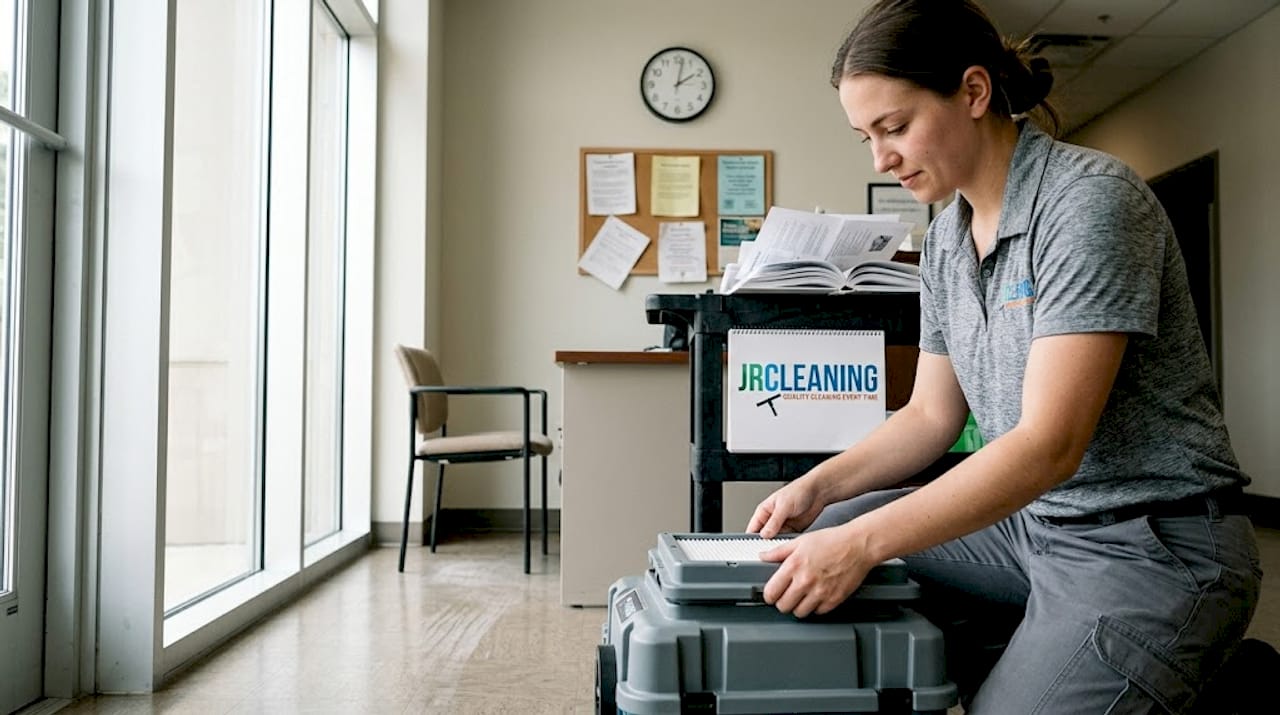
Specialist equipment includes air scrubbers fitted with HEPA filters, UV-C light systems, electrostatic sprayers, and full personal protective equipment such as respirators, hazmat suits, and chemical-resistant gloves. These are not optional extras. They are essential to protecting both the operatives and the property.

1776356029851 Technician works on HEPA scrubber maintenance - J R Cleaning

Pro Tip: Never allow a space to be reopened after a hazardous contamination event without independent post-clean verification. A visual inspection is not sufficient. Testing confirms that pathogens, chemicals, or particulates are within safe limits before occupants return. This applies to advanced cleaning techniques in any setting, including industrial cleaning safety environments.

Rigorous regulations and standards in the UK

Having covered the cleaning process, it is clear these measures are not just best practice; they are legal requirements in the UK.

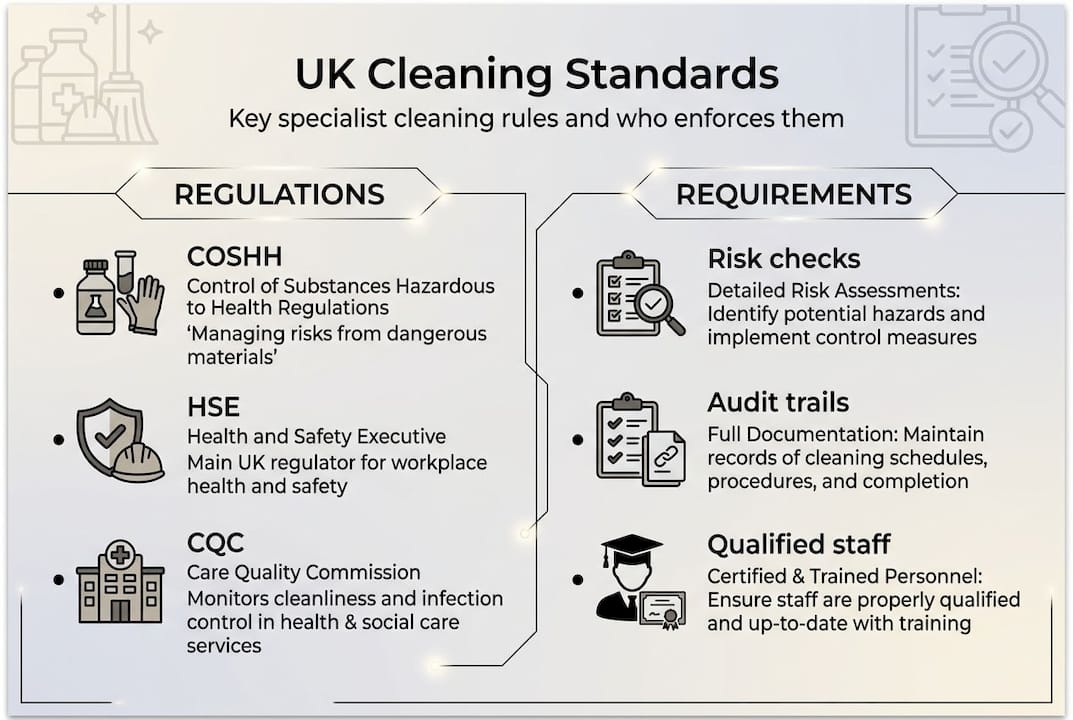
Specialist cleaners operate within a web of overlapping legislation and standards. The most important frameworks include:

  • COSHH (Control of Substances Hazardous to Health): Governs how hazardous chemicals are stored, used, and disposed of. Any cleaning operative using regulated substances must be trained under COSHH.
  • HSE (Health and Safety Executive): Sets requirements for handling sharps, dangerous materials, and protecting workers from occupational exposure.
  • Health and Social Care Act 2022, Regulation 13: Requires all regulated premises to maintain safe and hygienic conditions.
  • CQC (Care Quality Commission): Audits care and medical settings against cleanliness standards that go well beyond basic hygiene.
  • NHS National Standards: Assigns risk categories to different areas, which determines cleaning frequency and rigour required.

As confirmed by the NHS National Standards, regulations including COSHH, HSE, NHS, and CQC all apply concurrently in specialist cleaning contexts.

1776356628205 Infographic explaining UK cleaning standards - J R Cleaning

RegulationEnvironment affectedKey requirement
COSHHAll commercial and domesticSafe use of hazardous substances
HSEIndustrial, medical, commercialWorker safety and sharp handling
Health and Social Care ActRegulated care premisesHygiene maintained at all times
CQC standardsCare homes and clinicsRegular audits and documented cleaning
NHS risk categoriesClinical environmentsFrequency and depth set by risk level

Non-compliance carries serious consequences. Businesses can face enforcement notices, fines, or closure. Property owners may find insurance policies invalidated if contamination events are not handled by qualified operatives. The regulatory landscape exists to protect everyone involved, from cleaning staff to building occupants. For a deeper look at how UK compliance in cleaning works in practice, the requirements go further than most people realise.

When do you need a specialist cleaning service?

Standards and regulations define the playing field, but how do you know when you actually need to enlist a specialist service?

The straightforward answer is this: if the contamination or hazard in question poses a risk to health, involves regulated materials, or falls under any of the frameworks mentioned above, you need a specialist. Research shows that deep cleans cut sick days by 44%, and specialist firms handle thousands of complex jobs every year across the UK.

Here are the situations that clearly call for specialist cleaning:

  • Discovery of bodily fluids, sharps, or biological contamination
  • After a pest infestation such as rodents, cockroaches, or bed bugs
  • Serious or widespread mould affecting air quality
  • A trauma, crime, or unattended death scene
  • Industrial chemical spill or hazardous material release
  • Post-flood remediation with sewage or grey water contamination
  • Properties affected by severe hoarding with health hazards present

What are the risks of not calling in a specialist? Legally, you may be in breach of COSHH or HSE duties if you use unqualified staff to handle regulated hazards. From a health perspective, incomplete decontamination leaves pathogens or toxins in place, creating ongoing exposure risks. Insurers may also refuse claims if evidence emerges that cleaning was handled improperly after a known contamination event.

Pro Tip: If you are unsure whether your situation qualifies as a specialist job, ask yourself one question: does this cleaning task involve any material that is regulated, potentially infectious, or legally classified as hazardous waste? If yes, stop and call a specialist. House clearers for hazardous waste can advise on whether a situation crosses that threshold, even if the job appears domestic on the surface. Reviewing domestic vs specialist cleaning comparisons can also help clarify where your job sits.

Not every intense clean is a specialist job. A heavily soiled oven or badly neglected bathroom is a tough job, but it does not involve regulated hazards. Specialist cleaning is defined by risk and regulation, not by effort alone.

Our perspective: what most people misunderstand about specialist cleaning

Knowing when to call in a specialist is one thing, but let’s dig deeper into what most people still get wrong.

The biggest myth we encounter, even from experienced property managers, is this: “If I pay my regular cleaner more, they can handle anything.” This is not just incorrect; it can be genuinely dangerous. Specialist cleaning is not a function of effort or even product strength. It is a function of risk management, legal compliance, and documented process.

We have seen situations where well-meaning clients tried to address biohazard contamination themselves, or asked a general cleaner to handle a post-infestation property. In most cases, this created a secondary problem: incomplete decontamination, improper waste disposal, and a premises that looked clean but was still a risk to health.

Post-COVID, there is also a growing complacency around infection control standards. Many businesses assumed that once pandemic restrictions lifted, elevated cleaning standards could be relaxed. The regulations disagree. Standards built around expert hygiene and safety did not disappear; they became the new baseline.

What actually works is documented process, independent verification, and responsible waste management. Shortcuts do not just risk health; they risk your legal standing, your insurance coverage, and the long-term condition of your property.

How J R Cleaning delivers true specialist cleaning

If you are ready to protect your property with genuine specialist cleaning, here is what J R Cleaning delivers.

1774551979294 jrcleaning - J R Cleaning

With over 20 years of experience serving homeowners and businesses across the UK, J R Cleaning applies every standard covered in this article to real jobs, every day. Our team is fully trained and insured, and every clean follows the regulatory frameworks of COSHH, HSE, and NHS guidelines where applicable. From specialist cleaning services for contaminated environments to gutter cleaning professionals for exterior maintenance and kitchen deep cleaning for commercial properties, we cover the full spectrum. Contact us today for a free quote and let us handle the complexity, safely and correctly.

Frequently asked questions

How is specialist cleaning different from deep cleaning?

Specialist cleaning goes far beyond deep cleaning by handling hazardous risks with advanced methods, regulated tools, and strict legal compliance. Where deep cleaning addresses heavy soiling, specialist cleaning includes risk management, containment, and hazardous waste removal.

They must meet COSHH, HSE, Health and Social Care Act, CQC, and NHS cleaning standards, including audits and risk assessments. The COSHH, HSE, NHS, and CQC frameworks all apply depending on the setting and type of hazard.

Can homeowners hire specialist cleaning for small domestic jobs?

Yes, whenever contamination or hazardous waste is involved, even in a home, specialist cleaning is required for legal and safety reasons. Specialist cleaners address hazardous risks in domestic settings, not just for commercial clients.

Does specialist cleaning cost more than standard cleaning?

Yes, due to required training, equipment, and regulations, but cost savings are often seen in improved health outcomes and long-term property safety. The upfront investment far outweighs the legal and health risks of inadequate decontamination.

Gutter cleaning explained: protect your home and investment

Most UK homeowners assume gutter cleaning is a quick job involving a ladder and a handful of soggy leaves. The reality is far more serious. Blocked gutters are one of the leading causes of preventable property damage in the UK, contributing to damp walls, rotting fascias, and even foundation problems. As experts note, gutter cleaning involves removing leaves, moss, twigs, silt, and nesting materials from gutters and downpipes to maintain proper rainwater flow. This guide explains exactly what gutter cleaning entails, how professionals do it, and why staying on top of it is one of the smartest decisions you can make as a homeowner.

Table of Contents

Key Takeaways

PointDetails
More than just leavesGutter cleaning involves removing all types of debris to prevent property damage and damp.
Pros use specialist toolsProfessional cleaning ensures thorough debris removal, inspection, and safer methods for all UK homes.
Regular frequency mattersTwice-yearly cleans are ideal for most homes, more often if surrounded by trees or moss.
DIY has risksWhile some can DIY, professionals offer better safety, completeness, and insurance-backed peace of mind.

What gutter cleaning actually means

Gutter cleaning is not simply scooping out a few leaves once a year. It is a systematic process that covers the full rainwater drainage system attached to your home, including the gutters themselves, the downpipes that carry water to the ground, and the joints and brackets that hold everything together. As industry professionals confirm, the process removes leaves, moss, twigs, dirt, silt, and nesting materials to ensure proper rainwater flow and prevent water damage.

The purpose is straightforward. When rainwater cannot flow freely through your guttering, it has nowhere to go but over the edge or back towards your property. Over time, this causes serious structural harm that is expensive to fix.

Common debris found in UK gutters includes:

  • Autumn leaves from nearby trees, which compact and form a thick, soggy blockage
  • Moss and algae, which grow rapidly in the UK’s damp climate and can weigh down gutters
  • Roofing granules shed from ageing felt or tile roofs
  • Silt and fine grit, which washes down from the roof and settles at low points
  • Bird and squirrel nests, which can completely block downpipes
  • Twigs and seed pods, carried by wind from surrounding trees

When these materials accumulate, the consequences go well beyond a bit of overflow. Blocked gutters can cause:

  • Damp patches on interior walls and ceilings
  • Rotting timber fascias and soffits
  • Cracked or bowed guttering from the weight of standing water
  • Damage to brickwork and mortar from constant saturation
  • Mould growth inside the property
  • Foundation erosion from water pooling at the base of the building

Understanding why clean gutters matter goes beyond aesthetics. A well-maintained drainage system actively protects your property’s value and structural integrity. As blocked gutter drain advice from drainage specialists confirms, even partial blockages can redirect water into areas of your home that are costly to repair. Consistent gutter maintenance is not optional; it is essential.

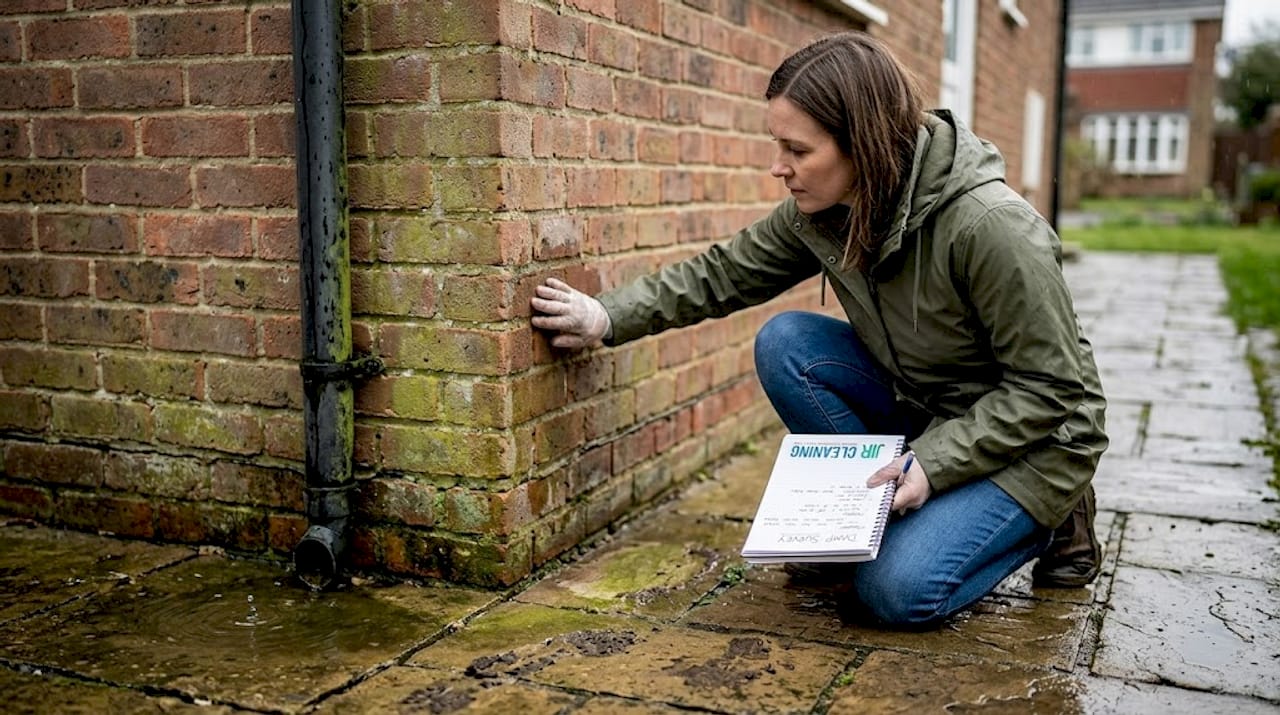
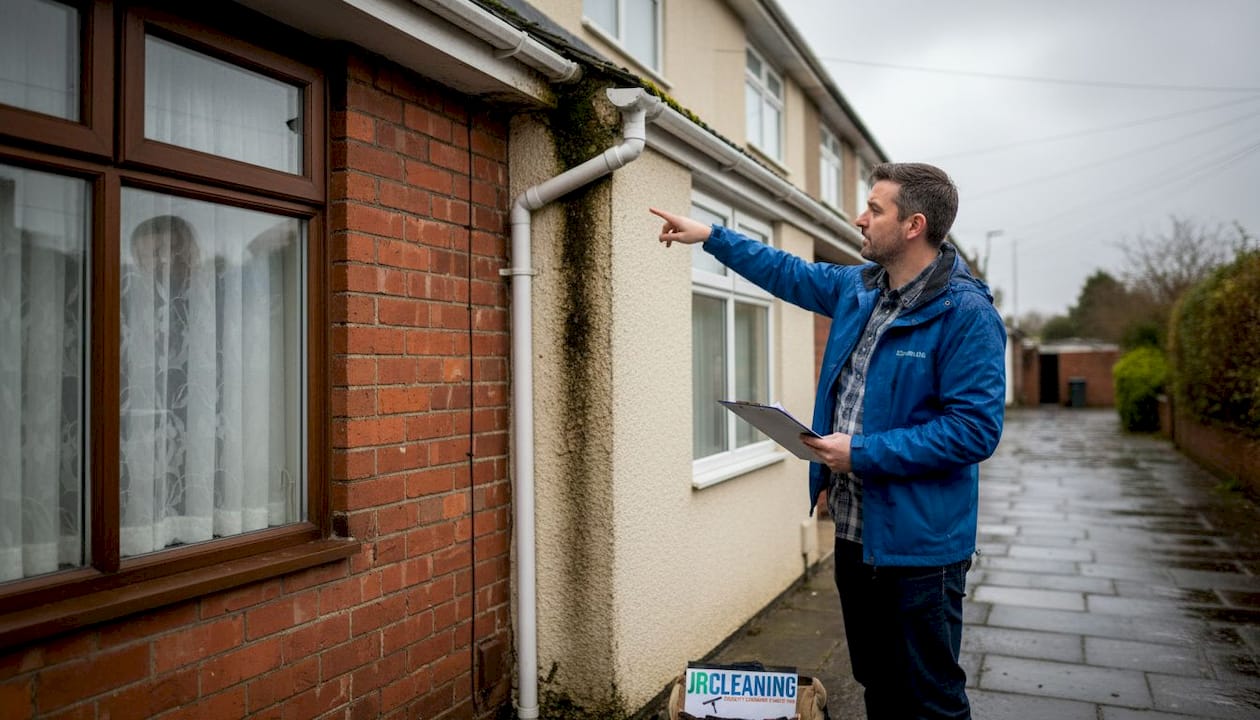
1776252671222 Homeowner inspecting water damage near downpipe - J R Cleaning

How professionals clean gutters: step-by-step process

With a clear definition in mind, it helps to understand how professionals actually tackle the job and why their approach is so different from a DIY attempt on a Saturday afternoon.

According to industry guidance, professional cleaning follows a structured step-by-step process covering inspection, preparation, debris removal, vacuuming, flushing, downpipe clearing, and final checks for leaks or misalignment. Here is what that looks like in practice:

  1. Initial inspection of the gutters, downpipes, and fascias to identify blockages, damage, or sagging
  2. Site preparation, including laying protective sheeting and setting up access equipment safely
  3. Manual debris removal using specialist scoops and trowels to clear large accumulations
  4. Vacuum suction using ground-based telescopic systems to extract fine silt and residue
  5. Flushing with water to clear remaining debris and test flow through the system
  6. Downpipe clearing using rods or high-pressure jets to remove compacted blockages
  7. Final checks for leaks, joint failures, sagging, and correct water flow direction

Professionals use a range of gutter cleaning tools depending on the property. The most common methods are compared below.

MethodSafetyThoroughnessTypical use
Manual with laddersModerate riskGood for light debrisSingle-storey or low roofs
Telescopic vacuum systemHigh safetyExcellent, no ladder neededMost UK homes, all heights
Pressure washingModerate riskVery thorough, removes mossHeavily soiled or mossy gutters
Cherry picker accessVery safeExcellent for complex rooflinesMulti-storey or awkward access

Many professionals now use camera inspections to document blockages before and after cleaning, which is especially useful for insurance purposes. Reviewing professional gutter cleaning steps in detail reveals just how thorough a proper job should be. For homes with heavily blocked downpipes, drain unblocking tips from drainage specialists can also be useful.

Pro Tip: For most UK homes, a telescopic vacuum system is the safest and most effective method. It keeps operatives off ladders, causes no mess on driveways, and reaches all gutter sections without disturbing roof tiles. Ask your contractor which system they use before booking.

DIY or professional? What UK homeowners need to know

Knowing the process, the next key decision is whether to do it yourself or hire a professional. This is where many homeowners underestimate the risks involved.

DIY gutter cleaning carries real dangers. Falls from ladders account for a significant proportion of serious home accidents in the UK each year. Beyond safety, DIY attempts often miss compacted sludge deep in downpipes and fail to spot early signs of gutter damage. As professional cleaning is worth it evidence confirms, DIY risks incomplete cleaning and ladder falls, while professionals provide thoroughness, insurance cover, photographic evidence, and early damage detection.

DIY may be feasible if:

  • Your home is a bungalow or has very low eaves
  • You have proper ladder safety equipment and a helper
  • The gutters have only light, recent debris
  • You are confident inspecting downpipes and joints

You should call a professional if:

  • Your home is two storeys or higher and ladder access is risky
  • Gutters are heavily blocked with compacted moss or silt
  • You have gutter guards that need removing and refitting
  • You have experienced previous blockages or water damage
  • Your gutters are old or fragile and could crack under pressure

The benefits of regular gutter cleaning extend beyond the clean itself. Professionals spot cracked joints, failing brackets, and early signs of rot that a homeowner on a ladder would almost certainly miss. If damage is found, accessing gutter repairs early prevents small problems from becoming expensive ones. Specialist drain cleaning services can also assist when downpipes connect to underground drainage systems.

Pro Tip: Always ask for before and after photographs when hiring a professional. A reputable company will provide these as standard. If a contractor cannot show you evidence of the work completed, that is a warning sign worth heeding.

How often should gutters be cleaned in the UK?

Regardless of who does the work, how frequently should you schedule gutter cleaning? The answer depends on your property, its surroundings, and the local environment.

The standard UK recommendation, as confirmed by cleaning frequency guidance, is twice yearly for most homes, typically in spring and autumn. Properties near trees, in coastal areas, or with mossy roofs should increase this to three or four times per year. No property should go more than 12 months without a clean.

Property typeRecommended frequency
Standard home, no nearby treesTwice yearly (spring and autumn)
Home near deciduous treesThree times yearly
Coastal or high-rainfall areaThree to four times yearly
Property with mossy or aged roofThree to four times yearly
Home with gutter guards fittedOnce to twice yearly

You should also watch for signs that an interim clean is needed between scheduled visits:

  • Water overflowing during or after rainfall
  • Visible moss, weeds, or plant growth in the gutters
  • Staining on external walls below the gutterline
  • Birds or squirrels repeatedly visiting the roofline
  • A recent storm that brought down significant leaf or branch debris

Seasonal timing matters too. Winter gutter cleaning is particularly important because blocked gutters in freezing temperatures can fill with ice, adding significant weight and causing sections to crack or pull away from the fascia entirely. Spring cleaning clears the debris that has accumulated over winter, while autumn cleaning prepares the system for the heavy rainfall and leaf fall ahead.

Key stat: Gutters left uncleaned for more than 12 months are significantly more likely to develop structural faults, according to drainage and property maintenance specialists. The cost of repairing water-damaged fascias, soffits, or brickwork far exceeds the cost of two professional cleans per year.

The overlooked truths about gutter cleaning

Having covered the facts and essential advice, here is an insider perspective on what is truly at stake for UK homeowners.

The most common mistake we see is treating gutters as invisible. Because they sit above eye level, homeowners assume everything is fine until water starts dripping down the wall. By that point, the damage is already done. The real cost of neglect is not just the repair bill. It is the damp that creeps into bedroom walls, the insurance claim that gets disputed because maintenance was overdue, and the surveyor’s report that flags gutter condition as a concern during a property sale.

Gutter guards are another area where expectations do not match reality. Many homeowners install them believing they will never need to clean their gutters again. In practice, moss and fine debris still accumulate underneath and around guards, and the guards themselves can trap material in ways that make blockages worse. As step-by-step gutter cleaning insights make clear, guards reduce frequency but never eliminate the need for professional attention.

The uncomfortable truth is that regular professional cleaning is one of the most cost-effective forms of home maintenance available. It costs far less than a single damp remediation job, and it keeps your property in the condition that insurers, surveyors, and future buyers expect.

Protect your home with expert gutter care

Understanding what gutter cleaning involves is the first step. Acting on that knowledge is what protects your home.

1774551979294 jrcleaning - J R Cleaning

At JR Cleaning, we have over 20 years of experience helping UK homeowners maintain safe, functional guttering systems. Our fully insured team uses professional-grade equipment, provides before and after photographic evidence, and identifies any damage before it becomes a costly problem. Whether you need a routine clear-out or have noticed signs of blockage, our expert gutter cleaning service is designed to give you complete peace of mind. We also offer dedicated gutter repairs if our team spots any damage during the clean. Get in touch today for a free, no-obligation quote.

Frequently asked questions

What happens if I don’t clean my gutters?

Blocked gutters cause rainwater to overflow and saturate walls, leading to damp, structural damage, rotting fascias, and potential foundation issues that can seriously hurt your property’s value.

How can I tell if my gutters need cleaning?

Overflowing water during rain, visible moss or weeds growing in the gutterline, and birds repeatedly nesting near the roofline are all clear signals, and as frequency guidance confirms, no home should go more than 12 months without a professional check.

Are gutter guards a substitute for cleaning?

No. Gutter guards reduce how often cleaning is needed, but as industry evidence shows, moss, fine debris, and compacted silt still accumulate and require regular professional attention.

How long does professional gutter cleaning take?

Most domestic jobs take one to two hours depending on property size and debris levels, following the structured professional process from initial inspection through to final flow checks.

Window cleaning tips: Easy methods for spotless results

You’ve just spent twenty minutes cleaning your windows, stepped back to admire the results, and noticed streaks running in every direction. Sound familiar? It’s one of the most common frustrations for homeowners and business owners in Victoria alike. The good news is that spotless, streak-free results come down to using the right tools and techniques, not more elbow grease. In this guide, we cover everything from essential equipment and cleaning solutions to step-by-step methods and seasonal maintenance, so your windows stay clear, safe, and looking their best all year round.

Table of Contents

Key Takeaways

PointDetails
Use proper toolsA squeegee and microfibre cloth deliver the best streak-free results.
Select safe solutionsEco-friendly detergents and purified water help protect your windows and the environment.
Apply expert techniquesFollow a step-by-step approach for clean, clear windows every time.
Prioritise safetyAlways use extension poles or professional help for upper floors.

The essential tools for effective window cleaning

The difference between a streaky finish and a crystal-clear pane often comes down to what you’re holding in your hand. Many people reach for a sponge and an old newspaper, but professional results call for purpose-built tools. Getting familiar with the right equipment makes the job faster, safer, and far more satisfying.

Here’s a quick look at the core tools every homeowner or business owner should have:

  • Squeegee: The gold standard for window cleaning. A good rubber-bladed squeegee pulls water cleanly off the glass without leaving residue.
  • Microfibre cloths: Ideal for detailing edges and corners. They trap dirt rather than pushing it around.
  • Bucket: A wide, flat bucket lets you load your squeegee or applicator evenly without dripping.
  • Extension pole: Essential for reaching upper-floor windows safely from the ground. More on this in the safety section.
  • Scrubber or applicator sleeve: Used to apply soapy water across the glass before you squeegee it off.

As a professional standard, squeegee and microfibre cloth use is what separates amateur results from genuinely spotless glass. You can read more about choosing the right window cleaning tools for different property types on our blog.

FeatureTraditional toolsModern professional tools
Streak riskHigh (newspaper, sponge)Low (squeegee, microfibre)
Drying timeSlowFast
ReachLimitedExtended with poles
Eco impactLowLow to moderate
CostLowModerate upfront, long-term saving

Safety matters too, especially for properties with upper-floor windows. Never lean out of a window or stand on an unstable surface. Extension poles let you clean from ground level, which removes the risk entirely for most standard properties.

Pro Tip: After each use, rinse your squeegee blade and hang your microfibre cloths to dry. Storing tools properly prevents mould, rubber degradation, and cross-contamination between jobs.

Now that you’ve seen how the right tools make a difference, let’s cover the cleaning solutions that complement them.

Choosing the best cleaning solutions for spotless windows

Even with the best squeegee in hand, the wrong cleaning solution will leave your windows looking worse than before. The chemistry of what you add to your bucket matters more than most people realise.

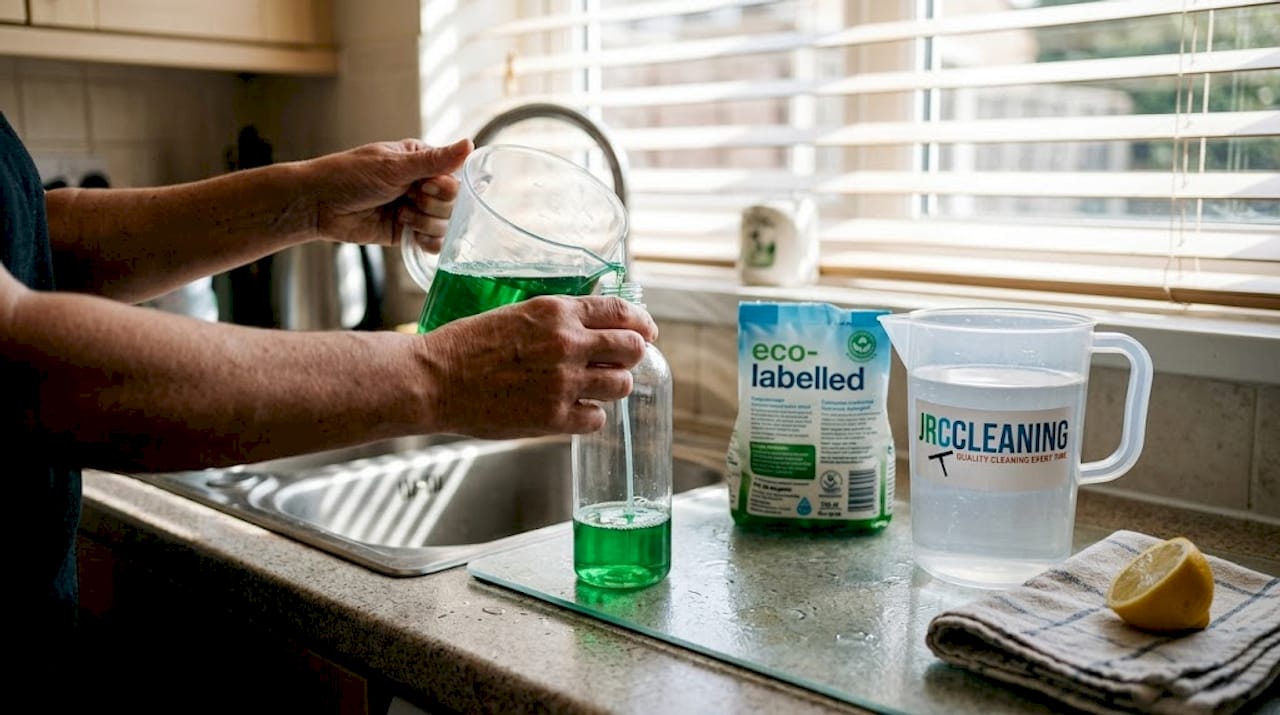
1776163691344 Hands mixing window cleaning solution at kitchen sink - J R Cleaning

Here’s how the main options compare:

Solution typeStreak riskEco-friendlinessCostBest use
Washing-up liquid (low foam)LowModerateVery lowEveryday cleaning
Specialist window cleanerVery lowVariesModerateRegular maintenance
Deionised water onlyMinimalHighLow (with system)Professional finish
Vinegar and waterModerateHighVery lowLight grime

The key principle is simple: less foam is better. High-foaming detergents leave a residue on the glass that dries into streaks. A small drop of low-foam washing-up liquid in a full bucket is genuinely all you need for most jobs.

Deionised water, also called purified water, takes things a step further. It works by removing all dissolved minerals from the water, achieving a TDS of 0ppm (total dissolved solids). When this water dries on glass, there are no minerals left to form spots or smears. It’s the reason professional window cleaners using water-fed poles can leave windows to dry without wiping them at all.

For those who prefer eco-friendly options, plant-based, biodegradable detergents work well and are safer for gardens, pets, and drainage systems. They’re particularly worth considering for commercial properties where large volumes of water run off into public drains.

A few tips for mixing your solution effectively:

  • Use warm water in cooler months to help cut through grime faster.
  • Add detergent to water, not the other way around, to control foam levels.
  • Change your bucket water regularly during a job. Dirty water just redistributes grime.
  • For heavily soiled windows, pre-rinse with plain water before applying your solution.

After choosing your detergent and water system, you can apply these methods to achieve a professional result.

Step-by-step techniques to clean windows without streaks

Having the right tools and solution only gets you halfway there. The sequence in which you clean makes a significant difference to the final result. Professional window cleaners follow a defined sequence, and it’s one you can replicate at home or on your commercial premises.

Here’s the method, step by step:

  1. Rinse the glass first. Use plain water to remove loose dust and debris. Scrubbing dry dirt across glass can cause fine scratches.
  2. Apply your cleaning solution. Use your scrubber or applicator sleeve to cover the entire pane with soapy water. Work in overlapping strokes.
  3. Squeegee from top to bottom. Start at the top corner and pull the squeegee across in a slight arc, overlapping each stroke by a couple of centimetres. Wipe the blade with a clean cloth after each pass.
  4. Detail the edges. Use a dry microfibre cloth to catch any drips along the frame and corners. This is where most streaks hide.
  5. Final inspection. Step back and check the glass at an angle in natural light. Any missed spots will show up immediately.

“The corners are where most DIY cleans fall apart. A dry microfibre cloth wrapped around your fingertip gives you the precision to clear them properly without smearing.”

Common mistakes to avoid include using too much detergent, cleaning in direct sunlight (the solution dries too fast), and using the same cloth for washing and drying. That last point is worth emphasising. Keeping your interior cleaning routines consistent with two-cloth discipline makes a noticeable difference, and you can see how this fits into broader professional methods for maintaining your property.

Pro Tip: Always use two cloths. One damp cloth for washing frames and edges, one completely dry cloth for finishing the glass. Mixing the two is the single most common cause of streaks.

Following these expert methods keeps your windows clear, but ongoing maintenance is just as important.

Maintaining your windows: Safety and seasonal tips

Cleaning your windows well once is satisfying. Keeping them clean throughout the year takes a bit of planning, but it doesn’t have to be complicated. A simple routine prevents the kind of heavy buildup that makes each clean a major project.

Extension poles are essential for safely reaching upper-floor windows, and this is non-negotiable for anyone working on a two-storey or taller property. You can find detailed guidance on cleaning upper windows safely without ladders or unnecessary risk.

Here’s a safety checklist before you start any window cleaning session:

  • Check that extension poles are fully locked before use.
  • Wear non-slip footwear on wet surfaces.
  • Keep children and pets away from the work area.
  • Never lean out of an upstairs window to reach the outside pane.
  • If in doubt about access or height, call a professional.

Seasonal routines also play a big role in keeping windows in good condition:

  • Spring: Clear pollen and winter grime. Check frames and seals for any damage caused by frost.
  • Summer: Clean more frequently as dust and insects accumulate faster. Avoid cleaning in peak afternoon sun.
  • Autumn: Remove leaf residue and check gutters, as blocked gutters overflow onto window frames and cause staining.
  • Winter: Clean on milder days. Avoid using cold water on very cold glass. Read more about winter maintenance to protect your property during colder months.

For most Victoria properties, cleaning windows every six to eight weeks strikes the right balance between effort and appearance. High-traffic commercial premises or properties near busy roads may need attention every three to four weeks.

Pro Tip: Set a recurring reminder on your phone for window cleaning. Treating it like any other maintenance task, rather than waiting until the glass looks obviously dirty, prevents stubborn buildup and keeps each clean quick and easy.

Now, with maintenance routines and safety covered, let’s reflect on what really matters for consistently spotless windows.

Our expert perspective: What most DIY window guides miss

After more than two decades of professional cleaning across Victoria, we’ve noticed a pattern in the advice that circulates online. Most guides focus on gadgets and products, as though the right spray bottle is the answer. In our experience, it rarely is.

The real culprit behind most streaky windows is too much detergent. People assume more soap means more cleaning power, but it actually leaves a film that attracts dust and smears light. A tiny amount of low-foam solution in clean water outperforms a bucket full of suds every single time.

Pure water systems, often dismissed as a professional-only luxury, are genuinely worth considering for homeowners who clean regularly. The upfront cost of a basic deionised water filter pays for itself quickly when you factor in the time saved on re-cleaning and detailing.

“The real trick is consistency, not perfectionism. A quick clean every six weeks beats a heroic deep clean twice a year.”

We’d also encourage you to read our thoughts on commercial window safety tips, because the principles apply equally well to residential properties. Stop chasing the perfect technique and start building a reliable routine. That’s what actually keeps windows looking great.

How J R Cleaning makes window care simple

If you’ve worked through this guide and realised that window cleaning is more involved than you’d like to manage yourself, that’s a perfectly reasonable conclusion. Safety risks, time constraints, and the sheer effort of maintaining larger or multi-storey properties are exactly why many homeowners and businesses in Victoria turn to professional help.

1774551979294 jrcleaning - J R Cleaning

At JR Cleaning, our window cleaning experts bring over 20 years of experience to every job, fully insured and equipped with professional-grade tools and pure water systems. Whether you need a one-off clean or a regular maintenance schedule, our professional cleaning services are tailored to your property type and budget. Get in touch today for a free, no-obligation quote and let us take the hassle out of keeping your windows spotless.

Frequently asked questions

What is the best tool for cleaning home windows?

A squeegee paired with a microfibre cloth is the most effective combination for streak-free results, as professionals rely on these tools for spotless finishes on every job.

Are eco-friendly detergents as effective as traditional ones?

Yes, eco-friendly low-foaming detergents are just as effective when used correctly and actually help reduce the streaking that high-foam products cause.

How often should I clean my windows?

Regular window cleaning every six to eight weeks suits most properties, though high-pollution or high-traffic locations benefit from more frequent attention.

Is it safe to clean upper-floor windows myself?

It can be risky without the right equipment. Extension poles for higher windows are the safer option, or you can contact a professional service to handle upper floors securely.

5 key benefits of regular gutter cleaning in 2026

Blocked gutters are one of the most overlooked causes of serious property damage in Victoria. When leaves, moss, and debris build up, rainwater has nowhere to go, and the consequences can be expensive. Water damage to roofs, walls, and foundations is entirely preventable with routine gutter cleaning, yet many homeowners and business owners only act once the damage is already done. In this article, we cover five major advantages of keeping your gutters clean, from protecting your building’s structure to saving significant money on repairs.

Table of Contents

Key Takeaways

PointDetails
Water damage preventionRegular gutter cleaning prevents costly leaks and protects your property’s structure from water-related damage.
Longer gutter lifespanClearing debris stops premature rust, sagging, and breakage, helping gutters last much longer.
Healthier indoor environmentClean gutters reduce risks of mould, pests, and bacteria contaminating living or work spaces.
Save on repairsScheduled cleaning is far cheaper than emergency repairs for water or structural issues.
Professional resultsExpert gutter cleaners provide safer, more thorough protection than DIY approaches.

Protect your home and business from costly water damage

Your gutters have one job: channel rainwater safely away from your building. When they are blocked, water spills over the sides, seeps behind fascias, and finds its way into walls, ceilings, and foundations. In Victoria, where seasonal rainfall can be heavy and unpredictable, this is not a theoretical risk. It happens regularly to properties whose gutters have not been cleaned in over a year.

“Regular gutter cleaning prevents water damage to roofs, walls, and foundations by ensuring proper rainwater drainage across all parts of a building.”

The repairs that follow water ingress are rarely cheap. Common damage caused by blocked gutters includes:

  • Rotting roof timbers and saturated insulation
  • Damp patches and staining on interior walls and ceilings
  • Cracked or subsiding foundations from persistent waterlogging
  • Damaged fascias, soffits, and exterior paintwork
  • Flooded basements or ground-floor rooms after heavy rain

A well-maintained drainage system does far more than move water. It protects the entire envelope of your building. Think of your gutters as the first line of defence. When they fail, everything behind them is exposed. Protecting property value starts with something as straightforward as keeping water moving in the right direction.

Pro Tip: After any significant storm in Victoria, do a quick visual check of your gutters from ground level. Overflowing water or visible debris is a clear sign that a professional clean is overdue.

Prevent structural issues and prolong your gutters’ lifespan

Most people think of gutters as simple channels. In reality, they are a system of brackets, joints, seals, and sections that work together under pressure. When debris accumulates, the weight increases dramatically. A metre of wet leaves and compacted moss can weigh several kilograms, and that load puts constant strain on the fixings holding your gutters to the building.

1776079080148 image - J R Cleaning

Clogged gutters cause sagging, rusting, and detachment over time as the debris weight stresses brackets and joints beyond their design limits. Left unchecked, sections can pull away from the fascia entirely, leaving your building exposed and creating a safety hazard.

Watch out for these early warning signs of gutter distress:

  • Gutters visibly pulling away from the roofline or sagging in the middle
  • Rust stains running down exterior walls
  • Water dripping from joints rather than the downpipe
  • Visible plant growth or moss inside the gutter channel
  • Paint peeling on fascias directly above the gutter line

Addressing these issues early through regular cleaning avoids the need for full gutter repairs or even complete replacement. Replacement costs can run into hundreds of pounds per section, whereas a routine professional clean costs a fraction of that. Investing in drainage solutions that keep your system flowing freely is simply good property management.

Pro Tip: Consider installing gutter guards after a professional clean. They reduce how much debris enters the channel and can significantly extend the time between cleans, especially if your property is surrounded by trees.

Boost health and safety by reducing mould and pests

Blocked gutters do not just damage brickwork. They create conditions that actively harm the health of people inside the building. Stagnant water sitting in a debris-filled gutter is a breeding ground for mosquitoes, midges, and other insects. Rodents are also attracted to the damp, sheltered environment that compacted leaf matter provides.

“Neglected gutters prevent health risks from mould, bacteria, and stagnant water breeding in debris from being controlled, allowing them to escalate into serious indoor air quality problems.”

Mould spores are particularly concerning. Once damp debris sits against a fascia or soffit for an extended period, mould can take hold and spread into roof spaces and wall cavities. From there, spores circulate through ventilation and into the rooms where you live or work. Health problems commonly linked to gutter neglect include:

  • Respiratory irritation and worsening of asthma or allergies
  • Skin conditions triggered by mould exposure
  • Increased insect bites and pest-related stress
  • Bacterial contamination of rainwater harvesting systems
  • Damp-related illness in vulnerable occupants

For business owners in Victoria, this is also a liability issue. A workplace with a mould problem linked to poor building maintenance could face serious consequences. Booking gutter cleaning in winter and other key seasons ensures you are not unknowingly allowing these hazards to develop.

Save money: Gutter cleaning versus emergency repairs

Let us talk numbers. Routine gutter cleaning is one of the most cost-effective maintenance tasks a property owner can carry out. The contrast between prevention and reaction is stark when you lay the figures side by side.

Maintenance typeTypical costFrequency
Professional gutter clean£60 to £150Twice yearly
Gutter repair (section)£150 to £400As needed
Roof timber replacement£500 to £2,000+Major event
Foundation remediation£1,500 to £10,000+Serious neglect
Damp proofing and replastering£800 to £3,000+Water ingress

According to cost data from 2026, professional gutter cleaning typically costs between AU$100 and AU$450 depending on storey height, while gutter guards can save property owners AU$300 to AU$1,500 per year in reduced cleaning frequency and avoided repairs. The maths strongly favours prevention.

Here is a smart scheduling approach to keep costs down:

  1. Book a professional clean every autumn to clear fallen leaves before winter rain arrives
  2. Schedule a second clean in spring to remove winter debris and check for storm damage
  3. Arrange an additional check after any severe weather event
  4. Review gutter maintenance tips to spot early warning signs between professional visits
  5. Follow a step-by-step cleaning guide if you need to carry out a basic visual inspection safely

The goal is simple: never let a small blockage become a big repair bill.

Professional cleaning: Safer, more thorough, and risk-free

Many property owners consider cleaning their own gutters to save money. It is understandable. But the risks involved in working at height are significant, and the results of a DIY clean are rarely as thorough as a professional job.

DIY gutter cleaning carries real risks including ladder falls, contact with wildlife nesting in debris, and working in heat or wet conditions that increase the chance of accidents. Professionals arrive with the right equipment, training, and insurance to do the job safely and completely.

FactorDIYProfessional
SafetyHigh risk (ladder falls)Fully insured, trained
EquipmentBasic ladder and glovesSpecialist tools and PPE
ThoroughnessOften incompleteFull system inspection
Damage detectionUnlikely to spot issuesTrained to identify faults
CostLow upfront, higher riskAffordable, predictable

For Victoria property owners, using a local professional also means someone who understands the specific debris patterns, tree species, and weather conditions in your area. They can advise on the right cleaning schedule for your property rather than offering a one-size-fits-all answer.

Pro Tip: Some home insurance policies will not cover damage caused by a DIY ladder accident. Check your policy before climbing up yourself. Booking a professional gutter cleaning service removes that risk entirely, and you can find practical safety guidance in our gutter cleaning safety guide.

Why prevention always beats repair in gutter care

After more than 20 years working with homeowners and business owners across Victoria, we have seen a pattern repeat itself. A property owner notices a small damp patch. They assume it is condensation. Six months later, a surveyor is quoting thousands of pounds to fix rot in the roof structure. The original cause? A gutter that had not been cleaned in three years.

Conventional wisdom says repairs are a last resort. In practice, they become the only option when maintenance is delayed too long. The uncomfortable truth is that most serious property damage we encounter is entirely avoidable. It is not bad luck. It is deferred maintenance.

Routine gutter cleaning is not glamorous. It does not feel urgent until the water is coming through your ceiling. But the property owners who invest in it consistently, twice a year without fail, rarely face the emergency call-outs and costly remediation that others do. Maintaining property value is not about big renovations. It is about small, consistent actions that keep problems from ever starting.

A prevention-first mindset gives you peace of mind. It also keeps money in your pocket.

Get lasting protection with professional gutter cleaning

If this article has made one thing clear, it is that clean gutters are not optional. They are essential. The good news is that booking professional gutter cleaning in Victoria is straightforward, affordable, and one of the best decisions you can make for your property this year.

1774551979294 jrcleaning - J R Cleaning

At JR Cleaning, we offer fully insured gutter cleaning services for both residential and commercial properties across Victoria. Whether you need a routine seasonal clean or have spotted signs of damage, our experienced team is ready to help. We also carry out gutter repairs if we find any issues during the clean, so you get a complete solution in one visit. Contact us today for a free, no-obligation quote and protect your property before the next downpour arrives.

Frequently asked questions

How often should gutters be cleaned in Victoria?

Gutters should be cleaned at least twice a year, every autumn and spring, or more frequently after storms or if your property has many trees nearby. Properties with heavy tree cover may benefit from three to four cleans per year.

Is professional gutter cleaning safer than DIY?

Yes. Trained professionals use specialist equipment and follow safe working practices, significantly reducing the risk of falls or injuries. DIY ladder accidents are more common than most people realise, and professionals also spot damage that DIY cleaners typically miss.

What problems can blocked gutters cause?

Blocked gutters lead to water damage to roofs and foundations, mould growth, pest infestations, structural sagging, and can significantly shorten the lifespan of your building’s exterior.

Do gutter guards reduce how often cleaning is needed?

Yes. Gutter guards reduce the amount of debris entering the channel and can save AU$300 to AU$1,500 per year in reduced cleaning costs and avoided repairs, though periodic professional checks are still recommended.

Top services for UK homes and businesses 2026

Choosing the right cleaning service in the UK is no longer as straightforward as picking a name from a local directory. The industry has grown significantly, with the UK cleaning industry contributing £59 billion to the economy in 2026, driven by rising demand for specialist, eco-friendly, and compliance-led solutions. Whether you manage a family home or a busy commercial premises, the sheer variety of services available can feel overwhelming. BICSc (British Institute of Cleaning Science) and NHS frameworks now shape what quality actually looks like, and clients increasingly expect measurable results. This guide breaks down the major service types, standards, and trends to help you make a confident, informed choice.

Table of Contents

Key Takeaways

PointDetails
Service standards matterChoosing a provider aligned with BICSc and NHS standards ensures quality and compliance.
Diverse cleaning optionsResidential and commercial cleaning services include specialist and deep-clean solutions tailored to different needs.
Sustainability drives demandEco-friendly cleaning and tech adoption are revolutionising the industry and client expectations.
Post-COVID safety focusThere is a significant increase in demand for deep and disinfection services after the pandemic.
Expert advice is essentialConsulting with a professional provider allows you to match cleaning services to your property’s requirements.

Understanding key cleaning service standards

Before you compare providers, it helps to understand the frameworks that separate professional cleaning from a basic tidy-up. Two bodies set the tone in the UK: BICSc and the NHS.

BICSc standards cover everything from colour-coding systems and compound productivity rates to formal service level agreements (SLAs). Colour-coding is one of the most practical tools in professional cleaning. Each colour represents a specific zone: red for toilets and high-risk areas, blue for general surfaces, green for food preparation areas, and yellow for washbasins. Using the wrong cloth in the wrong area can transfer harmful bacteria, so this system is not optional for reputable providers.

NHS healthcare cleanliness standards are mandatory for any organisation cleaning medical environments. These standards use a red, amber, green (RAG) auditing system to measure cleanliness outcomes. A red rating means immediate remedial action is required, amber signals improvement is needed, and green confirms compliance. Even non-medical businesses are now adopting similar audit frameworks to demonstrate accountability to clients and insurers.

Here is a quick comparison of the two main frameworks:

FrameworkApplies toKey features
BICScAll professional cleaningColour-coding, productivity rates, SLAs
NHS standardsHealthcare and medical facilitiesRAG audits, mandatory compliance, outcome criteria
COSHHAll workplacesSafe handling of cleaning chemicals

Key compliance elements to look for in any provider:

  • Colour-coded equipment across all service zones
  • Documented SLAs with measurable outcomes
  • COSHH (Control of Substances Hazardous to Health) compliance
  • Use of PPE (personal protective equipment) by all staff
  • Regular internal and third-party audits

Pro Tip: When managing cleaning contracts, always request a copy of the provider’s audit results and ask how they handle a red or amber rating. A confident provider will have a clear remediation process ready.

With standards and quality benchmarks established, it is easier to differentiate between the service types available.

Residential cleaning services: Options for UK homes

The domestic cleaning sector is worth £4.7 billion in the UK, reflecting just how much homeowners value a professionally maintained living space. The range of services available has expanded well beyond a weekly hoover and mop.

Routine and regular cleaning covers the essentials: dusting surfaces, hoovering carpets and hard floors, cleaning kitchens and bathrooms, wiping down appliances, and emptying bins. Most providers offer weekly, fortnightly, or monthly schedules. This type of service suits busy households that want consistent upkeep without dedicating their weekends to housework.

Deep cleaning is a different proposition entirely. It targets the hidden grime that routine cleaning misses: inside ovens, behind appliances, grout lines, skirting boards, and under furniture. Specialist equipment such as steam cleaners and high-pressure tools are used to lift ingrained dirt and carry out thorough disinfection. A deep clean is typically recommended at least twice a year, or before and after tenancies.

Specialist residential services include:

  • Carpet and upholstery cleaning (hot water extraction or dry cleaning methods)
  • Window cleaning (interior and exterior, including frames and sills)
  • Gutter and fascia cleaning (essential for preventing water damage)
  • Render and exterior wall cleaning
  • Conservatory cleaning (roof panels, gutters, frames)

For practical guidance, our domestic cleaning tips article covers methods and benefits in detail, and you can explore spotless home methods used by professionals for everyday results.

Typical hourly rates for residential cleaning in 2026 range from £12 to £30, depending on the service type, location, and provider experience. Deep cleaning and specialist services sit at the higher end.

How to decide on service frequency:

  1. Assess how quickly your home accumulates dust, pet hair, or cooking residue
  2. Consider whether you have allergy sufferers or young children in the household
  3. Schedule a deep clean seasonally, even if you have regular cleaning in place
  4. Book specialist services such as carpet or gutter cleaning annually as a minimum

For a full breakdown of what to expect from each visit, our guide on interior cleaning must-haves is a useful starting point.

Commercial cleaning services: Solutions for UK businesses

The commercial cleaning sector is worth £5.6 billion and encompasses over 75,000 businesses across the UK. The variety of environments that require professional cleaning is enormous, and each comes with its own compliance requirements.

Offices, retail units, warehouses, schools, and medical facilities all have distinct needs. An office environment prioritises high-touch surfaces such as keyboards, door handles, and shared equipment. A food production facility requires strict hygiene protocols to meet Environmental Health standards. Medical environments demand stringent NHS-compliant procedures, with documented audit trails and specific disinfection protocols.

1775987980091 Commercial cleaner wiping meeting table in office - J R Cleaning

Here is a breakdown of common commercial cleaning services:

Service typeTypical environmentKey focus
Office cleaningOffices, co-working spacesDesks, floors, kitchens, toilets
Retail cleaningShops, showroomsCustomer-facing areas, display surfaces
Industrial cleaningWarehouses, factoriesMachinery, floors, safety compliance
Kitchen duct cleaningRestaurants, cafésFire safety, grease extraction
Medical cleaningClinics, hospitalsNHS compliance, disinfection, RAG audits

Post-pandemic, demand for disinfection services and deep cleans in commercial settings has remained elevated. Businesses now expect regular treatment of high-touch surfaces as a standard part of any cleaning contract, not an optional add-on.

Key compliance considerations for commercial clients:

  • COSHH data sheets for all chemicals used on site
  • PPE requirements documented and enforced
  • Risk assessments completed before work begins
  • Staff trained to BICSc or equivalent standards
  • Insurance certificates provided before contract commencement

Pro Tip: For businesses operating in food service or manufacturing, review our guide on commercial kitchen cleaning to understand the specific standards that apply, including fire safety compliance for kitchen duct systems.

Hourly rates for commercial cleaning typically range from £15 to £25 in 2026. Specialist services such as industrial floor cleaning or façade washing are usually quoted per project. For larger facilities, our resource on industrial facility cleaning covers safety and compliance in depth.

The cleaning industry is changing faster than most people realise. Two forces are reshaping what clients expect and what providers deliver: sustainability and technology.

Demand for eco-friendly cleaning has surged. 85% of UK cleaning companies now offer eco-friendly options, with demand growing at 12% year-on-year. This shift is driven by both client preference and tightening environmental regulations. Green cleaning products avoid harsh chemicals, reduce indoor air pollutants, and are safer for households with children, pets, or allergy sufferers.

On the technology side, the numbers are equally striking. Cleaning robots are growing at a compound annual growth rate (CAGR) of 18%, and 40% of commercial cleaning companies now use specialist software for scheduling, reporting, and digital auditing. Robot scrubbers and autonomous vacuum units are increasingly common in large retail and warehouse environments, handling repetitive floor cleaning tasks with consistent results.

“Digital auditing is no longer a luxury. It is the mechanism by which clients verify that their cleaning provider is delivering what was promised, every single visit.”

Digital auditing tools allow managers to review photographic evidence, completion logs, and compliance scores in real time. This level of transparency was unheard of a decade ago and is now becoming a standard contract expectation.

Checklist for selecting a provider based on current trends:

  • Do they offer certified eco-friendly or biodegradable products?
  • Can they provide digital audit reports after each visit?
  • Are they investing in or already using automated cleaning equipment?
  • Do they have a documented sustainability policy?
  • Can they demonstrate post-pandemic disinfection protocols?

Pro Tip: When reviewing proposals, ask providers to show you a sample digital audit report. If they cannot produce one, they are likely behind the curve on accountability. Explore professional cleaning methods to see how modern techniques compare to traditional approaches.

Why choosing the right cleaning service matters more than ever

Here is something the industry rarely admits openly: a generic cleaning contract almost always underdelivers. We have seen it repeatedly over more than 20 years in the field. A client signs a broad agreement, the provider sends a team with a standard checklist, and within weeks the results plateau. Nobody is measuring outcomes. Nobody is asking the hard questions.

Post-pandemic, the stakes are higher. Hygiene is no longer just about appearance. It is about demonstrable safety, documented compliance, and regular accountability. Clients who understand expert hygiene and safety requirements are far better positioned to hold their providers to account.

Green cleaning and tech-driven auditing are not trends you can afford to ignore either. Contract provisions are changing. Insurers, landlords, and local authorities are beginning to ask for evidence of sustainable practices. The providers who cannot show this will lose clients. The right cleaning service is not the cheapest one. It is the one that matches your property’s specific needs, meets current compliance standards, and can prove it.

Find your ideal cleaning service with J R Cleaning

If this article has made one thing clear, it is that the right cleaning service depends on your specific environment, compliance needs, and expectations. There is no single solution that works for every home or business.

1774551979294 jrcleaning - J R Cleaning

At J R Cleaning, we offer expert cleaning services tailored to both residential and commercial clients across the UK, with over 20 years of experience and full insurance cover. Whether you need a one-off deep clean, a regular domestic schedule, or a fully compliant commercial contract, our cleaning services overview covers every option. We also offer specialist solutions including gutter cleaning options and eco-friendly products. Contact us today for a free, no-obligation quote and let us match the right service to your needs.

Frequently asked questions

Regular domestic cleaning, deep cleaning, commercial office cleaning, and specialist services such as carpet, window, and kitchen duct cleaning are the most in-demand. The domestic and commercial sectors together represent a highly valued and growing market with an expanding range of specialist offerings.

How do I know if a cleaning provider follows UK industry standards?

Look for compliance with BICSc and NHS standards, proper colour-coded equipment, COSHH documentation, and PPE use by all staff. Asking for audit results is the most direct way to verify their commitment to quality.

Are eco-friendly or green cleaning services widely available?

Yes. 85% of UK companies now offer eco-friendly options, and demand is rising 12% year-on-year, making green cleaning increasingly accessible and affordable for both homes and businesses.

What are typical costs for professional cleaning in the UK?

Residential cleaning rates range from £12 to £30 per hour, while commercial cleaning typically costs £15 to £25 per hour, with specialist or project-based services quoted separately.

Post-COVID demand for deep cleaning and disinfection rose by 75%, and clients now expect documented hygiene protocols, digital audit trails, and measurable cleanliness outcomes as standard parts of any contract.

How to manage cleaning contracts for quality and compliance

Poorly managed cleaning contracts cost UK businesses more than money. They lead to failed hygiene inspections, unresolved disputes, and real gaps in duty of care that put staff and visitors at risk. For facility managers and business owners, the difference between a smooth operation and a compliance headache often comes down to how well the contract is written, monitored, and maintained. This guide walks you through every stage of cleaning contract management, from drafting watertight terms to running productive performance reviews, so you can protect your business and get consistent, high-quality results from your cleaning provider.

Table of Contents

Key Takeaways

PointDetails
Cover essentials in every contractAlways specify services, frequency, standards, and safety requirements for clarity and legal protection.
Use KPIs for quality controlDefine and monitor performance metrics to ensure consistent cleaning standards and accountability.
Prioritise ongoing reviewsRegularly review and adapt contracts to changing needs or legal requirements for long-term success.
Document everythingKeep records of all agreements and communications to prevent disputes and encourage transparency.

Understanding cleaning contract essentials

A cleaning contract is not just a formality. It is the foundation of your entire working relationship with a provider, and any vagueness in its terms will eventually surface as a problem. Whether you manage a corporate office, a healthcare facility, or a retail space, the contract must leave no room for misinterpretation.

As outlined in professional cleaning methods, contracts should clearly outline scope, frequency, standards, and health and safety requirements. This is the baseline. Without these four pillars, disputes are almost inevitable.

1775902595052 Infographic showing cleaning contract essentials - J R Cleaning

Every contract should also align with recognised industry benchmarks. The BICSc cleaning standards provide a widely accepted framework for defining cleaning quality in the UK, and referencing them in your contract gives both parties a shared language for measuring results.

Here is a summary of the core components every cleaning contract should include:

Contract componentWhat to specify
Scope of servicesAreas covered, tasks included, and exclusions
Frequency and scheduleDaily, weekly, or monthly tasks with specific times
Quality standardsAccepted benchmarks such as BICSc or bespoke KPIs
Health and safety obligationsCOSHH compliance, risk assessments, PPE requirements
ResponsibilitiesWho supplies equipment, materials, and supervision
Dispute resolutionEscalation process, timelines, and contact points

For businesses with specific needs, reviewing office cleaning requirements or the benefits of domestic cleaning can help you identify which tasks to include in your scope.

Common pitfalls when drafting cleaning contracts include:

  • Using vague language such as “clean as required” without defining what clean means
  • Failing to specify which party is responsible for consumables like soap and bin liners
  • Omitting seasonal or one-off tasks such as deep cleans or post-construction cleans
  • Not including a review or renegotiation clause as needs change
  • Leaving out liability and insurance requirements

Pro Tip: Always include a dispute resolution clause that names a specific escalation contact and sets a response deadline, such as 48 hours. This simple addition prevents minor disagreements from escalating into costly legal disputes.

Establishing service levels and performance standards

A contract without measurable performance standards is difficult to enforce. Once your contract is drafted, the next step is defining exactly what good looks like, and how you will know when it is not being delivered.

Key performance indicators, or KPIs, are the practical tools that make this possible. As noted in office cleaning performance guidance, KPIs improve accountability and help track service quality over time. They turn subjective impressions into objective data.

The right KPIs depend on your facility type. Here is a comparison to help you choose:

Facility typeRelevant KPIs
Office buildingDesk area cleanliness score, washroom inspection pass rate
Healthcare facilityInfection control audit results, response time to spillages
Retail or hospitalityCustomer complaint rate, floor condition rating
Industrial unitHazardous waste removal compliance, safety area clearance

For hygiene and safety guidance specific to your sector, it is worth reviewing what the UK workplace cleaning safety framework recommends before finalising your metrics.

Here is a step-by-step process for setting up a monitoring system:

  1. Agree on KPIs with your contractor before the contract starts, not after
  2. Set a scoring method, such as a 1 to 5 inspection checklist, for each KPI
  3. Schedule regular inspections, at least monthly, with a named assessor
  4. Record all results in a shared log accessible to both parties
  5. Define what score triggers a formal review or remedial action
  6. Review trends quarterly to identify patterns before they become problems

Facilities that conduct regular KPI monitoring report measurably higher satisfaction with their cleaning contracts. The reason is straightforward: when both parties can see the same data, conversations shift from opinion to evidence, and issues get resolved faster.

Ensuring compliance and health & safety in cleaning arrangements

Compliance is not optional. In the UK, both clients and contractors carry legal obligations when it comes to health and safety in cleaning operations, and a contract that ignores this exposes both parties to serious risk.

1775902575661 image - J R Cleaning

As highlighted in industrial cleaning compliance resources, incorporating health and safety clauses is vital for legal compliance. This is not just about ticking boxes. It is about protecting people.

The key regulatory areas to address in your contract include COSHH (Control of Substances Hazardous to Health), which governs how cleaning chemicals are stored, used, and disposed of. You should also require method statements for high-risk tasks such as working at height or cleaning in food preparation areas. The HSE cleaning guidelines provide clear direction on these obligations.

“The client cannot simply hand over responsibility for safety to the contractor. Both parties must actively manage their respective obligations under the Health and Safety at Work Act 1974.”

Documents you should always request from any cleaning contractor before work begins:

  • Public liability insurance certificate (minimum £5 million cover is standard)
  • Employer’s liability insurance certificate
  • COSHH risk assessments for all chemicals used on site
  • Method statements for specialist or high-risk tasks
  • Evidence of staff training records and DBS checks where applicable
  • A copy of the contractor’s health and safety policy

Keeping copies of all these documents on file is not bureaucracy for its own sake. If an incident occurs on your premises, these records are your first line of defence in demonstrating that you exercised reasonable duty of care.

Managing ongoing performance and relationships

Signing a contract is the beginning, not the end. The businesses that get the most from their cleaning arrangements are those that treat contract management as a continuous process rather than a one-off task.

Regular reviews and open feedback channels, as noted in interior cleaning essentials, improve contractor relationships and service consistency over time. This matters because cleaning needs change. Staff numbers grow, new areas open, regulations update, and seasonal demands shift.

A structured review process keeps everyone aligned. Here is a practical approach:

  1. Hold a formal performance meeting every quarter with your contractor’s account manager
  2. Share KPI data from the previous period and discuss any scores below target
  3. Agree on corrective actions with clear deadlines and a named owner
  4. Review the contract scope to check it still reflects your current needs
  5. Document all agreed changes in writing and have both parties sign off
  6. Set the agenda for the next meeting before closing the current one

Beyond formal reviews, day-to-day communication matters just as much. A simple shared log or messaging channel where your team can flag issues in real time prevents small problems from festering. The best contractor relationships feel collaborative, not adversarial.

Pro Tip: Document every agreed change, no matter how minor, in a written amendment or email confirmation. Verbal agreements are easily forgotten or misremembered, and a paper trail protects both parties if a dispute arises later.

Adapting your contract when circumstances change is also essential. The pandemic showed many businesses that their cleaning specifications were not fit for purpose under new hygiene demands. Build a review trigger into your contract, so that significant changes in regulation or operations automatically prompt a formal renegotiation.

What most managers overlook about cleaning contract management

Here is something that most contract management guides will not tell you: the paperwork is the easy part. The hard part is the relationship.

We have seen contracts that were technically perfect, with every KPI defined and every compliance box ticked, deliver poor results simply because the working relationship between client and contractor had broken down. Conversely, we have seen contracts with modest detail produce excellent outcomes because both parties communicated openly and resolved issues quickly.

The uncomfortable truth is that a contract sets expectations but does not guarantee outcomes. What guarantees outcomes is consistent engagement. That means showing up to review meetings prepared, acknowledging when your own team has contributed to a problem, and giving your contractor the information they need to do their job well.

Following expert hygiene advice is valuable, but pairing it with genuine dialogue is what makes the difference. Proactive problem-solving, where issues are raised and resolved before they escalate, consistently outperforms strict adherence to paperwork alone. Treat your cleaning contractor as a partner, not just a supplier, and the results will reflect that.

Get expert help with your cleaning contracts

Managing a cleaning contract well takes time, expertise, and a clear understanding of UK compliance requirements. If you are finding the process complex or want to make sure your arrangements are genuinely fit for purpose, we can help.

1774551979294 jrcleaning - J R Cleaning

At JR Cleaning, our professional cleaning services are built around transparency, accountability, and over 20 years of experience working with UK businesses. From drafting compliant service specifications to delivering consistent, auditable results, we handle the detail so you do not have to. Explore our comprehensive cleaning solutions or get in touch today for a bespoke consultation and a free, no-obligation quote tailored to your facility’s needs.

Frequently asked questions

What should a cleaning contract include in the UK?

A UK cleaning contract should specify services, schedule, standards, health and safety requirements, and dispute resolution procedures. These elements protect both the client and the contractor and provide a clear basis for measuring performance.

How do I measure cleaning contract performance?

Use measurable KPIs such as inspection results, complaint rates, and service response times to monitor performance. KPIs track service quality objectively and make it easier to identify and address issues before they escalate.

Who is responsible for health and safety in contract cleaning?

Both the client and the contractor share responsibility for health and safety compliance under UK law. Health and safety clauses in the contract should clearly define each party’s obligations to avoid any ambiguity.

How often should cleaning contracts be reviewed?

Review cleaning contracts at least annually or whenever service needs or regulations change. Regular reviews improve consistency and ensure the contract continues to reflect the actual scope of work being delivered.